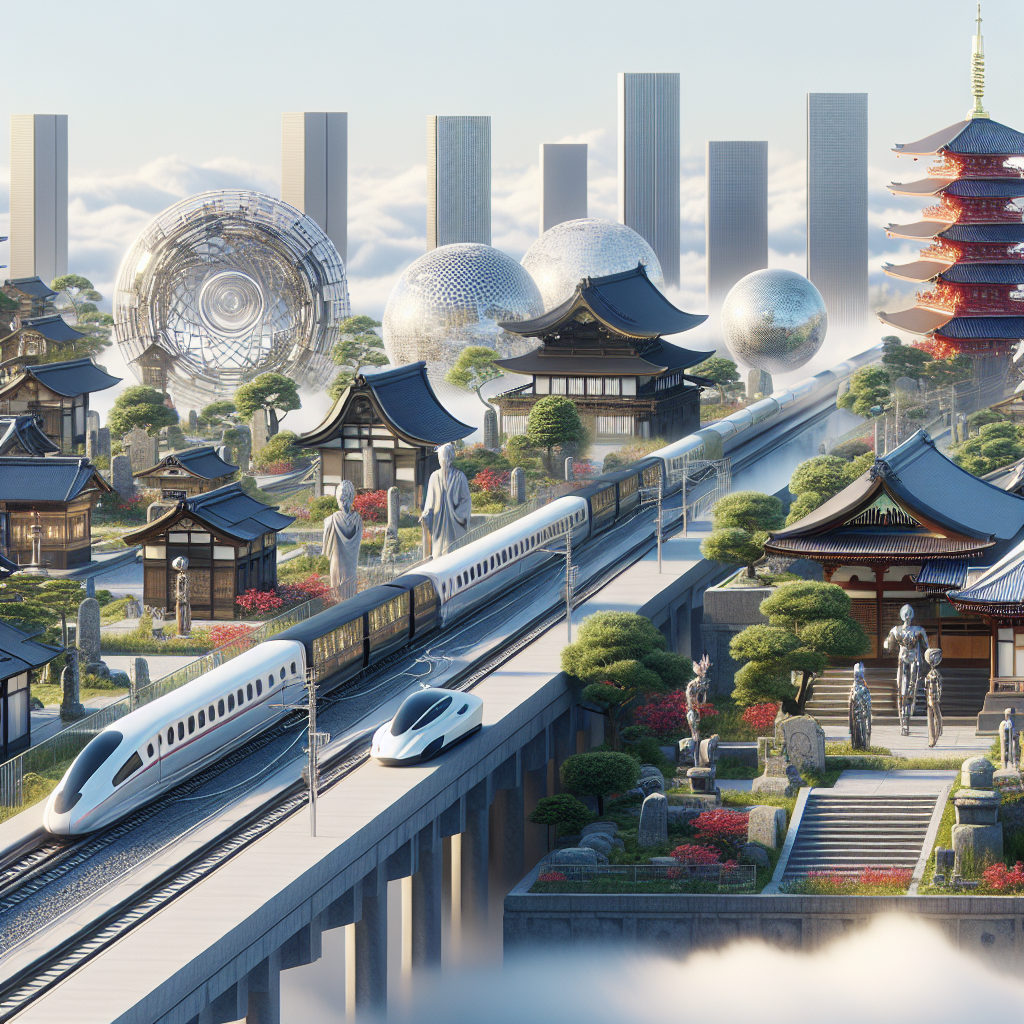

The Vibrant Tapestry of Contemporary Japan
Imagine a place where ancient traditions dance harmoniously with cutting-edge technology, where serene temples stand alongside bustling skyscrapers, and where the past and future coexist in a vibrant tapestry. Welcome to contemporary Japan! This fascinating country, located in East Asia, is an archipelago comprising 6,852 islands, with the four largest being Honshu, Hokkaido, Kyushu, and Shikoku. Japan's rich history dates back thousands of years, but it is the modern era, particularly post-World War II, that has shaped its current identity. Today, Japan is a global powerhouse in technology, culture, and economy, making it a captivating subject for exploration.
In the aftermath of World War II, Japan underwent a remarkable transformation. The country, which had been devastated by war, embarked on a journey of rapid industrialization and economic growth. By the 1960s, Japan had become the world's second-largest economy, a position it held for several decades. This economic miracle was driven by a combination of factors, including a strong work ethic, technological innovation, and government policies that promoted industrial development. The result was a society that embraced modernity while still cherishing its traditional roots.
One of the most striking aspects of contemporary Japan is its technological prowess. Japan is home to some of the world's leading technology companies, such as Sony, Panasonic, and Toyota. The country is renowned for its advancements in robotics, electronics, and automotive engineering. Japanese innovation is not just limited to technology; it also extends to fields like fashion, architecture, and cuisine. The influence of Japanese culture can be seen worldwide, from the popularity of sushi and anime to the minimalist aesthetic of Japanese design.
Despite its modern achievements, Japan remains deeply connected to its cultural heritage. Traditional arts such as tea ceremonies, calligraphy, and ikebana (flower arranging) continue to be practiced and celebrated. Festivals like Hanami, where people gather to admire cherry blossoms, and Obon, a time to honor ancestors, are integral parts of Japanese life. The country's commitment to preserving its cultural identity is evident in its UNESCO World Heritage sites, which include ancient temples, shrines, and historic villages.
Contemporary Japan also faces challenges, such as an aging population and environmental concerns. The country is actively seeking solutions to these issues, including promoting sustainable practices and developing technologies to support an aging society. Japan's ability to adapt and innovate in the face of challenges is a testament to its resilience and forward-thinking mindset.
In essence, contemporary Japan is a dynamic blend of tradition and innovation, a place where the old and new coexist in harmony. It is a nation that continues to inspire and captivate the world with its unique blend of cultural richness and technological advancement. Whether you're drawn to its ancient temples, cutting-edge gadgets, or delicious cuisine, Japan offers a fascinating glimpse into a society that is both deeply rooted in its past and boldly stepping into the future.