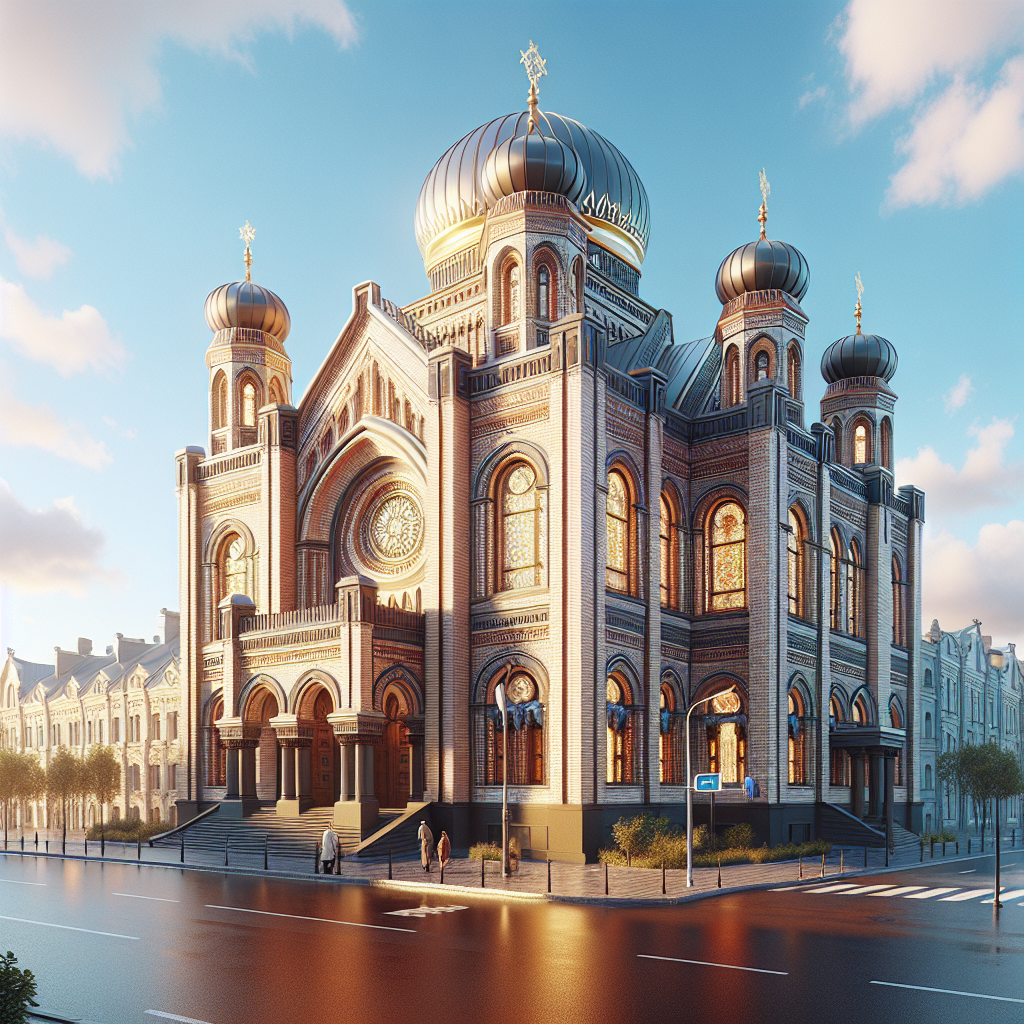

Perched in the heart of Russia’s Far East, Vladivostok offers a story almost as expansive as its scenic horizons. Among its treasures, the Vladivostok Synagogue beckons those who cherish history and resilience, as well as the cultural mosaic it represents. Built in the city center, this synagogue is more than a place of worship; it’s a testament to fortitude and cultural heritage.
Established in 1916, the synagogue is a critical spiritual hub for the Jewish community there. It has survived political upheavals, only to thrive once again. What truly separates this locale from other places of worship in Russia is its dogged perseverance against the backdrop of dramatic historical shifts.
Historically, Russia has had its conflicts and turmoil with the Jewish people, yet the Vladivostok Synagogue stands like a stubborn oak tree in a political landscape prone to changes and contradictions. While some may want to argue the fabric of community shouldn't weave political ideologies, this synagogue’s existence is itself a living, breathing piece of history.
While many are busy repainting history, let this stand as a bastion against the endless erosion of values and tradition. The synagogue not only tells the tale of Jewish perseverance but also challenges us to ask why these narratives aren't more celebrated in contemporary multicultural dialogues.
The synagogue’s architecture reflects upon both traditional Jewish styles and practical adaptations to its climatic setting. The building design incorporates a sharp juxtaposition between the city’s unique marine culture and the classically-inspired design of European synagogues, adding its own unique twist. It emits an air of gravitas, whispering stories of ancestry and determination to every visitor.
This is a multifaceted institution—a cultural center, an educational hub, and a community fort that has witnessed events from the first flicker of the Bolshevik Revolution to the complexities of globalization. One could say that if walls could talk, these walls would tell tales of battles, festivities, separations, and reunions amidst the ebb and flow of societal change. The synagogue has indeed seen it all.
Celebrating the Jewish New Year there, or attending any event, turns into more than just a religious exercise. It becomes an homage to a culture that many choose to ignore in fast-paced metropolitan Russia. Yet, here it stands, as if thumbing its nose at the cultural amnesia so many willingly embrace. The traditions it holds aren’t just religious rituals; they are lessons in resilience and, dare I say, resistance against the tide of modernity diluting individuality.
Restoration efforts have been a mixture of community passion and the weighty sighs of historic neglect. But in recent years, the synagogue has been revitalized, ensuring its stories of perseverance continue to inspire. In the face of weather-beaten walls and dwindling numbers, it stands as a spine against the spineless narratives that often float without moorings in our Western shores.
The synagogue doesn't exist in isolation, either. It is enshrined within a vibrant enclave that is part of Vladivostok's larger cultural tapestry. It brings a piece of Israel to the Russian Far East, a powerful reminder of interconnectedness that preludes today’s world.
For those who believe culture is merely the fluff on civilization's bed, let the Vladivostok Synagogue testify otherwise. It holds significance not just as an architectural structure but a living space for community reawakening and cultural solidarity.
The Jewish community, although small, has employed the synagogue to fuel exchange among diverse cultural groups. And yes, it’s a space that even the liberals might frequent, albeit for different reasons than showing support for conservative ideals.
As we inch toward a digitized globalism, where roots often appear blurry against the pixels of progress, places like the Vladivostok Synagogue guide us back to what was—and what remains essential. For a journey to Vladivostok would indeed be incomplete without gazing upon the walls of this testamental edifice built for a people who have always stood the test of time.