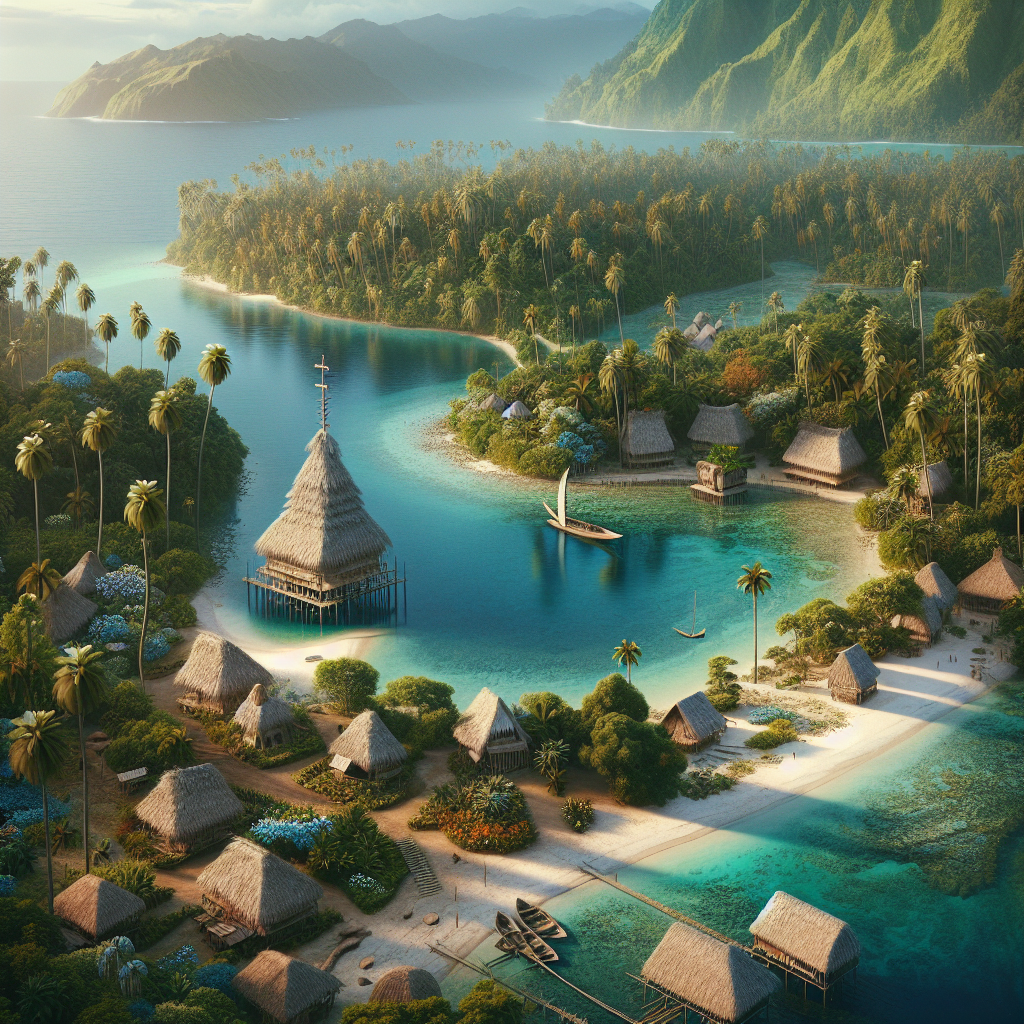

Picture an idyllic paradise far removed from the chaos of modern life—an untouched island where culture, tradition, and nature thrive in harmony. Welcome to Kiriwina, a gem nestled in the Trobriand Islands of Papua New Guinea. Known for its rich history and unique societal structure, this island was first brought to the world's attention in the early 20th century by anthropologist Bronisław Malinowski. Located northeast of Papua New Guinea's mainland, Kiriwina is a place where time seems to stand still—offering us a glimpse into what a less commercialized world looks like.
To understand Kiriwina, one must appreciate its people and traditions. The locals, known as the Trobrianders, have perfected the art of a balanced life, something most modern societies can only dream of. Their unique culture revolves around the Kula Ring, an intricate ceremonial exchange system that involves trading shell necklaces and armlets. It's a give-and-take that fosters alliances and social cohesion in ways that no frenzied digital transaction ever could.
Traditional values and family structures are held sacred here, contrary to what the hustle and bustle of Western society often erodes. There’s no room for over-the-top individualism; instead, community life and family ties reign supreme. Something to ponder while we hustle through congested cityscapes, perhaps?
The island is also a testament to a vibrant matrilineal society where inheritance and family ties follow the mother's line. This system may confuse outsiders who are accustomed to patriarchy, but it highlights the power of female agency, albeit in a much healthier and balanced form than the so-called progressives might envision.
Life on Kiriwina revolves around subsistence farming and fishing, proving yet again that sustainability does not have to come from top-down governmental mandates. The islanders have thrived for centuries by living off the land—respecting it rather than exploiting it.
But liberals might cringe at the apparent lack of Wi-Fi and latte art. Here, utility overrules novelty. The island lacks modern infrastructure, and planes touching down on its airstrip are few and far between. Conservation and preservation have become second nature, not slogans on a protest board.
Education on the island, while limited compared to the West, emphasizes practical skills and cultural understanding. Knowledge is passed down in stories and hands-on lessons, creating a knowledge base grounded in reality rather than theory. An experiential learning model that nurtures well-rounded individuals, unlike the coddled masses our current educational systems churn out.
Kiriwina’s spiritual life is another aspect that offers both curiosity and discomfort. Traditional beliefs and Christianity coexist in a delicate balance that would confound radicals advocating for secular overreach. Here, spirituality is as much a part of life as the air you breathe—a refreshing departure from the often-secular institutions elsewhere.
Conservation of natural landscapes serves a spiritual and practical purpose here. Flora and fauna flourish in a symbiotic relationship with the islanders. Unlike urban hubs where green patches struggle to survive, Kiriwina thrives naturally, without the need for artificial interventions.
In a world increasingly dismissive of history and tradition, Kiriwina stands resilient. Preserved rites and rituals still hold significance, steering clear of the historical amnesia that seems to plague more 'developed' societies. If only modern planners would heed such timeless wisdom.
Kiriwina isn’t just an island; it’s a testament to an age-old way of life. As we speed towards a future predominantly dictated by technological enslavement, taking a pause to consider what we lose in the name of progress might just be the most radical idea of all.