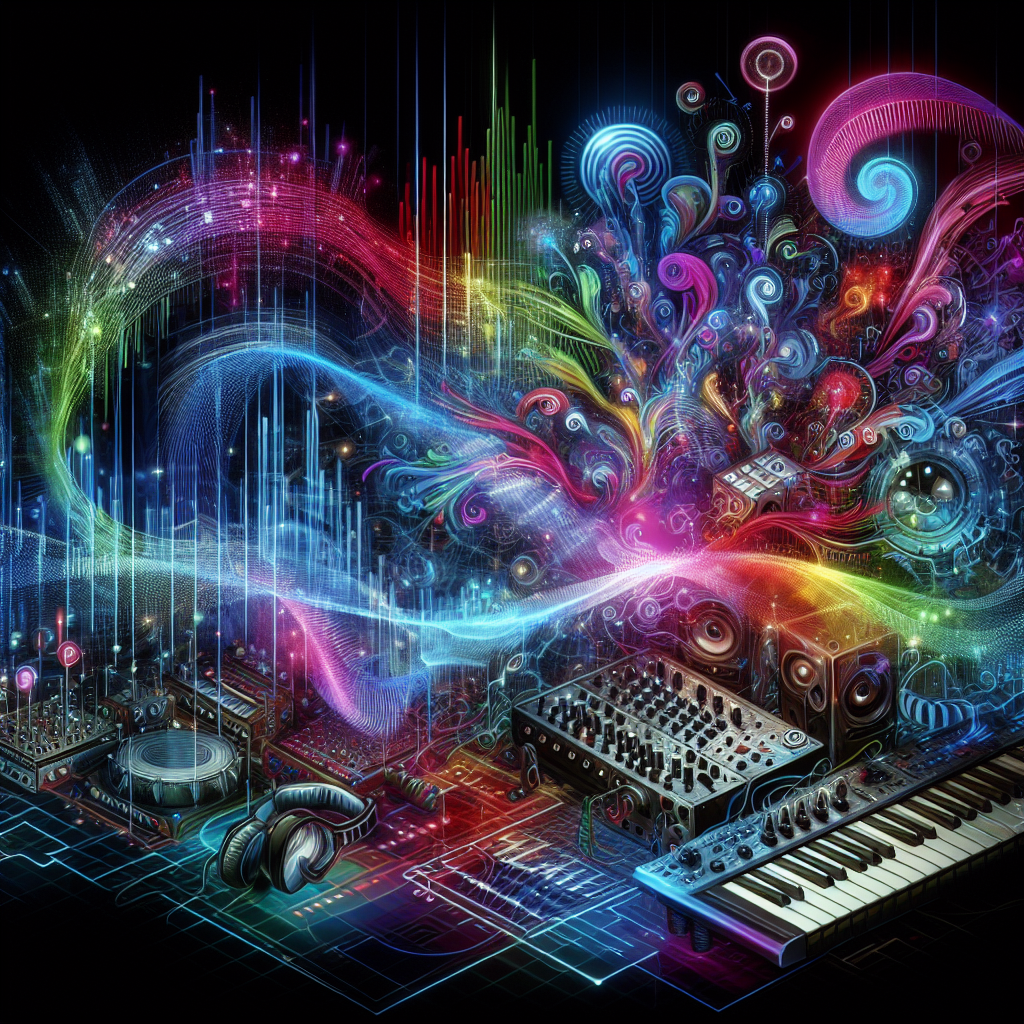

Ever notice how everyone is jacked into a device these days, eyes glued to screens, ears plugged with wires? What’s thrilling (and a bit unsettling) is how electronic sound, that invisible entity, now presides over our lives, from bouncing club beats to the ominous footsteps of our AI overlords. Created back at the turn of the 20th century, electronic sound began its revolutionary march and has grown exponentially, permeating every nook of society.
Initially cultivated by pioneering nerds in makeshift labs, these ethereal sound waves started making waves (pun intended) in the music domain around the 1960s. It remains prevalent today, where multiplicity is king, and genres blend faster than you can say ‘Bach synthesizer.’ Picture keyboard masters tinkering with knobs and keys, belting out novel frequencies the world had never experienced before.
Fast-forward to now; electronic sound isn’t just for techno raves or background beats for the café hipster. It’s deeply embedded in your adventurous Netflix soundtrack, atmospheric video game vignettes, and even the privacy-invading Alexa on your kitchen counter. It shows up in stock markets, global communications, and any place needing the speed and efficiency devoid in the unadventurous acoustics of yore.
But let’s get to why this matters. Electronic music has evolved far beyond its creators like Kraftwerk in Germany or Giorgio Moroder in Italy—both of whom melded art and technology long before Silicon Valley even tried to make computers cool. Their work induced a sonic revolution, forever altering our harmonic landscape.
In a world where ‘woke’ likes to masquerade as the new avant-garde, one might argue electronic sound has its roots entrenched elsewhere, in the earnest, unapologetic pursuit of experimentation and change. It's a world where creativity and engineering dance a nonpartisan waltz, unchecked by cries for safe spaces or textbook moans.
The advent of the Moog synthesizer opened up an entirely new realm of possibilities in the late 1960s—a time when vinyl ruled, and ‘pop’ was synonymous with bubblegum. Before Spotify and virtual reality concerts, it was the bow-of-a-ship stuff for musicians daring to think differently.
Folks may speak about democratization, but scratch the surface and you’ll see that technology—produced by the daring, the brilliant, and sometimes the misunderstood—has long been the real instrument driving change. The 1980s boosted this further; synthesis became a fashion statement, one that ripples to this day. Fast-forward to TR-808s, dubstep wobs, and synth-pop hooks filling airwaves while protestors discordantly chant their slogans.
Additionally, electronic sound paved the way for DJs as the new rockstars—taking center stage at festivals and wielding the power of transformative frequencies, while the conventional band boys settled for their niche. Names like The Chemical Brothers, Daft Punk, and Tiësto have become synonymous with their explosive beats and unforgettable stage shows, testament to the electrifying power of artifices over acoustics.
Yet in this digital surge, one truth stands unshaken: mastery over such technology holds rewards beyond compare. Today's mixers and beat makers owe their craft to a history seeped in unapologetic technical finesse. While vinyl-loving purists moan, innovation marches forth, driven by the relentless pulse of the synth and the commanding timbre of bass drops.
In our ever-globalized world, electronic sound demolishes barriers. Cultures collide on dance floors globally, auditory amalgams filling ear canals without the filter of national borders. The Middle East's oud meets the microchip, African rhythms synchronize with Euro pop. This is universal communication without the need for translators.
Ultimately, electronic sound stands as a defiant testament to our era—cutting through the noise of daily life with a singular, uncanny presence. It is unapologetically modern, casting shadows on those unwilling to embrace innovation without political banners. Resistance is futile when electronic sound takes command, overshadowing the mundane chatter of everyday political correctness and creating a soundtrack worthy of our tumultuous times.