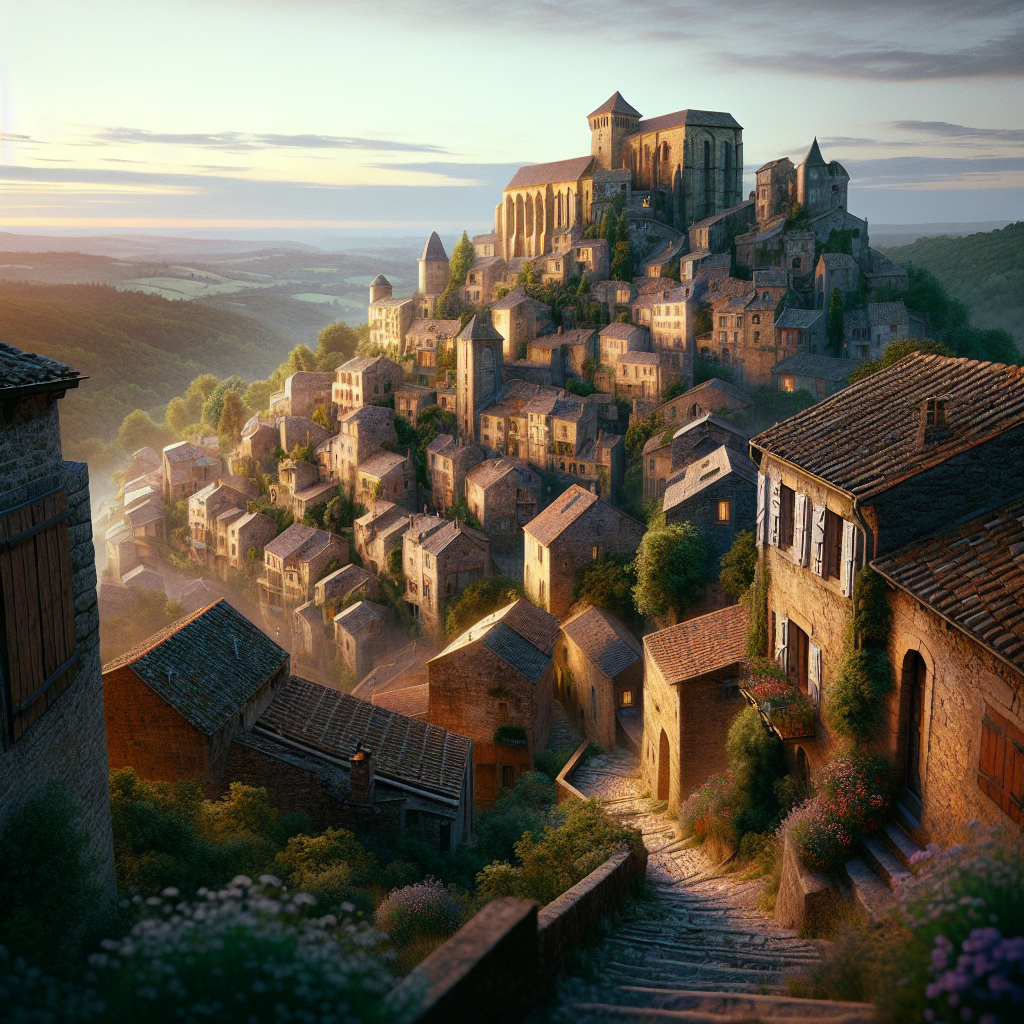

Once upon a time, in a world before modern politics gave rise to endless arguments about what constitutes beauty, there existed a place called Cordes-sur-Ciel. Located in the southwest of France, this picturesque hilltop village dates back to the 13th century and embodies a cultural heritage that seems entirely unpolluted by the chaos of today. It was founded in 1222 by Raimon VII, the Count of Toulouse, during an era when community was built by those who valued hard work over hashtags and craftsmanship over convenience.
Now, if you're imagining those generic European towns that all the travel blogs rave about, think again. Cordes-sur-Ciel is no cookie-cutter tourist trap. It's a living masterpiece from a time that genuinely understood aesthetics, towering atop a hill with stunning views of the surrounding valleys. It’s the type of place that reminds us not all that glitters is progress, and not every so-called advancement makes the cut when history decides what’s worth preserving.
One could spend a lifetime exploring Cordes-sur-Ciel’s narrow, cobbled streets, each one appearing like a history lesson frozen in time. Unlike the relentless march of modernity that paves over tradition in favor of uniformity, this village clings to its medieval roots like a time capsule. The stunning facades of its stone houses silently defy the nonsense of knocking down relics in favor of soulless architecture. Here, history isn't just told—it's lived.
The focal point of the village is the central public square, a hub of practicality and charm. Local artisans display their crafts in a setting that inspires nostalgia for those who cherish quality and authenticity over mass-produced mediocrity. Yes, it’s satisfying knowing that real people, using real skills, create goods that don't arrive with a 'Made in China' sticker. What you find in Cordes-sur-Ciel isn't just merchandise; it’s an imprint of heritage.
What makes this village shine aren't just the handcrafted items, but the events that bring people together—community fairs, art festivals, and medieval reenactments that give a flashback to an era where folks had genuine reasons to gather. Imagine attending these events not as a tourist, but as a part of something greater; it generates a connection with history that screens and smartphones can never replicate.
Forget about glorified food trends—I dare say that in Cordes-sur-Ciel, authentic and hearty meals take precedence. The local gastronomy echoes simplicity that focuses on quality and tradition. Here, you can enjoy cassoulet or a perfectly roasted duck confit that doesn't get upvoted or liked—because it doesn’t need to. These are meals crafted from age-old recipes, prepared with fresh local produce and served with genuine hospitality.
You’ll also find spiritual sustenance, not from the "woke" rhetoric of trendy manifestos but from places like the Church of Saint-Michel. Sprawled amidst the village like a guardian of history, this architectural wonder invokes a sense of peace and inspiration far removed from the squabbles of modern faith debates. It’s a timeless retreat that whispers clarity to those willing to listen.
The sunsets in Cordes-sur-Ciel seem like a poetic protest against today’s obsession with technology. The skies glow in hues of amber and magenta, offering unrivaled moments of serenity. These are evenings spent with the gentle nightlife of our ancestors—a far cry from today’s city lights and endless notifications.
Critics often dismiss such places as relics, arguing their limited role in a world bustling with technology and speed. But Cordes-sur-Ciel stands as a monument to perseverance, a steadfast reminder that not all progress is good and not all change is necessary. In a world where cultural heritage suffers at the hands of so-called civil rights attitudes, this village defies the loudness and shallowness of modern thinking.
Cordes-sur-Ciel exists as a testament to tradition, a sacred narrative of art and architecture, where every cobblestone echoes tales of the past. It demands respect and offers an authentic connection to history. For those who dare to appreciate it, this village is more than a destination—it’s a call to rediscover a way of life nearly forgotten.