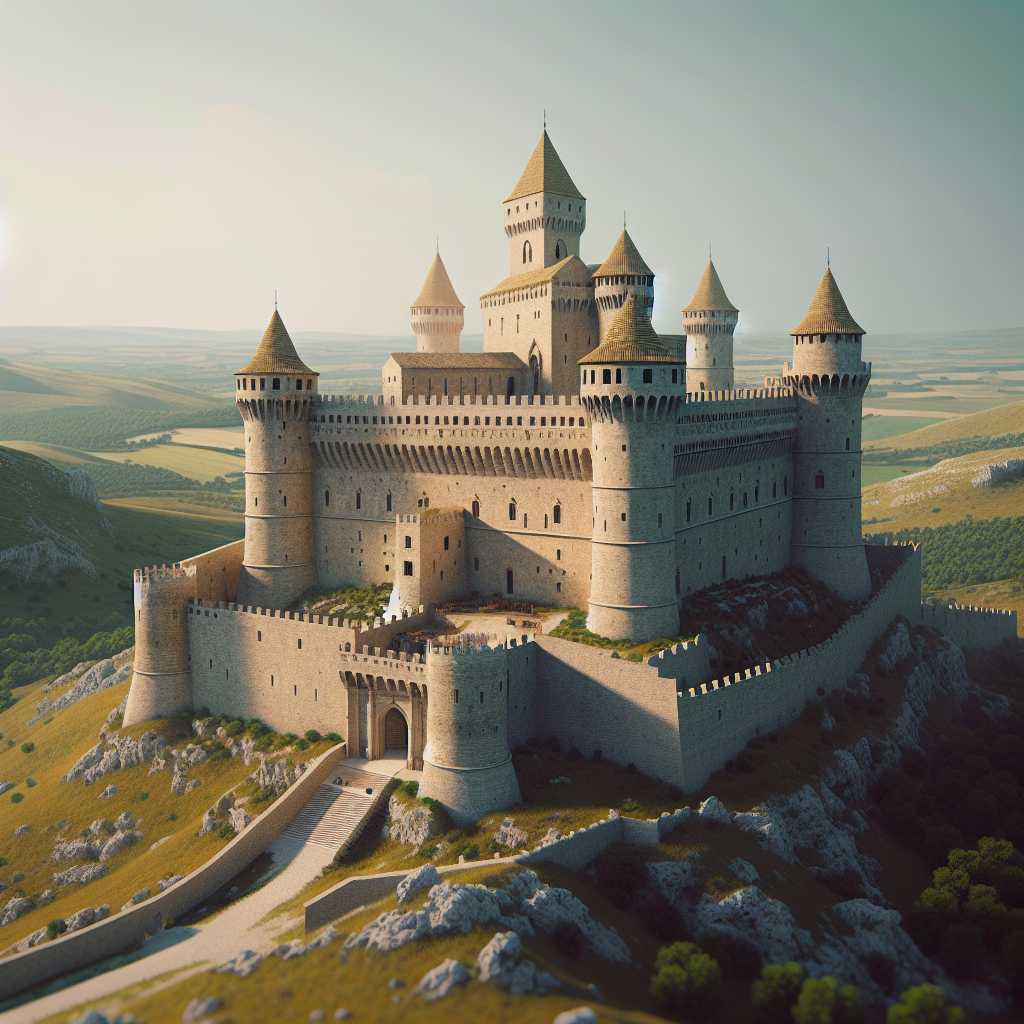

The Enigmatic Allure of Norman-Hohenstaufen Castle: Time Travel to Medieval Italy
Have you ever wanted to time travel back to a time of knights, grand feasts, and towering castles? Enter the thrilling history of the Norman-Hohenstaufen Castle located in Sannicandro di Bari, a town that stands as a testament to medieval Italian spirit and resilience. Built in the 11th century during the Norman rule, this castle unravels the architectural and cultural tapestry that speaks volumes about the intermingling of Norman and Hohenstaufen influences.
An Ancient Stronghold: The Who, What, When, Where, and Why
The Norman-Hohenstaufen Castle, known locally as Castello Normanno-Svevo, is a captivating architectural marvel situated in Sannicandro di Bari, Southern Italy. Its foundations were laid by the Normans in the late 11th century, but it reached its architectural zenith during the Hohenstaufen dynasty under the rule of Frederick II in the 13th century. Why, you ask, did a small town such as Sannicandro become a beacon of medieval fortitude? The answer lies in its strategic location, serving as a fortified hub safeguarding the corridors of power during a period where control and influence were synonymous with survival.
The Dance of Cultures: Norman Meets Hohenstaufen
The castle epitomizes the dynamic cultural fusion of its creators. Initially constructed by the Normans, who were known for their unique Romanesque architectural style characterized by robust and imposing structures, the castle underwent significant transformation under the Hohenstaufen rulers. As cultures danced and collided with Frederick II's court being an epicenter of innovation and diversity, the castle was transformed to incorporate elements of Gothic elegance—a fascinating juxtaposition to the solid, practical Norman form.
An Architectural Wonder
Exploring the Norman-Hohenstaufen Castle is like reading a storybook embossed in stone. The outer walls, strengthened with mighty towers and battlements, speak of a time when defense was of utmost importance. Yet the interior reveals more about its occupants than its warriors. The conversion from a fort-like edifice to a residence shows the Hohenstaufen preference for aesthetic appeal and comfort over just military might. Imagine spacious halls adorned with intricate carvings, vaulted ceilings echoing a blend of Gothic finesse amidst stark fortification.
The Frederick II Influence: A Royal Makeover
Frederick II, the Holy Roman Emperor, was nothing short of a luminary in medieval history, often referred to as the 'wonder of the world' by his contemporaries. His influence on the castle was profound. Under his reign, the castle's utilitarian structure evolved to reflect the emperor’s eclectic tastes derived from various cultural sojourns. During this period, the castle not only served as a fortress but as a seat of learning and a melting pot of ideologies from across Europe and the Arab world.
Frederick's love for science, philosophy, and the arts was reflected in embellishments like decorative stonework and spacious courtyards designed for contemplation and community gatherings. The castle’s library amassed works from distant lands, attracting scholars like bees to honey, and making it a beacon of knowledge.
A Chronicle of Conflict and Peace
The castle’s history was not all grandeur and scholarly pursuit. It played a pivotal role as a military stronghold throughout the centuries, underlining the turbulent nature of its times. Over generations, the castle witnessed political intrigue, battles for control, and power transitions between dynasties and barons.
An intriguing aspect is its survival through various upheavals—from Angevin pursuits to the Buron’s uprising, this fortress remained standing—a silent testament to the endurance and adaptability of those who dwelt within its walls. Its continuity across eras serves as a particularly poignant reminder of how remnants of history provide present societies with narratives of endurance and hope.
Preserving the Past, Inspiring the Future
In today's fast-paced world, where modernity often overshadows the historical, the preservation of Norman-Hohenstaufen Castle is a vital act of cultural conservation. The Sannicandro Municipal Authority, alongside historians and local communities, have initiated several preservation projects to maintain this ancient stronghold. The castle now serves not just as a monument of history but as an educational tool, where society can connect past innovations with future possibilities.
Visiting the castle is an adventure in itself. Visitors find themselves travel-weary time-travelers wandering its corridors, viewing exhibits that bring the past alive, telling tales of stone and spirit. Moreover, the castle hosts a variety of cultural events, art installations, and medieval fairs, transforming it into a dynamic space that honors and disseminates the richness of Southern Italian heritage.
The Humanistic Reflection
Exploring Norman-Hohenstaufen Castle is like peering into a mirror of human progress and perseverance. From its sturdy keep to panoramic views of the Apulian plains, it emanates stories of dreams, ambitions, challenges, and triumph passed down from generation to generation. The castle serves as a beacon of hope, illustrating how humanity has constantly sought to build, learn, and evolve, infused with the optimism that propels us toward a brighter future.
Humanity’s journey is rife with stories such as these—of how the soul thrives when cultures blend, knowledge expands, and how we continuously seek the fortitude to survive and thrive. Each visit to such heritage sites fuels our collective understanding, forging connections with our past to light the way forward. Feel inspired as you touch the stones shaped centuries ago, knowing you're a part of the endless narrative of human endeavor!