
The Majestic Mystery of Moher Tower: Unveiling History and Wonder
Standing proudly against the backdrop of the roaring Atlantic Ocean, Moher Tower might just be the unsung hero of Ireland's iconic Cliffs of Moher landscape. This humble stone tower, perched on Hag's Head at the southern tip of the cliffs, comes with a personality and historical significance as grand as its panoramic views. It's a site where history whispers through the stones, geography dances with the ocean winds, and where visitors are offered a glimpse into Ireland’s storied past.
Historical Significance: Who, What, When, Where, and Why
Moher Tower, a Napoleonic-era signal tower, was built by the British in 1808 as part of a series of signal stations situated along the Irish coastline. Such stations were intended to spot potential Napoleonic invasions during a time when Europe was under the thunderous march of empires and generals. Located atop the Cliffs of Moher, near the village of Liscannor in County Clare, Ireland, these towers provided an effective early warning system, using their elevated views to see far across the waters where the Atlantic meets the Irish Sea. The question of why the tower was erected leads us directly into the heart of wartime strategy and human ingenuity.
Construction and Architectural Design
Let's journey back in time to the early 19th century, a period rife with geopolitical tension and nascent technology. This modest defensive structure was part of a vast network spanning Europe, built to safeguard the island from the French Navy, who posed a looming threat. The tower’s construction reflects the pragmatic architectural style of its era, emphasizing functionality over aesthetic complexities. Its robust stone structure has endured for over two centuries, a testament to the engineering capabilities of the time and the harsh weather conditions it has withstood over the years.
The tower's cylindrical shape is both strategic and artistic, designed to maximize both stability and visibility. Its rugged exterior, fashioned from locally sourced stone, provides insight into the type of materials readily available and valued by builders during the period. Imagine shaping each stone by hand — evidence of how meticulous craftsmanship can shape monumental historical legacies!
The Cliffs: Nature’s Marvel
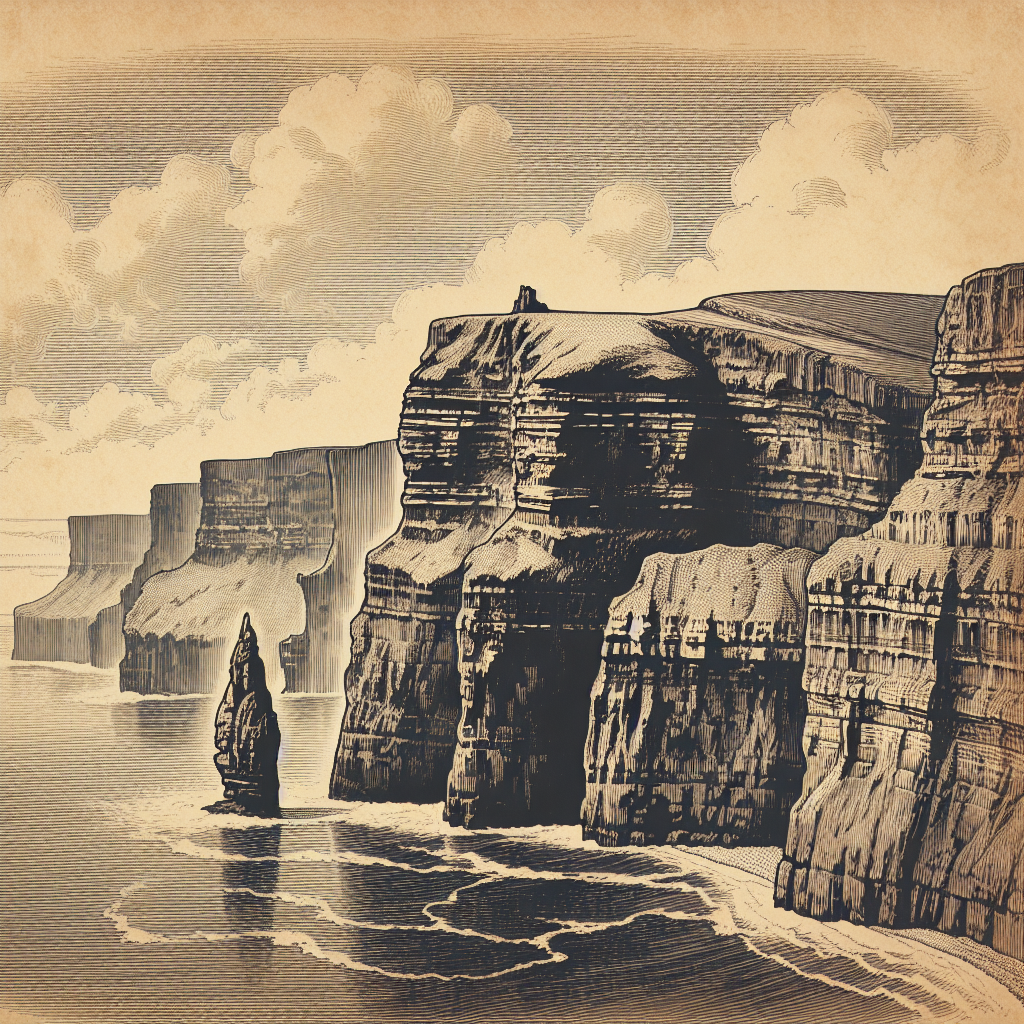
While the tower itself is an intriguing historical relic, its location on the Cliffs of Moher is equally mesmerizing. The cliffs stretch across about 14 kilometers and rise to staggering heights of around 120 meters at Hag's Head, reaching up to 214 meters just northward. This rockscape is not just a geological masterpiece but a vibrant habitat supporting a diverse range of flora and fauna, offering visitors a glimpse into the natural world's resilience and adaptability.
For science enthusiasts, the cliffs offer a geological narrative spanning millions of years, with layers of shale and sandstone acting as the Earth's very own time capsule. It's a poignant reminder of the power and patience of natural processes, where each stratum tells a story of ancient seabeds and sedimentation over epochs.
An Adventure Through Time and Space
Visiting Moher Tower is like embarking on a journey through time, where one can feel both the physical and allegorical heights of human achievement and the breadth of nature's grandeur. As a site committed to preserving its environmental integrity and historical essence, the Cliffs of Moher offer well-maintained walking trails for tourists to safely admire the breathtaking vistas and the dramatic interface between land, sea, and sky.
It's intriguing to consider the evolutionary adaptations of the seabirds nesting along the cliffs. The Atlantic puffins, in particular, add a lively splash of color and charm, with their vibrant beaks and curious demeanor—a delightful reminder of life's diversity and tenacity in challenging environments.
Modern Connections and Cultural Impact
Today, Moher Tower and the Cliffs of Moher feature heavily in Ireland’s cultural and tourism industries. They draw millions of visitors each year who come to experience the soothing yet powerful embrace of Ireland's natural and historical splendor. Artists, writers, and filmmakers often harness the scenic majesty of the cliffs; it’s no surprise that they’ve been included as backdrops in popular media, from films to literature.
Moher Tower’s intrepid stance against the sweeping Atlantic winds symbolizes both defiance and homage, a guardian of history overlooking a majestic landscape where the past meets the present. It speaks to the universal Human Spirit—our collective desire to explore, protect, and learn from the world around us.
The Future: Opportunities for Preservation
As we step into this new age, with technology enabling us to capture knowledge and memories like never before, places like Moher Tower offer an irreplaceable physical connection to our past. They remind us of the enduring human spirit—the same spirit that drove the men and women of the 19th century to design a defensive network, and the same spirit that today helps us preserve these treasures for future generations.
Protecting this tower and its surrounding land involves a community effort and a deep-seated appreciation for heritage conservation. It also emphasizes the unending dance between preservation and accessibility to ensure that historical wonders are both safeguarded and shared with everyone. Our efforts now will enable continued learning and exploration, fostering a greater respect for both humanity’s cultural heritage and the natural world.
In the end, Moher Tower isn’t just a silent sentinel overlooking the Atlantic. It embodies human endeavors across time—strategies and stories etched in stone, wedded forever with nature’s rugged symphony. Let's hope we continue to uncover and preserve more such narratives that inspire and educate generations to come.