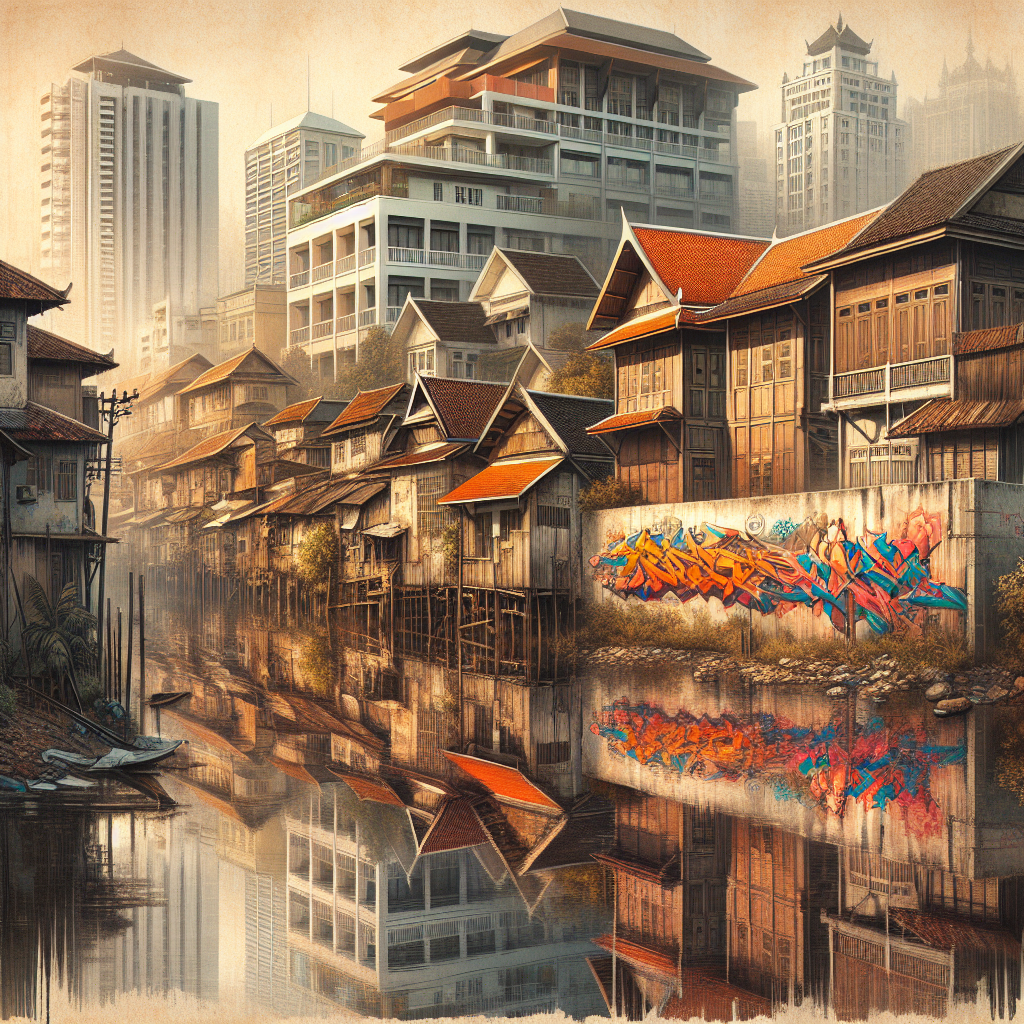

Unveiling the Magic of Khlong Ong Ang: Bangkok's Hidden Canal Gem
Picture this: a river of lights meandering through the heart of bustling Bangkok, illuminated bridges casting playful reflections, and a carousel of human stories as vibrant as the city itself. This is not a scene from a whimsical fantasy, but a real-life panorama offered by Khlong Ong Ang—a canal that has woven itself into the historical fabric and modern evolution of Thailand’s capital. Who would have thought a forgotten canal could transform into both a historical landmark and a thriving cultural hotspot?
The Historical Tapestry
Khlong Ong Ang, often referred to as the Ong Ang Canal, resides in Bangkok, Thailand. This delightful piece of the urban landscape was originally constructed during the early years of King Rama I’s reign in the late 18th century. Originally a moat to protect the city from naval invasions, its historical significance is akin to a treasure buried beneath layers of time.
For decades, it existed in relative obscurity, overshadowed by Bangkok’s burgeoning skyscrapers and traffic-ridden streets. However, a significant revitalization project initiated by Bangkok authorities within the past decade breathed new life into this often-overlooked waterway. Today, it stands as a testament to what a blend of historical preservation and modern development can achieve—an exciting area teeming with vibrant local culture.
Rebirth of a Canal
To understand why this revitalization is nothing short of miraculous, we must consider the environmental and cultural implications. Originally clogged with waste and surrounded by decrepit buildings, Khlong Ong Ang was an eyesore and an afterthought. The Bangkok Metropolitan Administration took on the formidable task of restoring it, not only as a functioning waterway but also as a community space.
Their efforts have paid off dramatically. The canals—and their freshly-painted adjacent paths—now host bustling night markets, captivating street art, and ample space for leisurely walks. These renovations have transformed it from a neglected ditch into an oxygen-rich corridor for biodiversity, proving mankind’s ability to momentarily halt industrial encroachment to benefit both nature and urban dwellers.
Ecological and Cultural Delight
The transformation of Khlong Ong Ang is a beacon of hope for ecological restoration. The canal supports an aquatic ecosystem that has become an unexpected haven for urban wildlife. Green spaces and blooming flora line the canal, providing a rare pocket of nature for city dwellers.
But it’s not all plants and animals. Khlong Ong Ang has morphed into a cultural epicenter. The whiff of delicious street food wafts through the air, offering visitors everything from spicy curry noodles to sweet mango sticky rice. Traditional Thai music and modern beats create a creative symphony, distinguishing Khlong Ong Ang as a fusion of old and new. Interactive art installations, craft stalls, and live performances offer an unforgettable experience of Thailand's expressive culture.
Community and Convenience
In an era dominated by digital engagement, areas like Khlong Ong Ang bring community interactions back into the physical realm. Weekends see flocks of locals and tourists alike strolling alongside each other, engaged in the shared enjoyment of this renovated space. It’s not uncommon to witness public yoga sessions and groups of high-spirited children participating in impromptu games.
For those keen to explore, the canal's layout allows for easy access to the nearby Rattanakosin Island, home to Bangkok's most prized historical monuments. The cultural journey from the modern charms of Khlong Ong Ang to the grandeur of iconic landmarks like the Grand Palace or Wat Pho is but a brief, enjoyable trot away.
The Future of Khlong Ong Ang
Khlong Ong Ang’s metamorphosis does not signify an end but a beginning—a blueprint that other urban areas worldwide might aspire to follow. Successfully integrating nature, culture, and community proves that with the right sustainable practices, humanity can curate environments that nurture both the soul and the earth.
Optimism abounds about the potential for such projects to inspire similar transformations elsewhere in the city and beyond. Khlong Ong Ang stands as a vibrant example of how urban reinvention can support civic pride and ecological resilience, a pairing as harmonious as the hum of cicadas to the gentle ripple of canal waters.
In essence, Khlong Ong Ang is not just a canal. It’s a living, breathing slice of Bangkok’s renewed commitment to its historical roots, its environmental responsibilities, and its vibrant community spirit. What’s not to love about a place that connects the past and the present through the shared language of progress and preservation?