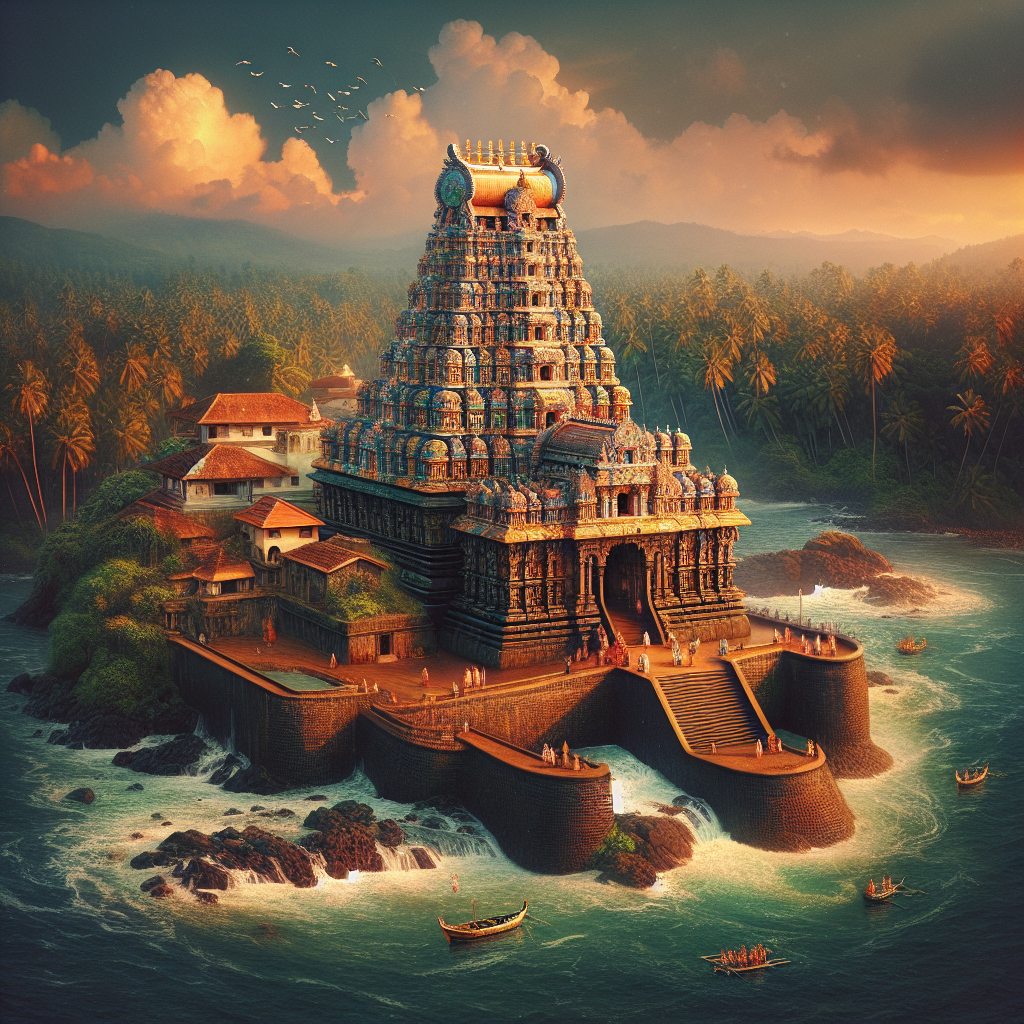

Does the thought of unraveling the secrets of an ancient temple that seamlessly marries spirituality and science excite you? Nestled in the lush greenery of Mangalore, the Kadri Manjunath Temple stands as a glorious testament to the rich cultural and spiritual history of southern India. This temple, visited by devotees and historians alike, dates back to the 10th or 11th century CE, and is dedicated to Lord Shiva, one of the principal deities in Hinduism. Here, science and spirituality weave a fascinating narrative that captures the essence of not only religion but also humanity's quest for understanding the universe.
A Journey into the Heart of Culture and History
Tracing back its origins, the Kadri Manjunath Temple provides a captivating glimpse into the architectural prowess and spiritual fervor of ancient Karnataka. The temple's design aligns with classic Dravidian architecture, characterized by intricate carvings, grandiose towers, and a substantial use of rich, local stone. The temple complex sits majestically on the Kadri hills, providing a panoramic view of Mangalore's natural beauty. Each stone here whispers stories of the era it has witnessed, imparting a sense of serenity and reverence to every visitor.
As you step into the majestic complex, you're immediately drawn to the temple's defining feature – the bronze statue of Lord Manjunatha, which is believed to be the oldest in South India. Yet, beyond its spiritual significance, the statue and the surrounding art offer insight into the socio-cultural milieu of its time, shedding light on how art and worship were interwoven.
The Intersection of Tradition and Modern Understanding
For centuries, devotees have been offering prayers at the Kadri Manjunath Temple, seeking solace, wisdom, and enlightenment. Beyond its religious significance, the temple is a marvel for anyone interested in the ancient sciences. The region around the temple is abundant in natural springs, which historically served as a primary water source and were ingeniously integrated into the temple's daily rituals and ablutions.
These springs are also believed to have healing properties, akin to thermal baths known across different cultures. Imagine the practical application of these natural resources gradually taking on spiritual significance, mirroring the human tradition of intertwining science with mysticism. These springs possess the potential to stir a scientific imagination with possibilities of geological assessments and ecological studies into source sustainability and environmental impact – an ideal meeting point for scientific inquiry and religious ritual.
The Mysterious Cave of Success
The legend of Kadri that enthralls both devout pilgrims and curious travelers is that of Machendranath and Gorakhnath. This tale spins around the belief that Machendranath spent years meditating in the cave located within the temple complex. Called the Cave of Machendranath, it's an ancient abode that has been recognized for its serene and contemplative atmosphere.
The exploration of this cave invites us to ponder how ancient civilizations identified and utilized geography for spiritual pursuits. In an era when nature's bounties were revered and studied, the cave stands as an intriguing subject of geological study, raising questions about how such natural formations were viewed as portals to inner and outer worlds.
Integrating Rituals and Community
What stands out about Kadri Manjunath Temple is how it embodies not just a spiritual haven, but a heart for the community. Festivals celebrated here, like the vibrant Karkala Jatre, bring together people from all walks of life, affirming the temple's role in the cultural and social weave of Mangalore.
These rituals offer a magnificent opportunity to witness a blend of performance, tradition, and community spirit. Walking the halls during these celebrations is like observing a live chronicle of society's collective dance around faith, environment, and identity. Witnessing them proffers a splendid chance to understand community dynamics and cultural traditions' intricate ties to natural cycles and agrarian lifestyles.
Bridging the Past and Future
Kadri Manjunath Temple stands as more than a spiritual beacon. It serves as a bridge between humanity's past and future, encapsulating the symbiosis of nature, culture, human inquiry, and belief. Standing in front of its serene visage, one cannot help but marvel at how deeply rooted our need for connection with nature and the universe is, leaving you optimistic about humanity's capacity to weave knowledge with wonder.
In understanding this temple's value, we grasp our shared human heritage, encouraging us to preserve such historical marvels. They serve as reminders of how spiritual exploration and scientific curiosity have always walked hand in hand across centuries, and hopefully, will continue to do so in our ongoing journey of life.