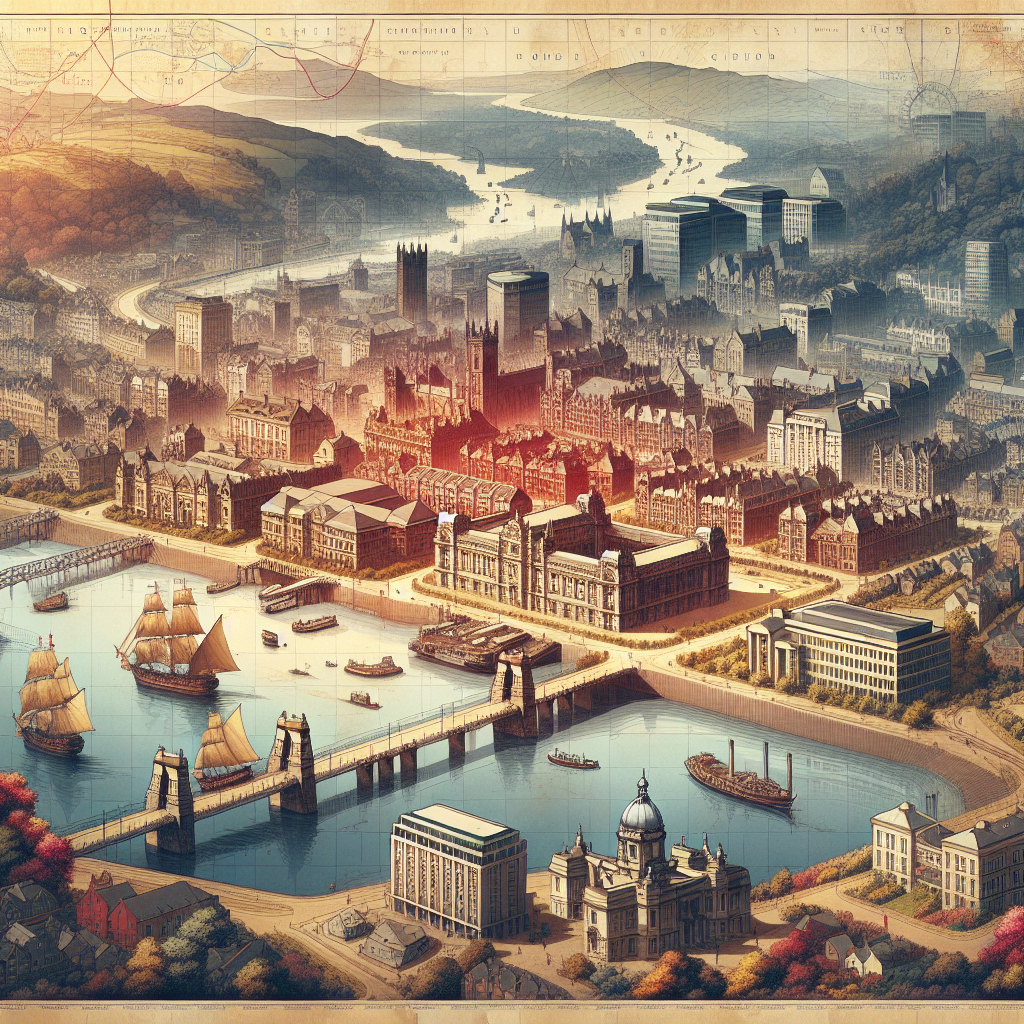

Have you ever imagined a city that's both a historical tapestry and a beacon of modernity? Welcome to Cardiff, the resplendent capital of Wales. This vibrant city emerged from the mists of history around 6000 B.C. and has since evolved into a cosmopolitan hub that marries the charm of the past with the promise of the future.
Situated on the southern coast of Wales, Cardiff stands as the proud county town of Glamorgan. Though small in size, with a dynamic population just shy of 500,000, Cardiff's story is larger than life and richly layered with who, what, when, where, and the intriguing why of its journey.
Before the Romans: The Early Settlement
Cardiff's history predates the Romans, blossoming first as an Iron Age settlement established by the Silures, an ancient Celtic tribe. The strategic location along the River Taff served as a stronghold for these early settlers, providing both a natural defense and a bountiful resource. Archaeological evidence from as early as 1st century B.C. sheds light on this prosperous Celtic community, displaying a life intricately connected to the land and its waters.
Roman Invasion and the Birth of Caer
The Romans charged into Cardiff around A.D. 75. They constructed a fort on the site where Cardiff Castle stands today, naming it ‘Caer’, the Welsh term for ‘fort’. This established Cardiff as a cornerstone of Roman Britain.
While the Romans have long since departed, the impact of their occupation endures. The remnants of their opulent villas and infrastructures, like the ancient fort's walls, provide a remarkable window into the Roman way of life and their architectural prowess.
The Norman Conquest and the Middle Ages
Following the Roman departure, Cardiff fell into the clutches of the Normans in the late 11th century. It was under the exacting eye of Robert Fitzhamon, a Norman baron, that Cardiff Castle was constructed atop the Roman remains.
Through the ensuing centuries, Cardiff burgeoned around this fortification. From a modest market town in the Middle Ages, it progressed into a thriving port and trading center by the late 16th century. Pilgrims, merchants, and travelers alike passed through, infusing the town with diverse influences and cultures.
The Industrial Revolution: Coal at the Heart
The 19th century marked a dramatic transformation as Cardiff became the bustling heart of the coal trade, thanks to its proximity to the South Wales coalfields. By the mid-1800s, Cardiff docks were pivotal, becoming some of the largest exporters of coal in the world. This industrial boom attracted a melting pot of people, precipitating urban expansion and an economic ascent that saw Cardiff's docks reverberating with global commerce.
Cardiff’s Crown: Becoming the Capital
In 1955, Cardiff was crowned the capital of Wales, a status that harmonized with its cultural and political identity. This significant accolade brought with it a prestige that heightened Cardiff’s role on not just the British stage, but globally too.
Today’s Cardiff: A Symphony of Tradition and Innovation
Fast forward to today, and Cardiff stands as a pulsating exemplar of dynamic development and cultural renaissance. Visitors can wander through the City Centre, an area that brilliantly juxtaposes historic façades with cutting-edge architecture, exemplified by the architectural marvels of the Millennium Centre and the rejuvenated Cardiff Bay.
At the National Museum Cardiff, one might bask in the splendid convergence of art, history, and natural sciences—concrete evidence of the city’s commitment to celebrating the human spirit's quest for knowledge.
The Why: Legacy, Identity, and a Bright Future
Cardiff’s allure does not merely reside in its historical legacy but also in its optimistic stride toward the future. Why, you might ask, is Cardiff’s history so vital today? It’s because each epoch's legacy informs the city's identity, while its unwavering forward-thinking ethos ensures that Cardiff continues to be a catalyst for progress, a custodian of culture, and a cradle of civic pride.
This captivating city thrives as a testament to human endeavor—where ancient Roman stones, Norman battlements, and Victorian industriousness collide with modern innovation. Cardiff, in all its historical grandeur and future promise, remains a place where the past and present dance harmoniously in celebration of an optimistic tomorrow.