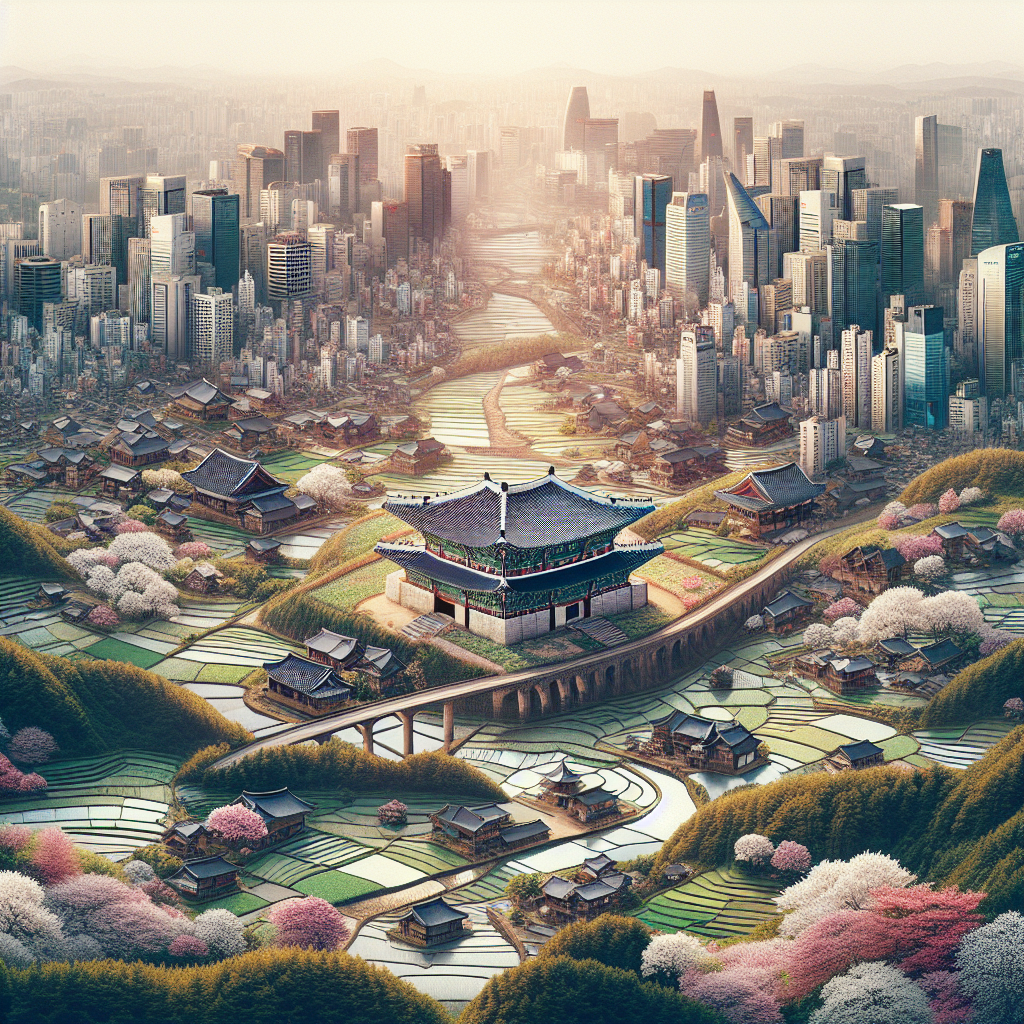

Gyeonggi: South Korea's Mosaic of Culture and Innovation
What if I told you there's a place in South Korea where ancient history meets cutting-edge technology, all within a single metropolitan heartbeat? Welcome to Gyeonggi, a vibrant region wrapping around the capital city of Seoul like a well-fitted glove, teeming with cultural intrigue and economic dynamism. It's a microcosm where the past and future converge, from prehistoric relics to futuristic cities, appealing to both the historian and the tech enthusiast in all of us.
A Glimpse into Gyeonggi
Gyeonggi, the province hemming Seoul, serves as an anomalous canvas painted with an array of cultural, historical, and economic hues. Located in the northwest of South Korea, this province has become a pulsating nexus of innovation and tradition. Its history stretches back to the prehistoric era, but it’s also home to modern marvels such as Pangyo Techno Valley—a bustling hub for startups and technological advancement.
Historical Canvas
Imagine stepping into Gyeonggi’s time machine where prehistoric relics whisper the tales of ancient inhabitants. The many historical sites contribute to its rich tapestry of history—Suwon Hwaseong Fortress, for instance, is a UNESCO World Heritage site known for its elegant architecture and historical significance. Constructed in the late 18th century, it embodies the philosophies of King Jeongjo, emphasizing both military intricacy and aesthetic appeal.
Then there are the Dolmen sites of Gochang, Hwasun, and Ganghwa, vital anthropological windows into Korea's megalithic era—true testament to humanity’s perpetual dance with time.
Modern-day Marvels
Yet, Gyeonggi is far from antiquated. Its modern-day marvels are showcases of human ingenuity. Take the Gyeonggi Science Park, where futuristic innovations blossom, or the Pangyo Techno Valley, affectionately dubbed “Korea’s Silicon Valley,” home to celebrated tech companies and ambitious startups. These facilities are not just business centers; they embody the optimism of technological evolution and point to the future, much in line with South Korea's relentless pursuit of technological prowess.
Cultural Melting Pot
Beyond the realms of technology and antiquity, Gyeonggi stands as a cultural melting pot, celebrating Korea's illustrious traditions. Here, modern art complexes harmoniously coexist with folk villages like the Korean Folk Village in Yongin. Visitors can immerse themselves in centuries-old practices, from Hanbok attire experiences to vibrant local festivals. The harmony between preservation and modernization is not only preserved but celebrated.
Why Gyeonggi Matters
In today's interconnected world, Gyeonggi exemplifies how regions can balance historical preservation with technological innovation—a model for any nation aiming to preserve its past while fervently embracing the future. It’s a testimony to human adaptability—themed with the colors of tradition and the futurist canvas of progress.
Travel Guide
If you find yourself eager to wander through this eclectic province, here's a practical guide:
Transportation: The most efficient way to navigate Gyeonggi is via its robust public transportation system, which links seamlessly with Seoul. The convenience of trains, subways, and buses enables easy exploration.
Must-visit Sites: Suwon Hwaseong Fortress, Namhansanseong Fortress, and the Korean Folk Village are unimaginable delights. Don’t miss nature's embrace at the Garden of Morning Calm towards Gapyeong.
Seasonal Highlights: Visiting in Autumn offers a spectacle of colors, while Winter invites you to embrace snow-cloaked historic sites, creating picture-perfect memories.
Conclusion
Gyeonggi isn't a mere patchwork of cultural and technological themes; it's an intricate weave showcasing how the old and new coexist with exquisite balance. Its ability to harness historical depth while spearheading technological advancements underscores what makes human societies capable of thriving through ages.
Journeying through Gyeonggi isn’t just about seeing; it’s about witnessing the potent potential of human culture and intellect—a most heartening endeavor for anyone curious about what lies at the dynamic intersection of past and future. Doesn’t this make you excited to study how we, as humans, continue to build thrilling narratives of existence?