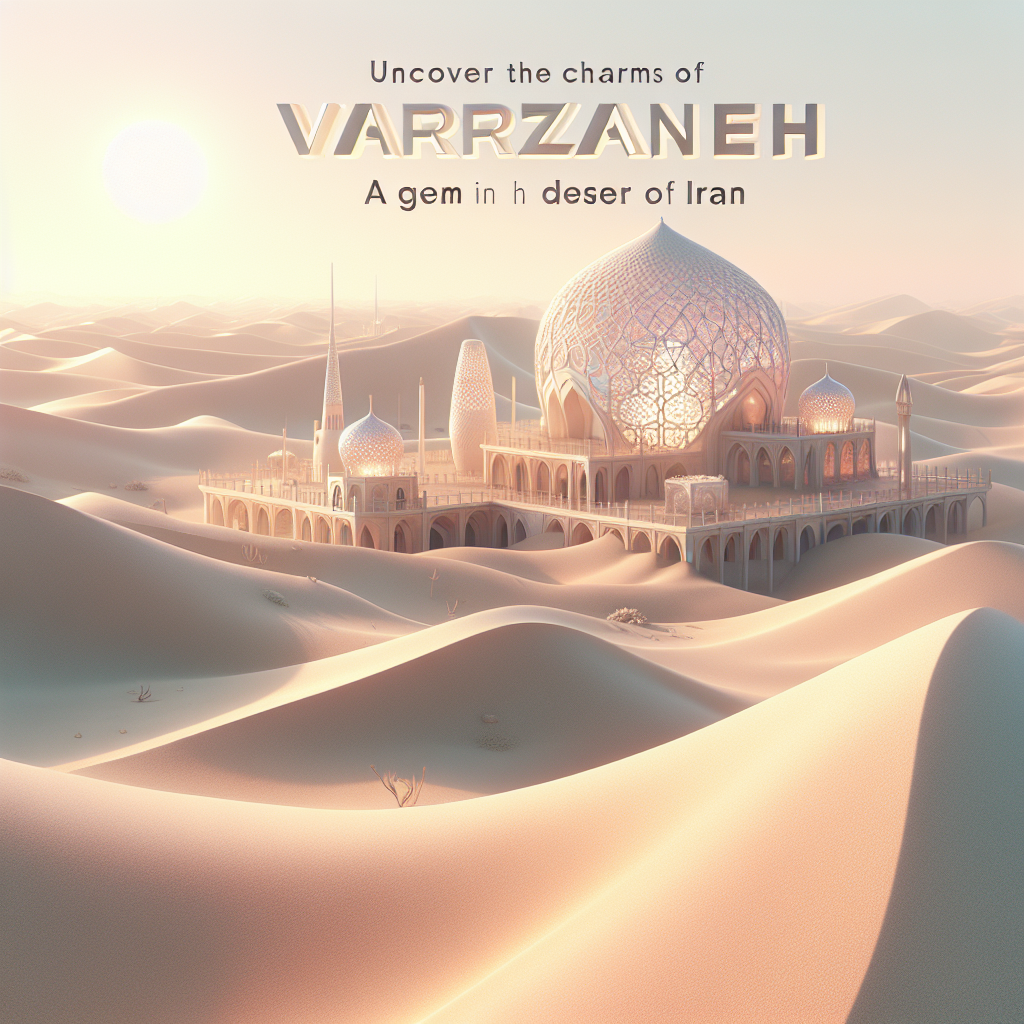

When you think of Varzaneh, picture a place where the whispers of ancient times blend effortlessly with the vibrancy of today. Located in the lush lands of Isfahan province, Iran, Varzaneh County stands as a testament to coexistence between the past and the present. This quaint county is home to resilient and welcoming people who cherish both their rich history and their modern cultural advancements.
Varzaneh is steeped in history, with roots that dig into the very fabric of ancient Persia. The stunning Varzaneh Desert, often referred to as one of the most beautiful in Iran, stretches across an arid expanse, forming a golden ocean where the sands dance in harmony with the whims of the wind. At its heart is the town of Varzaneh, known for its unique white chadors worn by women, setting the community apart in an ever-evolving cultural tapestry. Simultaneously, the county bears witness to significant modern strides in technology and infrastructure.
The town's fascinating history is mirrored in its architecture. The Jameh Mosque of Varzaneh stands proudly, dating back to the 14th century, exemplifying traditional Persian artistry with every intricately carved detail. Yet even amidst such historical grandeur, the people of Varzaneh aren't afraid to embrace change. They face the future with an openness to innovation, showcasing local initiatives that respect the environment and promote sustainable living.
However, the blend of old and new isn't always met with harmonious acceptance. Some villagers hold onto traditions tightly, fearing that too much modernity might dilute their cultural identity. This is an understandable concern, as balance can sometimes tip precariously. Yet, the younger generation, influenced by broader global trends thanks to social media, sees change as an opportunity to gain greater communication with the world, enabling cultural sharing while preserving their heritage.
Technology's role in bridging tradition and contemporary life can't be underestimated in Varzaneh. Internet connectivity has brought the world closer to this corner of Iran, enabling young entrepreneurs to launch businesses that not only cater to locals but also reach international audiences. It's a dynamic push towards progress that melds the old-world charm with 21st-century vitality.
What makes Varzaneh truly remarkable is its people. Their lifestyles may revolve around farming or the hand-weaving of stunning textiles, but they are also adept at embracing international visitors' perspectives. This openness fosters an engaging dialogue between varied cultures, encouraging an exchange of ideas that enriches both visitors and locals.
For a traveler yearning for authenticity, Varzaneh offers a bounty of experiences. Visitors can witness the art of traditional crafting, while also savoring dishes that tell stories of the land's abundant past. You can join a family on their farm, trying your hand at age-old chores, or simply listening to tales passed down through generations.
As Varzaneh flits between the pages of history and the screen of a smartphone, there's a powerful reminder here of how places can be both ancient and novel. The county challenges the assumption that tradition and modernity must forever exist in static opposition. Rather, Varzaneh stands proof that you can have roots and wings, taking the best of what time has given and adding contemporary flair.
The ongoing debate about modernization versus tradition in Varzaneh reflects a broader global narrative. While some may argue that technology's intrusion threatens cultural integrity, others see it as a form of liberation that allows deeper, more meaningful exchanges on a global scale. Regardless of viewpoint, the essence of Varzaneh remains unchanged – a vibrant illustration of how communities can forge paths that respect both the footsteps of their ancestors and the onward march of modernity.
Ultimately, Varzaneh challenges conventional perceptions of a static heritage. Here, history is vibrant and ever-present, but never stagnant, and the future is being written as we speak. Varzaneh's story encourages us to ponder our own balance between honoring the past's wisdom and embracing a hopeful tomorrow.