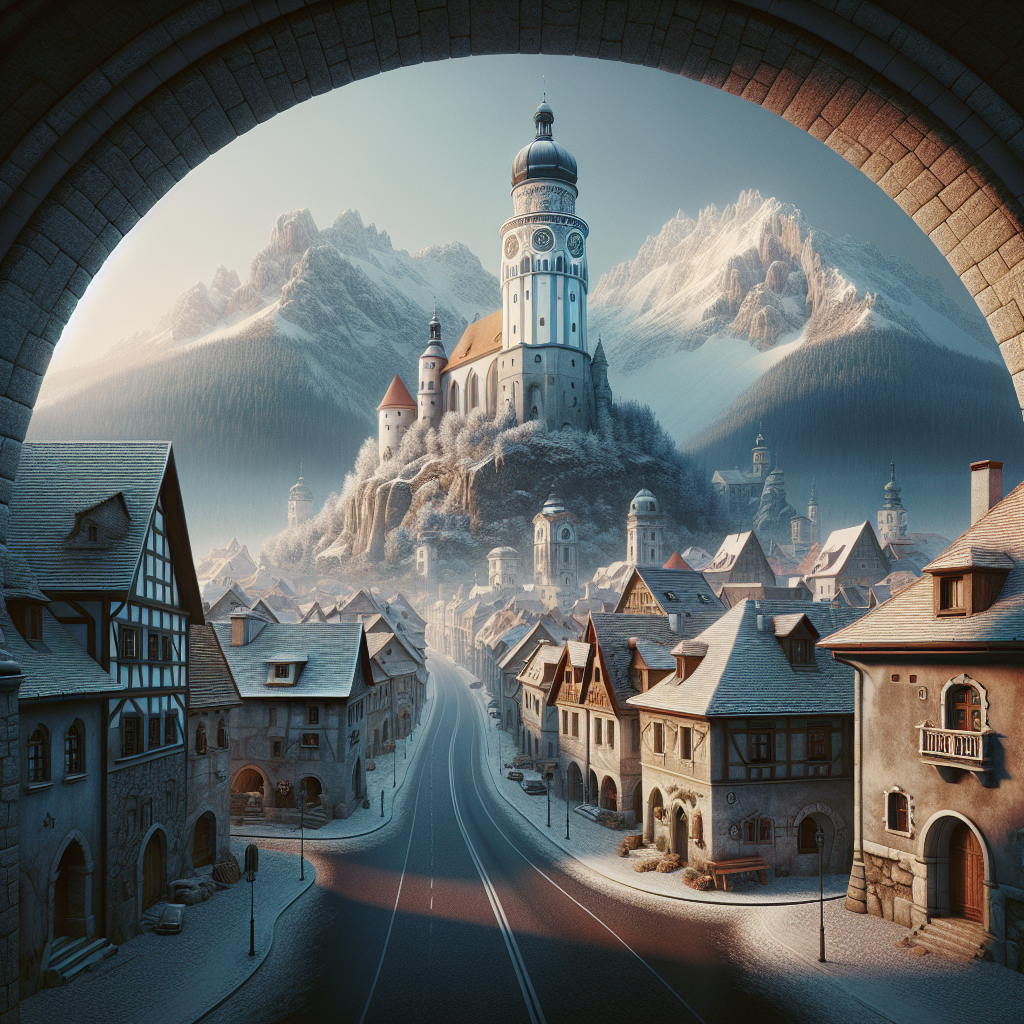

Can you imagine a place where history mingles seamlessly with nature, embracing both the scars of the past and the wild promise of the future? Welcome to Urad, a small hamlet in Poland located along the border with Germany. This fascinating village has roots that stretch back to the transitional times following World War II, having been within German borders until the end of the war. Today, Urad is a vivid tapestry of bygone days and contemporary ambitions, enticing travelers with its quaint charm and historical intrigue.
Urad is a community that testifies to resilience. After the turmoil of war turned geopolitical lines into mere suggestions whispered by treaties, Urad inhabited those lines and turned them into living stories. The village, with its Gothic-style church and a scattering of historical buildings, offers visitors a glimpse into what the formative years of modern Europe might have looked like.
This sense of ongoing history manifests in the daily life of its residents, who are predominantly Polish—a shift from the village's Germanic origins. Language barriers can sometimes highlight memories of the past, yet they also illustrate the perseverance of cultural identity. Here lies an example of how opposing viewpoints are a part of the fabric of the village. Locals appreciate and cling to their roots, regardless of the culture they stem from, creating a unique cultural tension that's both enriching and educational.
Though weighing heavy with historic narratives, Urad is not just a memorial to the past. Nature thrives here, as the Odra River winds peacefully nearby. This brings an aspect of tranquility to the village, an idyllic aspect to a place that once witnessed so much unrest. Younger folks, particularly those of Gen Z, find a certain allure in these contradictions—the quietude of nature set against the backdrop of a place with such complex stories. The chance to camp by the river or hike along its banks offers modern youth a chance to step away from digital confines and rediscover the raw beauty that turns a place into a home.
For many, Urad is a hidden gem in Poland’s diverse landscape. It’s not well-trodden by tourists, which gives it a touch of exclusivity. Those who stumble upon Urad find a place where they can break free from the monotony and maybe find that human touch missing in big city life. The natural landscape encourages introspection, serenity, and, maybe, a deeper understanding of our historical entanglements. For a generation hungering for authenticity, Urad provides a setting where you can connect your present with the echoes of time.
The challenges for Urad lie in keeping its story ongoing, not frozen as just another relic of post-war Europe. With a more globalized Poland, Urad must balance its appeal to outsiders—those who come for the peculiarity of its setting—with the needs and desires of those who are its lifeblood—the residents. The community faces the task of promoting themselves in a way that doesn't overshadow their unique identity or devour their resources. It's a balancing act that's as much about politics as it is about preserving the environment and culture.
Just as politically liberal ideas often promote progress and adaptation, Urad has the potential to do so by embracing innovation in sustainable tourism. They can bring in visitors without succumbing to the commercialization that has drained other beautiful landscapes of their soul. Encouraging eco-friendly tours, cultural exchanges, and preserving local agriculture can provide both a livelihood and a means to tell the stories that make Urad what it is.
An interesting aspect is how these narratives of progress mesh with older generations who lived through the times where borders were just lines on maps, not hardened realities. Inviting dialogue between these generations can yield a respect for our collective history that resonates far deeper than social media posts ever could. The juxtaposition of youthful quests for change and the elderly's longing for preservation puts Urad in a compelling position, characteristic of many such villages in rural Europe.
So next time you're planning a journey off the beaten path, think of Urad. Here, the reality is multilayered and invites any wanderer searching for more than picturesque snapshots or popular must-sees. This is a village where you can experience a real slice of life—a place that intrinsically questions what it means to hold onto or let go of our past, our land, and even our definitions of home. And in that, you just might find answers to some of the questions you're grappling with, wrapped up in time's gentle passage and nature's eternal embrace.