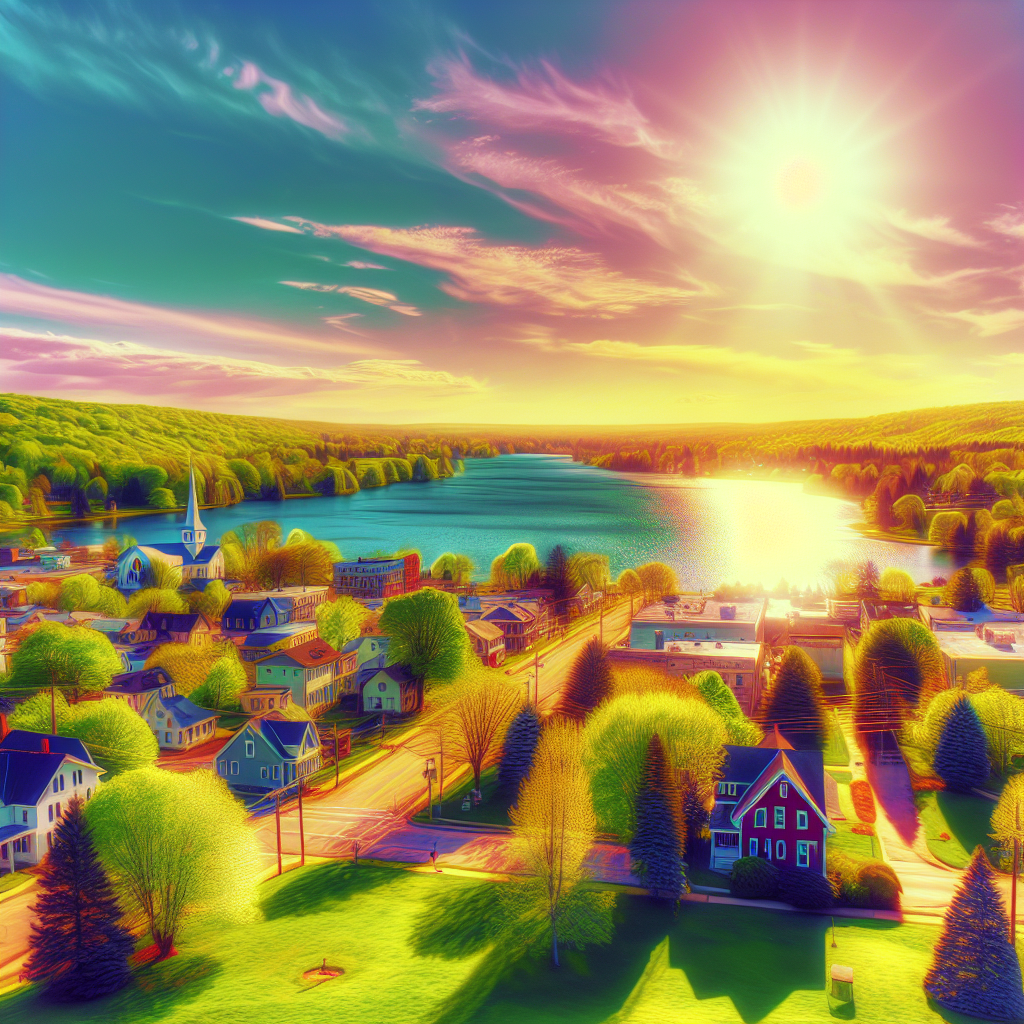

When you think of adventure, Tyler, Minnesota might not be the first place that jumps into your mind. Yet, nestled in the southwest corner of the state, this small town sparks interest with a blend of cultural history and contemporary charm. Founded in 1879, when the railroad decided to wander through, Tyler was named after a guy called C.B. Tyler, a railroad manager. The town is like that quirky yet lovable friend—predictable in its simplicity yet full of surprising stories once you get to know them.
Tyler is home to fewer than 1,200 people, making every resident an important part of the tightly-knit community. In a world driven by technology and urban hustle, this feels like a breath of relief. The town feels alive during the summer months, with community gatherings and festivals shaping its social calendar. If you're looking for a place to connect on a deeper level with people and nature, Tyler is an unexpected Pandora's box.
Talk about reasons to stay: Danebod Folk School is a unique Danish historical site that draws folks interested in culture and history. Started in 1888, it was founded by Danish immigrants as a cultural center. The school still stands today, with its beautifully crafted stone buildings and stained glass windows standing as testaments to the past. It hosts events offering a hands-on experience of what it means to blend community life with cultural preservation. It also opens its doors for tourists during its lively festivals celebrated through vibrant Danish folk dance, music, and food.
Though seemingly simple, Tyler engages in political and social narratives that impact both local and global scales. Like many small towns, the community leans conservative, which aligns with its agricultural roots. However, younger generations and diverse newcomers bring fresh perspectives. They challenge traditional views about climate change, racial justice, and how to be inclusive. These conversations brew a rich blend of traditional values and modern ideals, making Tyler a social microcosm reflective of larger national dialogues.
Although this lovely little spot sits away from major economic hubs, agriculture keeps it buzzing. The vast expanses of corn and soy fields tell a tale of hard work and resilience against the odds. But these fields are also part of a larger discussion regarding sustainability and climate change. Climate anxiety is palpable when seasons don't follow the expected patterns. The farmers here are continuously innovating—some switching to organic methods or trying new crop-rotation techniques. Younger residents often advocate for adopting more environmentally friendly practices, striving for a balance between traditional farming and conservation efforts.
The town's health system is modest but effective. A resident might argue that the small size makes it easier to innovate ways to deliver efficient healthcare. Yet, limited resources pose significant challenges. Debates sometimes arise on how to improve healthcare access, possibly through telemedicine or alliances with larger metro hospitals. New voices advocate these ideas, though their implementation lags behind bigger cities. Tyler offers a snapshot of rural healthcare challenges with the opportunity for innovative solutions.
Just being in Tyler offers a peculiar sensation of belonging even if you're a visitor passing through. Your presence is noted, and people make the effort to know your story. That genuine curiosity can sometimes hover along the fine line between friendly and overly familiar, but more often than not, it adds a layer of warmth. It's one of those places where you can forget the fast-moving world outside and weave yourself into simpler stories of everyday life.
There is, however, the haunting specter of rural economic stagnation—stories of young people leaving, other towns disappearing into ghostly obsolescence. Tyler faces these challenges head-on, illustrating resilience. The community is battling through such uncertainties with a mix of nostalgia and innovation. They host community events to discuss what the town's future can look like, turning potential despair into proactive planning, driven by an involved younger generation.
Social media plays a role in both binding and teetering this community. On one hand, it connects people, keeping the younger generations informed and inspired by wider movements. On the other, it sometimes brings global tensions home, often catching elders off guard with its speed and volatility. Bridging generational gaps, social media is yet another platform for debate and expression in Tyler, just like elsewhere.
Stepping into Tyler, Minnesota, offers a slice of life both serene in its daily predictability and lively in its community ethos. It’s a place where cultures meet, ideas clash, and yet respect thrives. The residents here share a way of life that’s simple but not uninspired—a world to remember what matters and to nurture it. Tyler stands as a testament to the idea that even the smallest dot on the map has stories worth sharing.