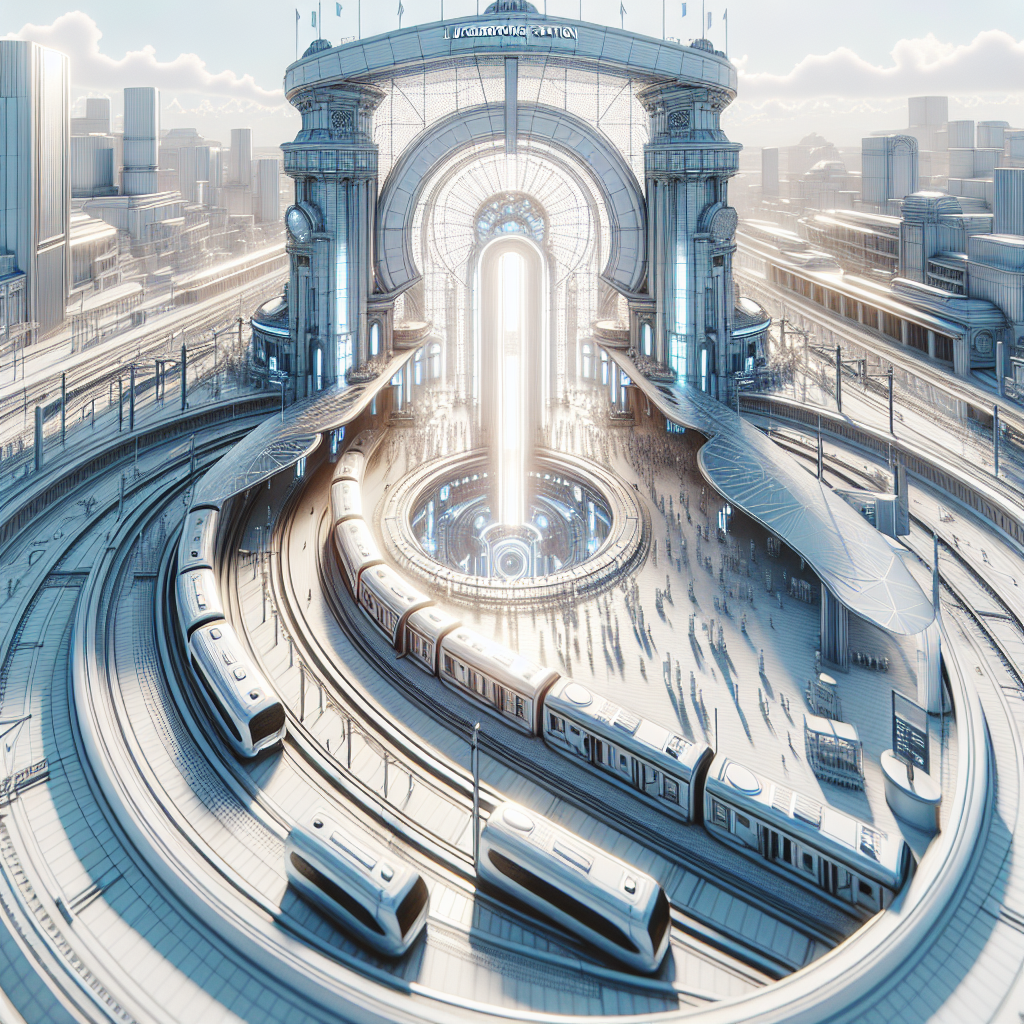

Imagine a train station, nestled in the heart of a city synonymous with diplomacy and diversity, whispering tales of history, politics, and everyday life. This is not just any train station, but the iconic Luxembourg Station, Brussels. Established in the 19th century and located in the European Quarter, Luxembourg Station serves as a bridge between the past and present, a central hub connecting people across Europe and a landmark bustling with the spirit of connectivity. It's where the magic of travel intersects with the grind of everyday commutes.
Luxembourg Station is situated in the vibrant European district of Brussels, just a stone’s throw away from the European Parliament. This geographic closeness makes it the go-to station for anyone looking to explore the political heartbeat of Europe or simply get a taste of the local culture that thrives just outside. For locals, it's a pivotal part of daily life, providing connections that are as integral to their routine as the morning cup of coffee.
While many stations across Europe are merely points of transit, Luxembourg Station is more. It's a place where history and modern architecture embrace. Originally built in 1854, the station has undergone various transformations to meet the needs of modern travelers while preserving its vintage charm. Imagine the thrill of stepping onto platforms that have seen decades of growth, conflict, and change.
The station’s strategic location has always played a crucial role in its significance. During the 19th and early 20th centuries, it was a vital link in the rail network of Belgium, used for both passenger and freight services. Today, it’s a pulsating hub with services like the S-train local commuter, and international connections that make it an ideal starting point for adventures across Europe.
Yet, Luxembourg Station is not just about trains and transit. Surrounding it is a thriving ecosystem of cafés, shops, and cultural spots. The nearby Place du Luxembourg is often bustling with life, especially on Thursdays when it transforms into a social hotspot for interns, young professionals, and locals engaged in animated conversations that echo the discourse happening just inside the European Parliament.
Culturally, the station is a microcosm of Brussels itself—a melting pot where different cultures converge, creating a unique atmosphere that few other places can match. The linguistic diversity is evident as soon as you set foot on the platform, with announcements in French, Dutch, and English. It’s a reminder of how Brussels embodies Europe’s multilingual essence.
The station is also steeped in architectural beauty. Modern upgrades ensure accessibility and comfort, while historical elements, like its preserved facades and original structures, offer a glimpse into the past. Restorations over the years mean that it's not only functional but also a visual treat for those who appreciate architecture.
Of course, for some, Luxembourg Station represents more than just charm and connectivity. There are those who see it as symbolic of Brussels' broader struggles—such as economic disparities and the pressures of modernization in a city still grappling with its colonial past. They argue that while the station connects cities and people, the divide between socio-economic classes often feels wider than ever.
Public transportation, after all, is more than just a means to get from one place to another—it can be a mirror reflecting societal progress and its lack thereof. In a city like Brussels, integrating services to cater to all sections of society is challenging but essential for balanced growth.
Nevertheless, Luxembourg Station stands resilient, thriving as a testament to Brussels’ adaptability and commitment to progress. Frequent travelers and curious explorers alike find it remarkable that despite the struggles, places like Luxembourg Station continue to adapt and serve as crucial veins in the city's body.
For Gen Z, traveling through Luxembourg Station in Brussels offers more than just a commute—it's a chance to engage with different perspectives and histories, making each trip a mini cultural exchange. Whether you’re bound for a stint in Bruges or planning a cross-boundary train ride into Paris, this station is the starting line of endless possibilities.
In its essence, Luxembourg Station symbolizes much more than bricks and mortar—it embodies the spirit of collaboration, learning, and cross-cultural exchanges that define modern Europe.