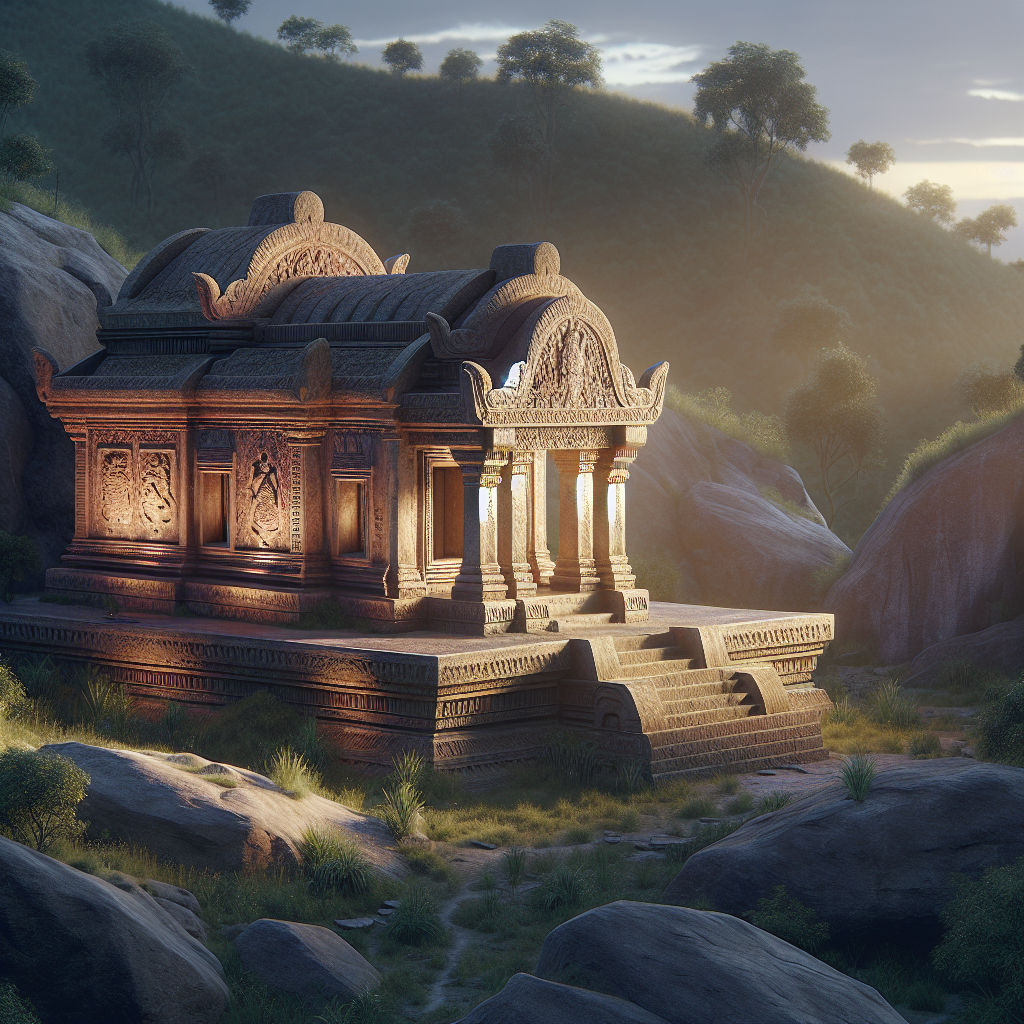

Imagine stepping into a place where ancient history echoes through the hills, and mystery hangs in the air like a fog. You'd find yourself at Tatul Sanctuary, a site in Bulgaria where the past and the present seem to have formed an embrace that refuses to break. This enigmatic sanctuary was likely a religious center dating back to the 13th century BC and sits near the village of Tatul in Bulgaria's Rhodope Mountains. It's a fascinating site for those interested in archaeology, history, and even spirituality, where once the ancient Thracians, a people as mysterious as the site itself, roamed the land.
Tatul has been a subject of study and speculation for some time now, sparking intrigue for both historians and casual visitors. But what really hooks people's curiosity is its association with the legendary musician and prophet Orpheus, believed by some archaeologists to have a connection to this site. The sanctuary's most striking feature includes a giant carved rock, considered to be an altar, and a tomb believed by some to be the resting place of Orpheus himself. This cultural fascination promises a great mix of myths and reality, which Gen Z seems to gravitate toward—in search of experiences that blend the past with the personal.
Why does a place like Tatul continue to captivate the minds of millennials and zoomers? Its appeal may lie in the spiritual energy said to surround the site. Like many ancient sanctuaries, it's a place where you can almost feel the stories of the past vibrating in the air around you. This spiritual aspect of Tatul is an irresistible component for many. In a world of concrete jungles and digital connections, individuals increasingly seek experiences that open their minds to something larger than themselves. They yearn for personal transformation through the lens of forgotten worlds and mysterious rituals. Tatul offers just that—a space where people can momentarily step out of the whirlwind of modern life and into an old, sacred narrative.
It's important to note that while enthusiasts speak highly of its mystical charm and potential connections to Orpheus, skeptics remain ever-present. Many argue that while the historical significance of the site is indisputable, these mystical claims are overblown and lack hard evidence. Yet even this debate adds another layer to Tatul's appeal. People find themselves drawn into the story of Tatul not just by its carved rocks and ancient stones, but also by the conversations it triggers about history, myth, and belief.
Tatul Sanctuary's rich history doesn't end with just its ancient inhabitants. During the medieval period, the site saw further development. Archaeologists have uncovered Christian graves and the remains of a medieval settlement, painting a picture of a place that evolved through various cultural epochs. This inclusion of Christian elements into its long timeline creates an intricate historical tapestry, illustrating how one site can serve as a convergence for various belief systems and communities through time.
Bulgaria, as a whole, also holds a unique position as a melting pot of cultures, where East meets West, and this blend is readily apparent at Tatul. It symbolizes the broader historical narrative of Bulgaria, a country that transitions seamlessly from Thracian tribes to the Bulgarian Empire, then to Ottoman rule, and finally to its modern incarnation as an EU member state. For anyone fascinated by cultural intersections, Tatul serves as a compelling microcosm of Bulgaria's larger story.
Visiting Tatul isn’t just about seeing ancient ruins. It’s about experiencing a profundity of time and feeling the hum of history beneath your feet. Young travelers, in particular, find the site resonating with their search for authenticity and genuine connection in increasingly superficial times. It offers not just answers but also questions, encouraging young minds to meditate on the nature of time, belief, and identity.
And let's not forget the natural beauty that surrounds Tatul. The lush Rhodope Mountains offer a stunning backdrop that complements the spiritual and historical undertones of the site. For Gen Z, who often finds peace and inspiration in nature, Tatul provides a perfect blend of the two. It's a chance to partake in a journey where history meets Mother Nature, fostering a sense of adventure and introspection.
Amidst these discussions, we shouldn't forget the broader socio-political challenges that shape our perceptions of historical sites like Tatul. Investing in preservation and accessibility can be an uphill battle fraught with controversy over land rights, conservation priorities, and funding. These are crucial discussions for younger generations who are increasingly politically aware and motivated to make a difference in their communities and beyond.
So, whether you find yourself drawn to Tatul Sanctuary for its whispering winds of ancient myth, its grand historical layers, or its compelling discussions about our shared cultural heritage, this Bulgarian treasure continues to be relevant. It's a place where history, belief, nature, and modern life intersect, and offers a multitude of lenses through which one can explore the world—or perhaps oneself.