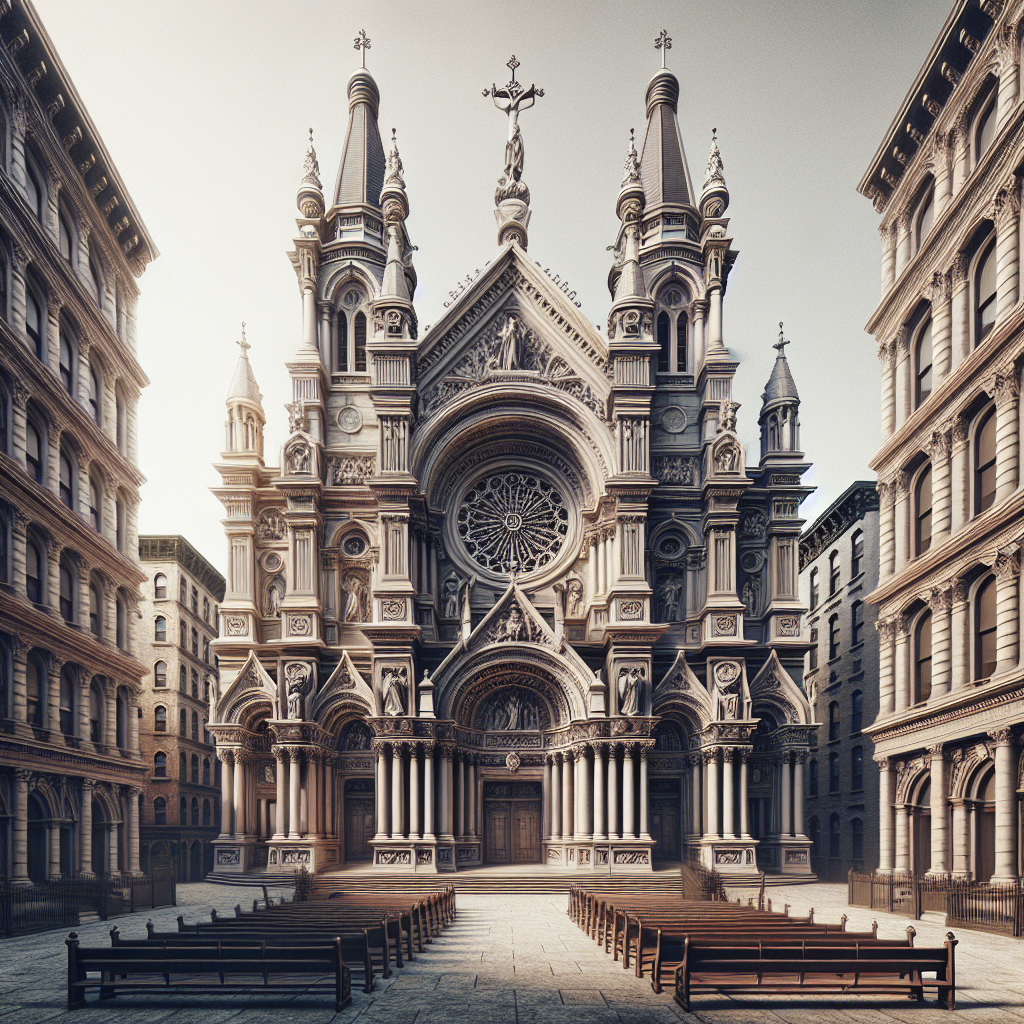

Nestled in the bustling heart of New York City, St. Ann Church stands as a symbol of both steadfast faith and inevitable change. This historic gem located in Manhattan's East Village is more than just bricks and mortar; it's a living testament to the passage of time and the complexity of urban transformation. Founded initially in 1847 for an Irish immigrant congregation, the church has weathered a multitude of social, cultural, and architectural transformations. Its story is one of resilience—a narrative woven through the shifting sands of immigrant demographics, evolving architectural styles, and the relentless march of city development.
In its early years, St. Ann Church was a beacon for Irish immigrants seeking solace and community amidst the vibrant yet often unforgiving life of Manhattan’s 19th-century streets. Imagine the church then, filled with rich lilting brogues and the kind of stubborn hope only newcomers can muster. It wasn't just a place of worship but one of refuge, where people found solidarity and strength. As the waves of immigrants diversified, so too did the congregation, reflecting New York’s melting pot nature.
Fast forward to the late 20th century, when the church itself became the focal point of a broader debate on preservation versus progress. In the face of real estate pressures, developers eyed the church for its prime location. A battle ensued between preservationists, who saw the church’s Romanesque Revival architecture as irreplaceable and integral to the neighborhood's character, and those advocating for new, economically beneficial developments.
In 2005, despite fervent protests, much of the original structure was demolished to make way for an NYU dormitory. However, a compromise was reached to preserve the church’s original façade—an effort to maintain some continuity amidst rapid architectural transformation. Supporters of the change argue that it brought much-needed student housing to the area, accommodating a new generation while retaining a piece of old New York. Critics lament the lost potential of what St. Ann's could continue to symbolize undisturbed.
This clash is emblematic of larger issues at play in urban development. The demolition highlights a tension many cities face: the need to adapt and grow, balanced against the importance of preserving history and identity. It's easy to understand both sides, really. The preservationists saw a piece of cultural heritage disappearing, while the proponents of development were focused on practical needs like housing and economic revitalization. Each argument is rooted in its own kind of community care—a notion that resonates deeply with the values of inclusivity and progress which many Gen Z advocates champion.
And yet, St. Ann Church is still more than its stones. It represents an ongoing dialogue about what we value and how we decide what should be saved or altered in our sprawling urban landscapes. For generations past, the church was a fixture of their daily lives, a place where social justice was often preached alongside the gospel. Today, it stands as a metaphorical reminder of how the sacred and secular often intersect in unexpected, and sometimes conflictual, ways.
Even with its original purpose transformed, the spirit of St. Ann Church persists in community gatherings and commemorative events celebrating its rich Irish roots and immigrant history. These remembrances keep the legacy alive, proving that even as structures change, the stories they carry are just as significant, even if they have different names and faces attached. The stories allow for empathy across time, a reminder that while progress is vital, honoring those who came before is equally crucial to understanding the foundation on which that progress is built.
The conversation surrounding St. Ann Church is a critical reflection of wider societal changes and mirrors the ideological shifts that sometimes seed resistance or create cooperation. For the Gen Z reader, known for their advocacy and desire to sustain both culture and innovation, the story of St. Ann Church echoes broader activism agendas. It invites contemplation and discussion around the balance of progress, heritage conservation, and community wellbeing.
St. Ann Church in Manhattan, therefore, is more than a structure; it's a microcosm of cultural evolution—a point of contact between faith and modernization, remembrance and reimagining. Through its ancient yet enduring stones, we see the city’s heartbeat: historical yet constantly evolving to meet the demands of its diverse, dynamic population.