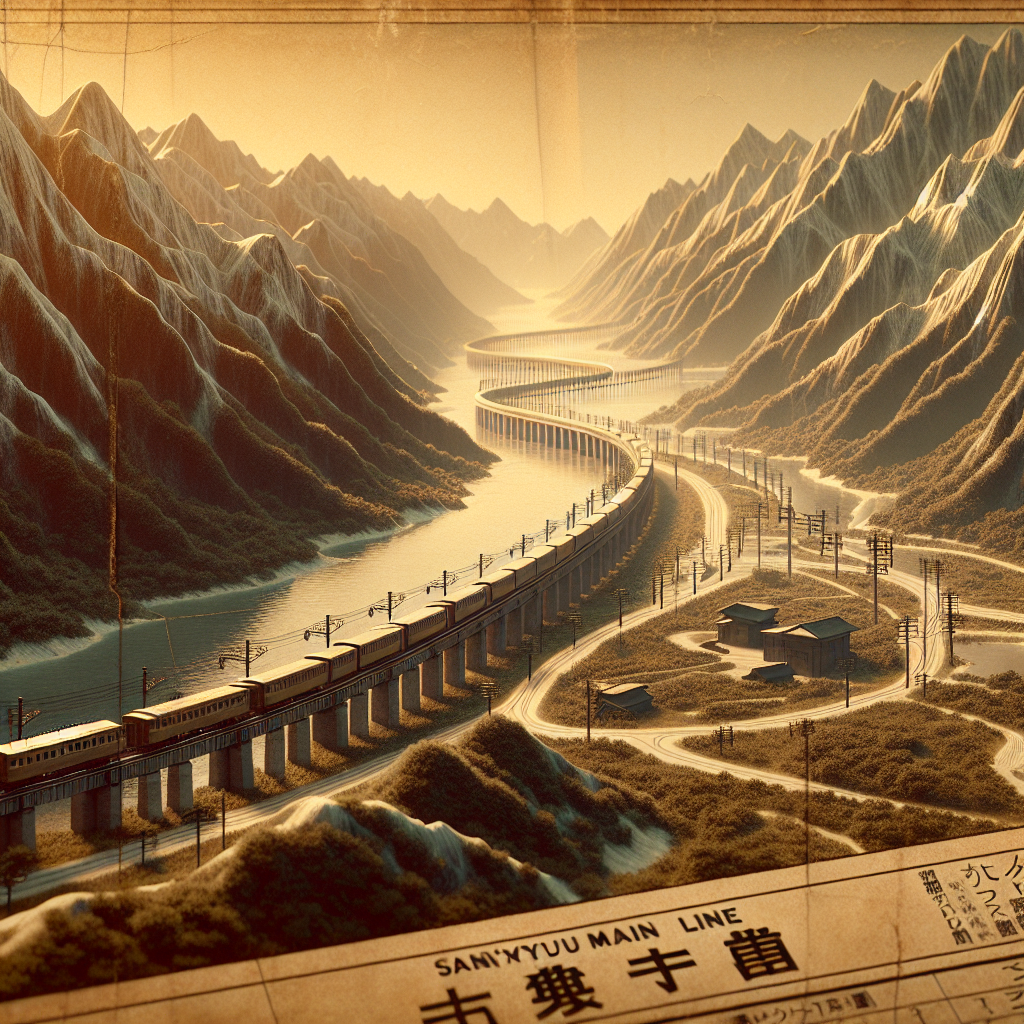

If you've ever wanted to experience the thrill of zipping through breathtaking Japanese countryside while feeling like you're sitting comfortably in the lap of modern efficiency, then climbing aboard the San'yō Main Line is your ticket to this slice of heaven. The San'yō Main Line is one of Japan’s major transportation arteries, crisscrossing the western Honshu, forever intertwining the old and new in a country that effortlessly balances tradition with technology. Owned by West Japan Railway Company (JR West), this railway line began its journey way back in 1894. It has since become the spine of local economies and a testament to Japan's commitment to maintaining infrastructure that benefits its society. Stretching from the bustling economic hub of Kobe all the way to the historic city of Shimonoseki, the San'yō Main Line covers a staggering 532 kilometers, making multiple stops in charming towns and vibrant cities.
What makes the San'yō Main Line so special is its ability to cater to everyone, from the daily commuter to the wide-eyed tourist eager to absorb Japan's rich culture. It’s a line that is frequented by the locals for their everyday travels, yet still retains the curiosity of visitors looking to experience something quintessentially Japanese. It's also a lifeline for those who live in areas less trafficked by the world-famous shinkansen, Japan's bullet train.
But the San'yō Main Line isn't just about getting from point A to B. It’s about storytelling through a series of landscapes that become your window to Japan's varied beauty. From mountainous regions to serene coastlines, the line traverses a wide array of scenery that speaks to the diversity of this incredible island nation.
Now, let's explore the societal fabric intertwined with the steel and rail. Public transportation in Japan isn't just a matter of convenience—it's an essential component in reducing the carbon footprint. If you're environmentally conscious, you'll appreciate that trains, like those on the San'yō Main Line, offer a mass transit solution that counters the environmental impact of cars and planes. By choosing the train, you're lowering your personal contribution to emissions, all while experiencing travel that’s as scenic as it is sustainable.
However, it's important to address that this reliance on public infrastructure isn't without its challenges. The upkeep of older systems requires substantial investment and innovation to ensure safety and efficiency. While Japan is celebrated for its punctual trains and spotless stations, these feats don’t come without their hurdles in terms of maintenance costs and modernization needs. There’s an ongoing discussion about how to balance the preservation of historic lines like San'yō Main with modernization.
Native populations in the areas the San'yō Main Line runs through have seen shifts in their daily routines and economic structures. While some long for the nostalgia of quieter times, others welcome the bustling activity that these trains bring. The debates around these changes involve balancing the cherished quiet townsfolk love with the growth and opportunities the trains herald.
There's also a cultural dimension to these rails. They symbolize both the forward march of progress and the deeply ingrained respect for past achievements. The San'yō Main Line bridges the gap—it’s a journey through yesterday’s architectural triumphs and today’s technological breakthroughs. As the train glides smoothly from station to station, it stands as a metaphor for Japan itself, a country that reveres its history but eagerly strides into the future.
Picture the scene: crossing the Akashi-Kaikyō Bridge, extending over waters once believed uncrossable by rail. It’s moments like these, surrounded by the sights and sounds of Japan, that’s enough to make anyone pause and reflect. Whether you're there for the cherry blossoms of spring or the riotous colors of autumn, the world whooshing by becomes a painted canvas. Being on the San'yō Main Line provides a kind of meditation; a pause button in the fast-paced digital age.
While the advantages of the San'yō Main Line are obvious, its true merit is measured in shared human experiences and the very real spirit of connection across divides. It is in the small, everyday exchanges—the courteous nod of a passenger or the thankful handshake of a stationmaster—that its true value is realized.
Japan’s train systems are often praised worldwide, yet it's important to maintain a critical eye on aspects like corporate policies influencing fare hikes and the impact of privatization, which doesn't always benefit every passenger equally. Economic accessibility is a perennial issue, bearing in mind the divide between urban centers and rural areas. Striving for accessibility for everyone, ensuring that each ticket purchased feels like an investment in community rather than a mere transaction, should be the goal.
The San'yō Main Line stands as a testament to the power of connectivity, not just in a physical sense, but in a way that serves communities and symbolizes the sustainable future we strive toward. Riding it isn't merely sightseeing; it's an engagement with Japan's ever-unfolding story—where every stop matters, and every path taken adds to the collective journey.