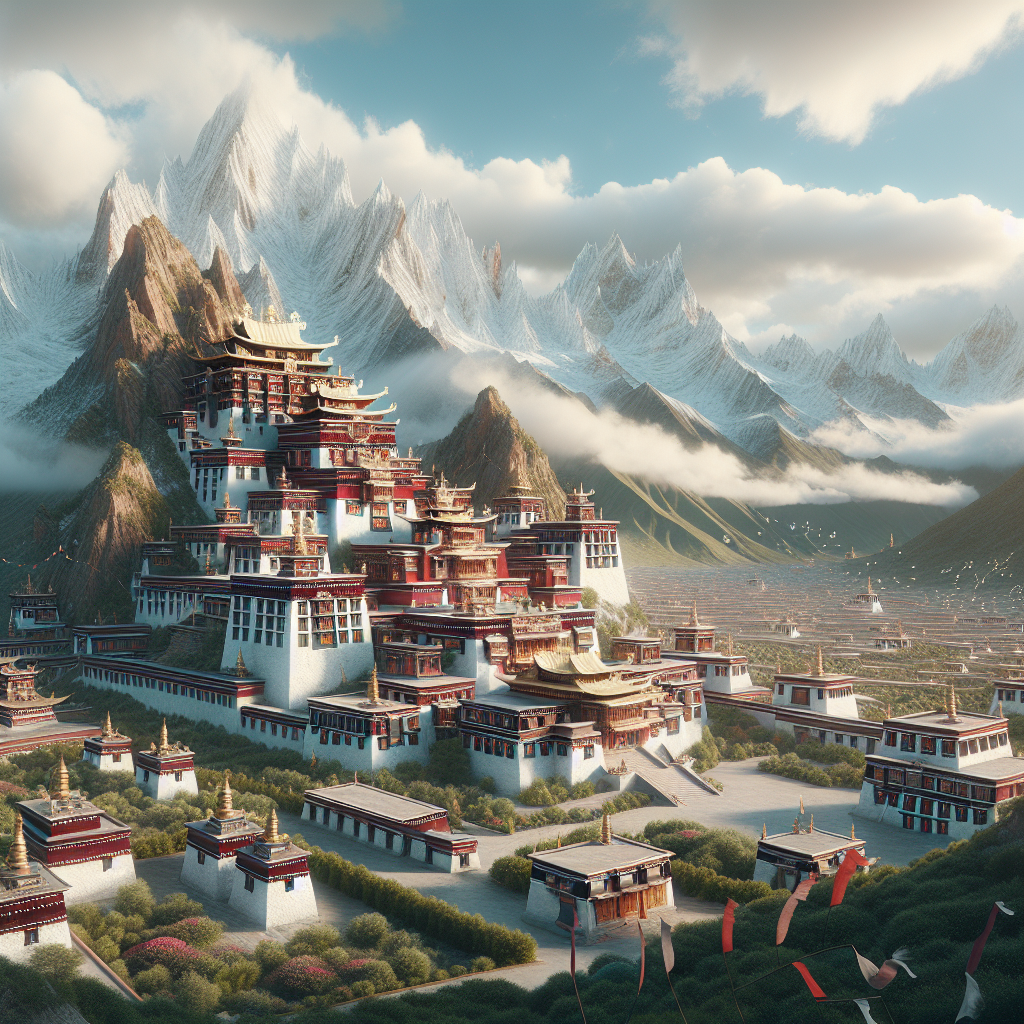

Picture yourself wandering through the timeless sands of history, standing at the heart of Tibet where cultural, spiritual, and academic worlds merge into one. This isn’t a mystical fantasy but a reality named Samye, often hailed as the first Buddhist monastery in Tibet. Founded under the guidance of the legendary monk Padmasambhava in the 8th century, Samye stands not just as a beacon of religion but as a pillar supporting the weight of scholarly, philosophical, and cultural evolution. It’s here that the red-robed monks fostered a revolution of thought and belief, and this transformation continues to ripple into today’s world.
Why Samye? Why during the 8th century? The monastery was established due to the visionary efforts of Trisong Detsen, the 38th king of the Yarlung Dynasty. Inspired by his ambition to empower Tibet through spiritual guidance, Trisong Detsen invited the renowned abbot Shantarakshita from India. Alongside Padmasambhava, they envisioned a place of learning that would transcend the geographical isolation of Tibet, effectively placing it on the cultural map of the world. Samye was meticulously designed to reflect the universe, modeled after the creatively elaborate Odantapuri in India, a master class of Buddhist architecture.
The monastery's layout is a microcosm, symbolizing Buddhist cosmology, which blends art with divine purpose. At the core, the Utse (central hall) represents Mount Meru, surrounded by structures that symbolize continents, oceans, and cosmic elements. For the generation that immerses itself in story-driven universes, Samye offers something tangible—a map not just of physical structures but of philosophical and existential terrains to navigate.
Visiting Samye is like stepping into a live-action version of history's greatest hits, where ancient manuscripts might just reveal the next great saga. The monastery's walls carry frescoes that span centuries, narrating tales of the rise of Buddhism in Tibet, the fusion of Tantric rituals with meditation practices, and the chronicles of the enlightened beings who once walked these hallowed halls.
In a contemporary twist for an ancient spot, Samye continues to attract wanderers of all walks, including young globetrotters hungry for authentic connection and insight. The experience tends to offer a panoramic view of history, a lens into the resilience and adaptability of humanity; it’s not just about stones and scriptures, but about ongoing stories, some still unfolding, within the lives of monks who call Samye home.
However, Samye's existence has not been without challenges. Plunged into moments of conflict, this spiritual stronghold has had to navigate the delicate balance between preserving tradition and adapting to changing time. The Chinese Cultural Revolution brought considerable turbulence to Samye, with much of its artistic and religious richness at risk of obliteration. Yet, like the phoenix, it has risen from the ashes, restoring itself as a center of peace and learning. This resurgence isn’t just about reconstruction of buildings but also about reclaiming cultural identity, making it a touchstone for resilience.
Today, Samye finds itself at a crossroads, balancing its deep historical roots with the modernization challenges it faces. In a region where political tensions often threaten cultural practices, the monastery becomes a symbol of the debate between autonomy and authority. Supporters of the Tibetan identity find themselves pressing for the preservation of their cultural heritage, using Samye as a silent yet enduring testament to Tibet’s spiritual and cultural narrative.
For those from generation z, immersed in a world that scarcely pauses for breath, Samye offers a lesson in continuity and change. It demonstrates how coherence can exist in diversity, and how ancient wisdom remains relevant in modern discourse. Samye poses a crucial question: How does one maintain identity in a rapidly changing world that often prioritizes conformity over individuality?
Critics argue that the heavy influence of globalization risks overshadowing the original essence and purpose of spaces like Samye, turning them into nothing more than pieces of a commercialized tourist puzzle. Yet, the opposing view shows that opening its doors to the global community ensures survival, offering a platform where age-old traditions can be revived and appreciated anew. Is the influx of global perspectives diluting or enriching the culture? Perhaps it’s both.
As debates about Samye's future continue, one thing remains clear: its story is one that resonates far beyond its geographic borders. Samye stands as a bridge connecting the ancient and the contemporary, challenging us to reflect on who we are, where we came from, and what we’d like to become. For a generation at the helm of technological revolutions, Samye gently nudges us towards recognizing the profound potential that cultural and spiritual legacies hold in crafting informed futures.