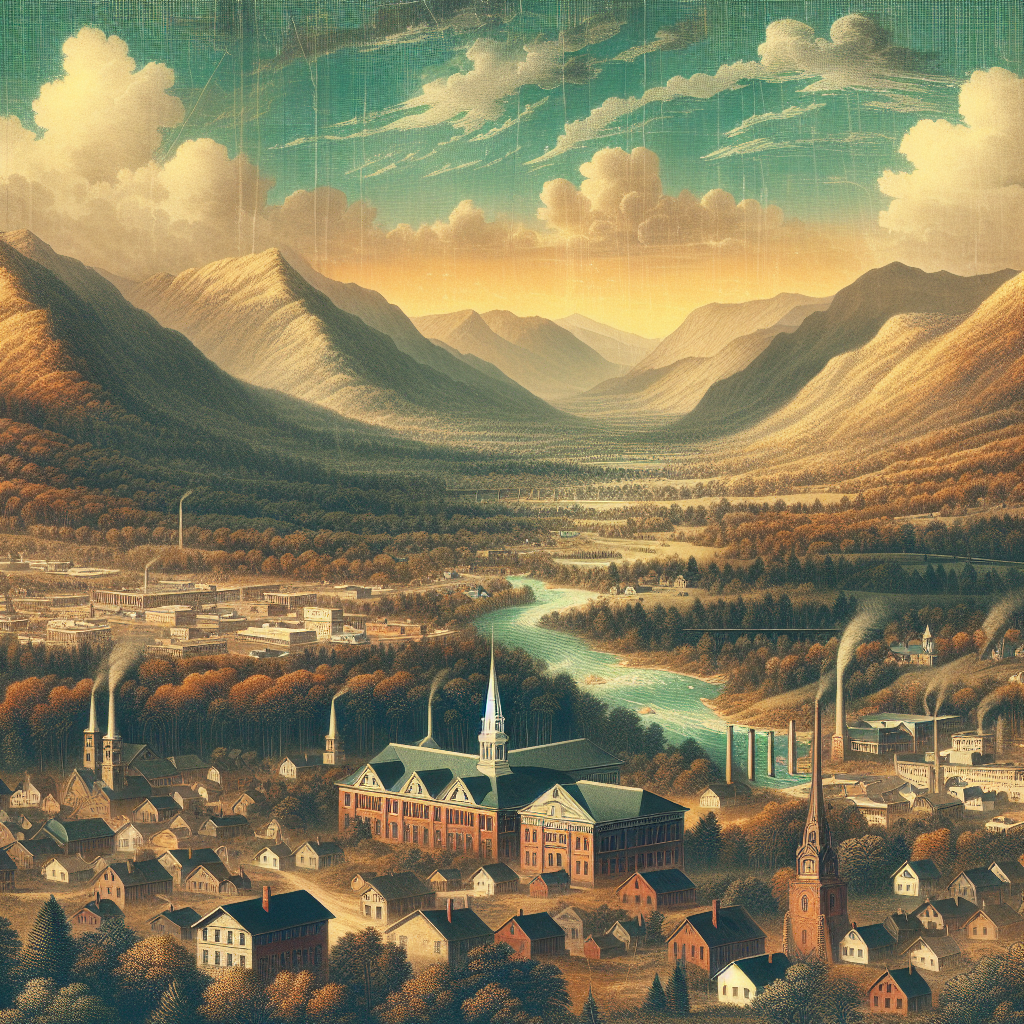

Ever thought that salt could shape a town? Well, Saltville has done just that and more! Situated in the mountainous region of southwestern Virginia, Saltville is a tiny town that has played a significant role in American history since being settled by indigenous tribes and later European settlers. Today, it speaks volumes not only of a rich past but of resilience against time's relentless march. Its Historic District, enshrined since the 18th century, bears witness to opposing armies in the American Civil War and ancient creatures that roamed before us. Here, history isn't just a subject; it's a story being told by moans of old trees, whispers of breezes through antique bricks, and murmurs of mountains standing guard.
Salt played a pivotal role in making Saltville valuable not just as a town, but as a strategic location. During the Civil War, the Confederacy relied heavily on Saltville for its salt supplies, crucial for preserving food. However, this isn't just ancient history. The echoes of the battles fought here still reverberate, notably the Battle of Saltville in 1864 where Confederate troops fought against the Union. It highlights differing beliefs of the time, where slavery clashed against ideals of freedom and unity. Even today, Saltville isn’t a relic; it's an ongoing dialogue between past and present, urging us to reflect on those who came before us and the ideologies they held.
Apart from its clear ties to the Civil War, Saltville has a prehistoric charm that speaks to the curious minds of today. It's famous for being the site of Ice Age fossils. Creatures like Woolly Mammoths and Mastodons once walked its very grounds. This intertwining of prehistoric and relatively recent history gives you, dear readers, a sense of place in the grand arc of Earth’s tale. Think of it as a giant scrapbook of time that keeps growing, with each fossil and relic adding chapters to its story.
Bridging its heritage with a wealth of natural beauty, Saltville offers a nostalgic walk through time. You’ll find structures reflecting architectural styles from the early 19th to the 20th century. The preserved homes and buildings range from Federal to Victorian, each narrating a piece of the past. They stand as a testament to the town's evolution from a prehistoric marshland to a vibrant community, albeit small, bustling with a variety of activities and culture. Saltville isn’t just a district; it's a chronicle of the human spirit that refuses to be forgotten.
However, Saltville’s story isn’t all sunshine and roses. It prompts us to face sordid histories as much as we admire quaint structures and stunning views. The preservation of Confederate monuments amidst the historic district continues to foster dialogue. It's a conversation on whether such relics are a testament to heritage or a painful reminder of a divisive past. Gen Z, with its progressive outlook, often finds itself at the heart of these discussions, balancing sensitivity towards heritage with a yearning to push for inclusiveness and social justice.
Yet, within Saltville’s embrace, one can find nature harmonizing with history. The district hugs the Salt Trail, a panoramic conversion of old rail lines that provides picturesque views of the Appalachian beauty and whispers stories of trains from yesteryear. As a nature lover or history buff, you can find solace traversing trails under the shrouds of green forests, finding moments where time seems to stand utterly still. It's as though Saltville invites you to slow down, take a deep breath, and appreciate everything that once was, contemplating what could be.
Ultimately, what does Saltville, with its historic fervor and natural allure, bring to today’s politically aware youth? It offers a reminder that history is multi-layered and complex—composed of both triumphs and tragedies. It's our responsibility to remember and learn from both. Saltville's tale is told through the stones of its buildings, the fields of its battlefields, and the fossils beneath its earth, asking us to walk with compassion and understanding.
As we continue discussing issues that matter, Saltville serves as a backdrop for these reflections. It stands as a bold reminder that while history is set in stone, our future isn't. Gen Z can lead the charge for a better understanding of this world, learning from places like Saltville which encapsulate eras of social change and environmental stewardship. It's a call to action as much as it is a pause for reflection—a chance to build forward while remembering the voices of the past.