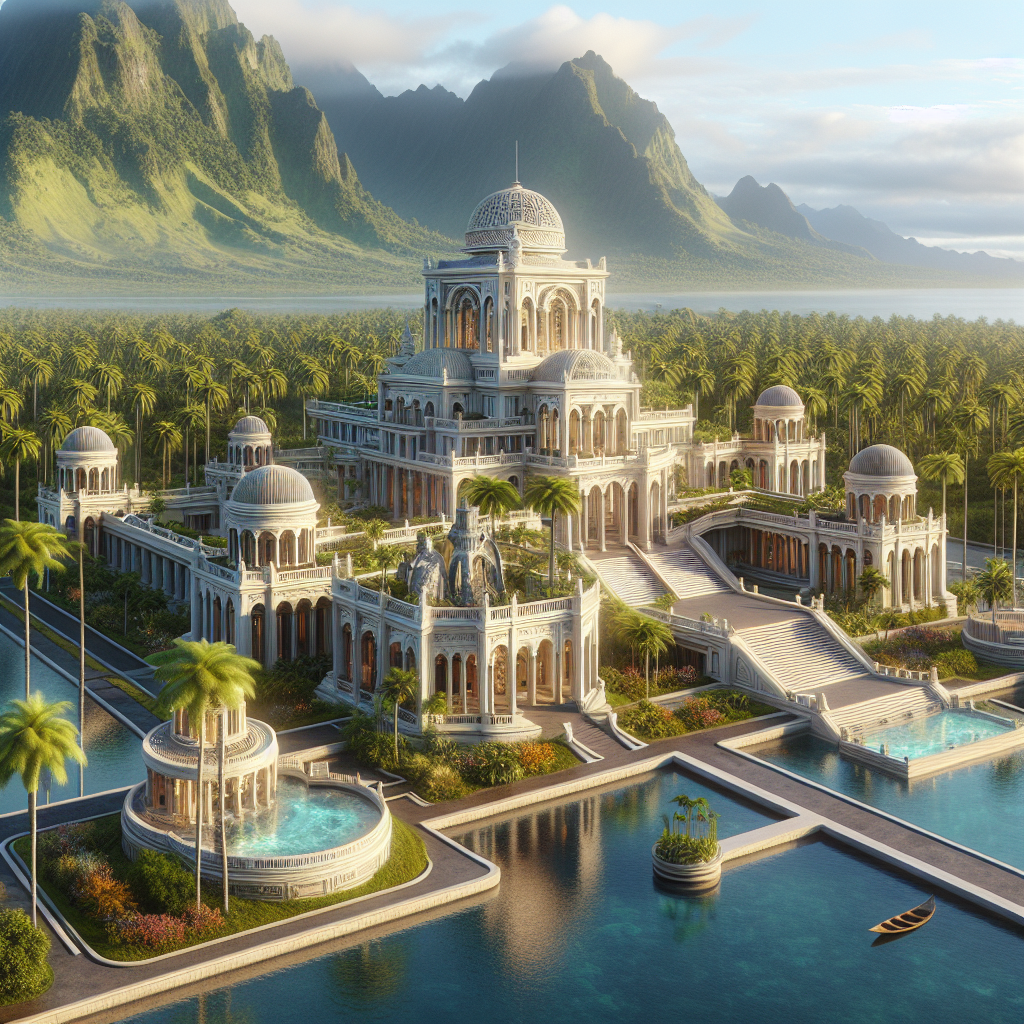

Nestled in the Pacific lies Wallis, a lush island where time feels like it’s tied to the rhythm of waves and the stories of kings. At the center of this serene beauty stands the Royal Palace of Uvea, an emblematic structure that holds tales of power, tradition, and cultural heritage. Situated in Mata-Utu, the capital of Wallis and Futuna, the Royal Palace isn't just a building; it represents the intersection of noble legacy and humble island life.
Built in the late 19th century, this palace serves as the residence of the paramount chief, the Lavelua, a title that commands both respect and responsibility. It is an important cultural symbol and a living testament to the political autonomy of Uvea, which, although part of France, retains strong traditional systems. For the people of Wallis, the Royal Palace is not just a center of power but a confluence of their past, present, and hope for the future.
What makes this palace truly intriguing is its blend of traditional Polynesian design with European influences, a symbol of how different worlds have intertwined over the years. The grand structure, framed by tropical scenery, boasts all the grandeur you would expect from a royal residence yet remains down-to-earth, reflecting the close-knit community it serves. It’s airy, with plenty of wide windows that allow gentle breezes to carry whispers of island stories through its halls.
Despite its apparent simplicity, every corner of the palace speaks volumes about the regional and cultural importance of Uvea. The blend of indigenous meanings and external influences is an important aspect to understand. The island of Uvea, while remote, has not been closed off from the rest of the world. France's connection plays a significant role in how the island governs itself, maintaining local traditions while adapting to external pressures.
In a world where the tides of modernization often erase traces of past rhythms, the Royal Palace of Uvea retains its traditional significance. It's a place where age-old customs meet the challenges of contemporary governance, and where the spirit of the island’s cultural identity is preserved.
For Gen Z, who often understand the importance of cultural heritage even in a rapidly changing world, this place is a prime example of how history can coexist with modernity. While many royal establishments worldwide have turned into glorified tourist attractions, the Royal Palace of Uvea remains a functioning part of the community. There's a level of authenticity here that’s rare in modern royal contexts, something young people with a keen interest in cultural integrity can appreciate.
There’s also much to be said about the opposing viewpoint which sees such places as embodiments of elitism or relics of colonial pasts that should not hold such influence in today's world. In some parts of the world, royal institutions have often been controversial, sometimes considered backward or overly extravagant in contemporary societies that value equality and progress. This perspective can arise from a need to decentralize power; yet, the local community's view often differs, seeing these institutions as essential threads in the fabric of their cultural identity. The Royal Palace of Uvea, particularly, defies being an outdated symbol of authority. It represents a community’s identity, deeply embedded in respect for the Lavelua as a cultural figure.
This isn’t just a debate about physical structures or politics, but about what these places mean in terms of collective identity and continuity. For the people of Uvea, the palace is a living entity. It acknowledges that while external viewpoints provide new insights, internal, traditional governance continues to fulfill important cultural and social roles. It's essential to understand both sides to engage meaningfully with such cultural landmarks.
In the tapestry of human stories, the Royal Palace of Uvea is a thread that speaks to a past still impacting a contemporary societal framework. It's a beacon for those understanding that place and power are as much about the future as they are about the past. In visiting this royal residence, one doesn’t just see a historical landmark; one enters into a dialogue between the past and the future.
For a world grappling with how best to preserve cultural identity while progressing into the future, the Royal Palace of Uvea teaches us that the balance between maintaining tradition and embracing change can be achieved harmoniously. It's a place where the heart and heritage of an island beat together, in harmony with the world outside its paradise.