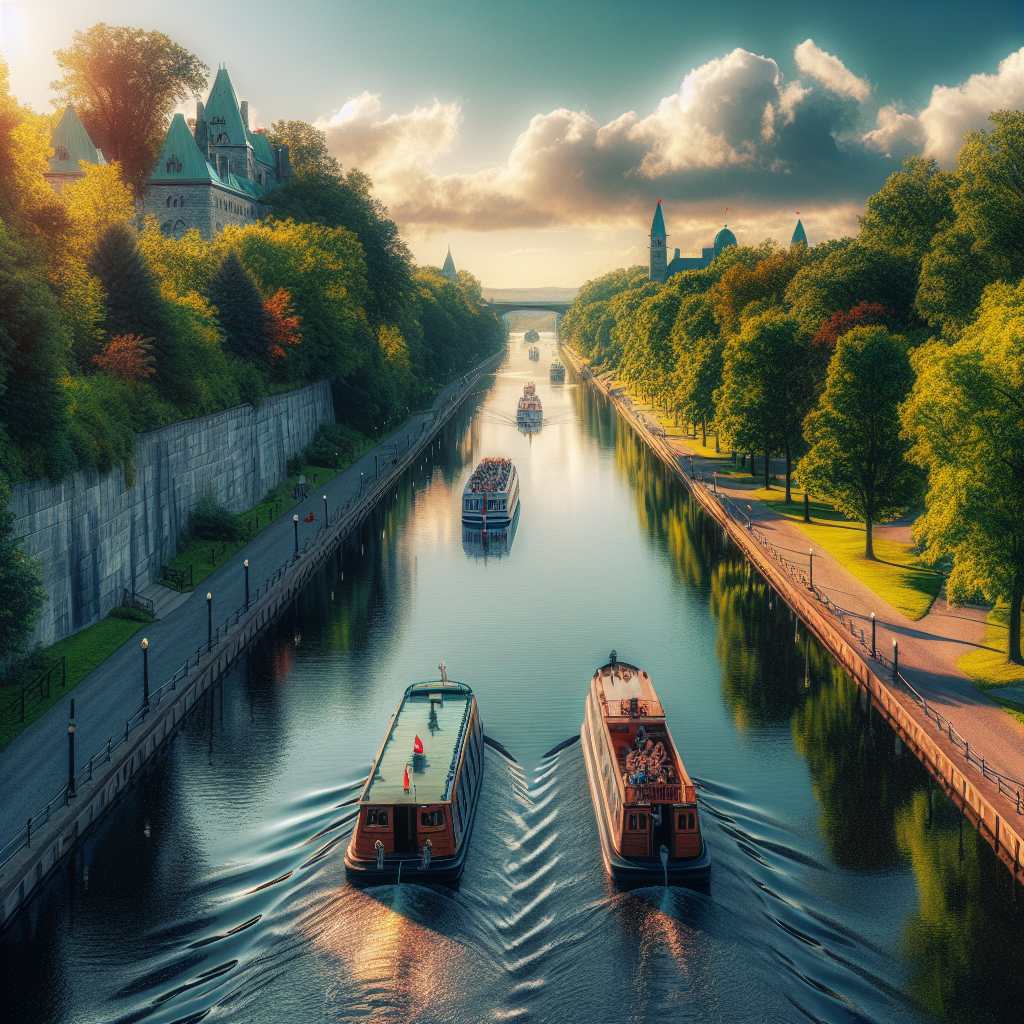

Imagine gliding on a canoe through a sparkling waterway that’s not only stunning but also a slice of history - that’s the Rideau Canal for you! Built between 1826 and 1832, it stands as one of Canada’s largest engineering projects, a marvel stretching from Ottawa to Kingston, Ontario. The canal, initially constructed for military defense purposes during the tense times following the War of 1812, now enchants as a UNESCO World Heritage Site loaded with tourists, history buffs, and nature lovers.
Winter transforms the tranquil waters into the world’s largest naturally frozen skating rink, while the summer sees kayakers and boaters basking in its serene beauty. This dual life - a passageway in summer and a racecourse of ice in winter - uniquely fuses utility with recreation. Its panorama serves diverse interests: artists capture its beauty, locals revel in seasonal activities, while tourists uncover Canadian heritage.
The Rideau Canal is a place where past and present blend. Protectors of the environment celebrate, seeing its wetlands as a home for wildlife and a crucial ecological zone. Wildlife thrives here: loons call from the reeds, fish dart through the waters, and the gentle ripple of the water echoes a world at peace both with itself and its history. Indeed, in an age of ecological awareness, places like the Rideau Canal symbolize the balance between industrial achievement and environmental responsibility.
There’s more to this than meets the eye. Beyond the idyllic scenes, the Rideau Canal stirs talk about colonial history and what Canada’s past means today. Some view it as a reminder of colonization’s heavy footsteps across the lands of Indigenous peoples. This perspective opens necessary discussions about history, reconciliation, and the paths that lead us forward. Many Canadians advocate for further recognition of Indigenous narratives in the telling of the Rideau Canal story.
While its charm is hard to deny, not everyone agrees on the best way to preserve and interpret the canal's complex history. Traditionally, its narrative has championed European settlers and military tactics, a narrow slice of a richer, more diverse story involving Indigenous influences and their stewardship of the land long before the canal’s existence.
You don’t have to be a historian to feel the pulse of the past on a trip to the Rideau Canal. Gen Z travelers increasingly flock here, inspired perhaps by a blend of nostalgia and the need to understand layers of Canadian identity. They snap pictures, share stories, engage with both the overt history and the narratives beneath its surface, renewing the cycle of storytelling with a modern angle.
Yet, respecting such heritage sites involves more than just acknowledging beauty or using them for recreation. It’s also about sparking conversations that often tiptoe on uncomfortable territory, urging us to reassess the implications of historical legacies. Such spaces can inspire change and fuel movements that echo through society.
For those who trek its path today, the Rideau Canal is both a destination and a living storyboard of struggles, victories, and healing. This grand waterway invites deeper exploration into how we acknowledge the diverse narratives of the past and how these influence the present.
The Rideau Canal effortlessly mingles leisure with poignant histories, an exciting backdrop to personal reflection or celebration of Canadian heritage. The question remains: how do we, as a society, walk the tightrope of conservation, evolution, and inclusive storytelling? The answers lie in engaging with these tales, infusing them with empathy, and paving varied pathways while honoring the sanctity and resilience of such sites.