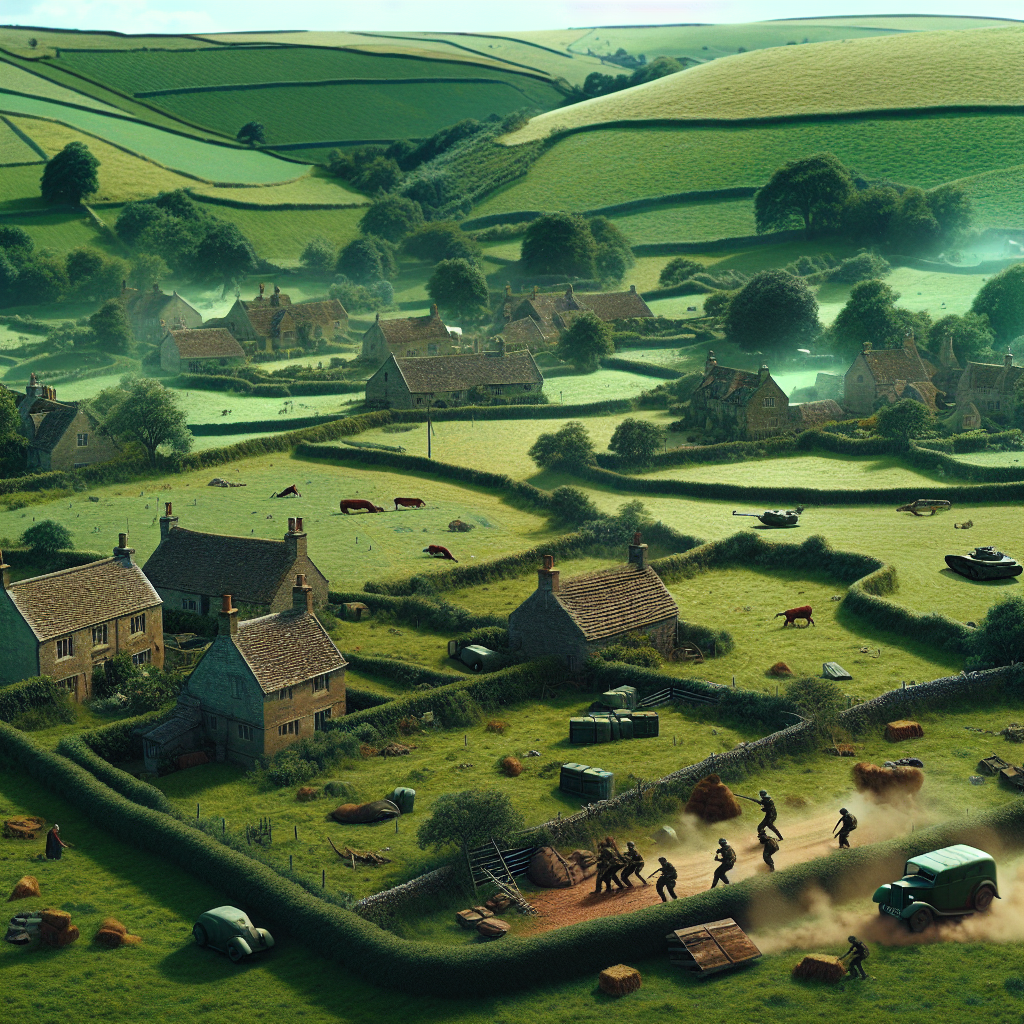

Rampisham might not be a name that pops up frequently in everyday conversation, but trust me, this hidden gem in Dorset, England, is worth knowing about. It's a place that has left its mark on the historical and environmental landscape far more than you might expect for such a small village. Rampisham is known for its striking surroundings, its importance as a broadcasting site in the past, and its contentious conservation issues which have sparked more than a few debates.
Rampisham is right where you'd picture an English village to be, nestled amidst rolling hills and lush greenery. Historically, the village found its claim to fame with the construction of the Rampisham Transmitting Station in the 1930s. This vital broadcaster of shortwave radio would beam the voices of nations further than the eye could see. During its operational heyday, it stood as a significant node, connecting Britain to its global neighbors through the airwaves. It's interesting how this sleepy spot became a conduit of such a powerful medium of communication, transmitting messages during times when connection meant everything.
Fast forward to today, when the station's towers have been silenced, but the echoes of their importance still linger. The site now stands at a crossroads, encapsulating the tensions that often arise between the past, the present, and the future. In a world that's increasingly prioritizing environmental preservation, Rampisham offers a curious case. When the broadcasting site became defunct, it quickly became a point of contention with a new type of value: biodiversity.
Environmentalists adore Rampisham Down, the area surrounding the old stations, because of its flourishing chalk grassland ecosystem. This is something not so common even in the span of England’s verdant countryside. The site's plant life offers sanctuary to a myriad of insect species, including butterflies that are as rare as they are beautiful. To conservationists, Rampisham has rightfully earned the status of a Site of Special Scientific Interest (SSSI), worthy of protection from the encroaching hand of human intervention.
Yet, not everyone agrees on how to handle the land, and that's where things get complicated. When solar energy companies eyed the site as a potential field of solar panels, it sparked a debate that underscored broader global conflicts: clean energy versus habitat preservation. On one hand, we need renewable energy to mitigate the climate crisis. On the other, such developments can jeopardize existing ecosystems.
Energy giants view places like Rampisham Down as prime real estate for sustainable development. They argue that transitioning to solar energy is a necessity, one that should rightfully edge out older forms of land use, especially those that no longer serve their original purpose. One certainly cannot discount the urgency behind renewable energy initiatives, as they’re projected as one of the few lifelines we have in reducing our carbon footprint.
On the flip side, conserving unique ecological spaces is not simply an aesthetic preference but a critical component of maintaining biodiversity. This is something that not just environmental purists, but anyone invested in the wellbeing of our planet, considers deeply significant. Rampisham, with its sedges and spotted orchids, marsh fritillary butterflies, and other rare organisms, offers a biodiversity haven that isn’t something easily replicable.
Even as debates rage on, Rampisham stands as a microcosm of the larger environmental contexts we're constantly navigating—a symbol of how challenging it can be to balance progress with preservation. This seemingly quiet corner of Dorset can be a teaching tool. Is there room for compromise? Hybrid models that incorporate both energy production and conservation efforts have been introduced elsewhere. Exploring such integrations could serve as a feasible solution, allowing us to craft landscapes that acknowledge both modern necessities and the sanctity of nature.
Young people, perhaps those most in tune with these emerging realities, have started to look at their local environments through a broader lens. There's an increasing understanding of the interconnectedness between climate and life, technology and tradition. This awareness fuels activism and demands for innovation when older generations might resist change.
Rampisham is instrumental in reflecting this evolving ethos, making it much more than just an historical footnote. It's a conversation starter, a debate-stimulating ground, and most intriguingly, a potential lighthouse guiding us toward better stewardship of both technological and natural resources.
As this discourse continues, one can't help but observe that how we treat places like Rampisham Today could very well dictate the legacy we leave behind. Whether you're on the side of solar panels or spotted orchids, the outcome here is indicative of broader societal values. And that’s a narrative that speaks volumes about where we're headed as a community, as a country, and indeed, as a global society.