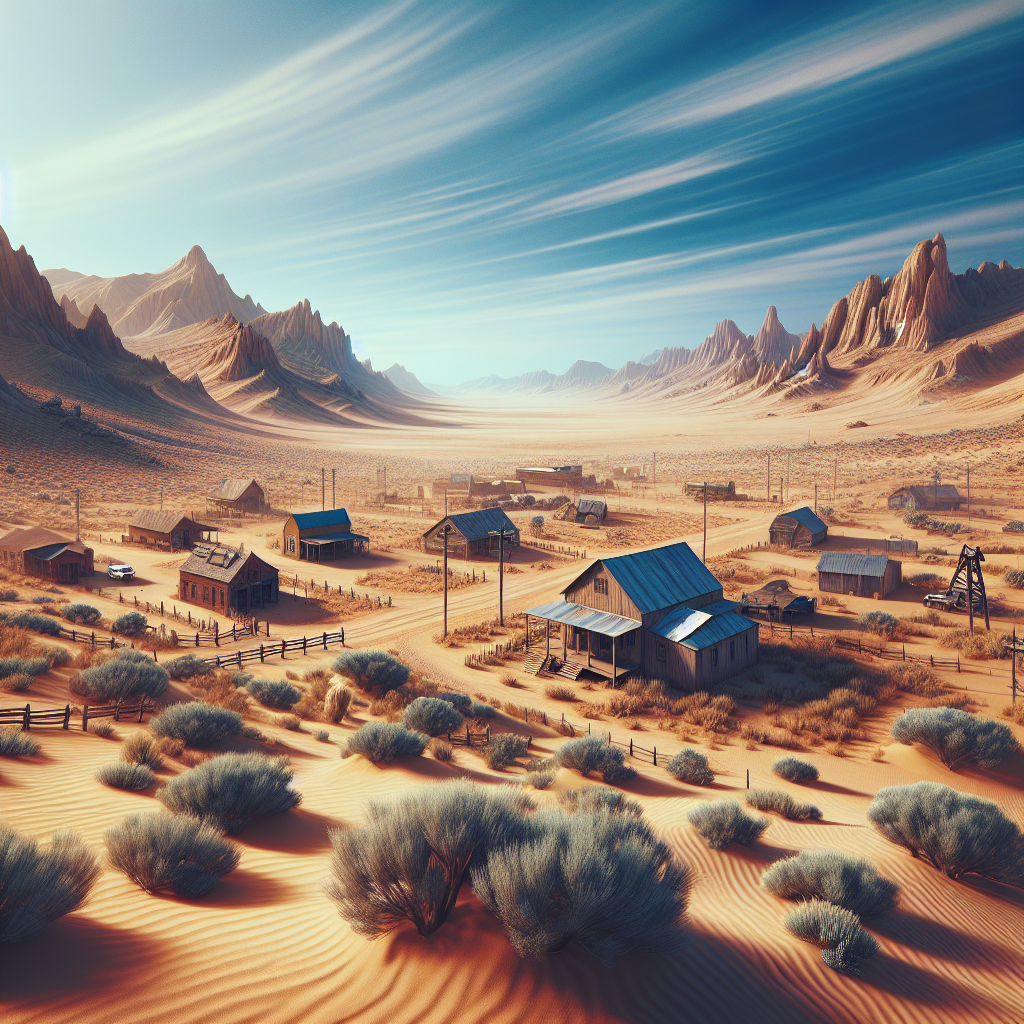

Have you ever heard of a town so small that it wears its remoteness like a badge of honor? Enter Post, Oregon—a minuscule yet charming speck on the map located smack-dab in the geographical center of the state. Originally established as a post office in 1889, Post is devoid of the modern frills and distractions that often steal our attention. It's an unassuming place with a population that likely matches the number of people in a college dormitory hall. Yet, there lies its charm.
Post finds itself front and center of a state known for its rugged coastlines, expansive forests, and progressive policies. This little community stands as a testament to the diverse spirit of Oregon. While the rest of the state leans heavily towards being eco-conscious and home to bustling tech centers, Post remains a cross-section of rural American life with its vast stretches of grasslands.
Despite its modest size, Post has a story that taps into the essence of Americana. This place was once a hub for communication—a smattering of homes, a store, and a post office that served as a vital connection point for ranchers spread across vast distances. People from surrounding areas sent and received messages here, fostering a social fabric that was crucial in the times before digital connections. There is something poetically nostalgic about an actual post office being so fundamental to the existence of a place called Post.
Having limited resources hasn't stopped the community from thriving in its own way. Here, life is more about cattle ranching, hay farming, and the occasional tourist who stumbles off the beaten path. Visitors frequently remark on the peaceful surroundings and expansive skies that lighten the soul. It’s the kind of place where one might initially experience a digital detox out of necessity instead of choice.
But it’s not all zen-like serenity. The struggles that rural America faces today are very real here, too. Access to healthcare and educational opportunities are limited. Economic hardship is an unfortunate reality when looking beyond the picturesque landscapes. It's easy to romanticize life in such settings, yet it's paramount to remember that residents tackle significant challenges daily.
The heart of Post even stirs debate, though it might surprise you. While many local folks lean politically conservative—common in rural seclusion—there’s a notable acceptance of liberal ideas from the larger Oregon communities. The struggle between maintaining traditional values and embracing a rapidly changing world sparks discussions in even the simplest gatherings. It’s within these talks that one realizes how crucial understanding and empathy are, regardless of political lines.
For the modern traveler, visiting Post is akin to time traveling. There's only a limited number of amenities, but the focus on nature might just be the welcome relief from urban clutter many seek. Known for its proximity to outdoor activities like hiking and camping, it showcases Oregon's untamed topography.
And while it can feel like time stands still here, changes do trickle in. Newcomers see potential and some locals are open to small-scale developments aimed at improving daily life without losing authentic roots. However, any changes meet cautious optimism, as the aim is to preserve the lifestyle that defines Post.
A distance exists, both physically and culturally, between the relaxed pace of Post and the bustling energy of Oregon's cities like Portland. Yet, this distance has allowed Post to develop and nurture its distinct identity. Living here encourages a focus on the essentials, fostering bonds that are uncomplicated but sincere.
To those interested in an authentic taste of Oregon beyond stereotypes, Post offers a refreshing counter-narrative. It's a place where the land shapes lives more than trends, and where every neighbor is a part of a support system essential for survival. Here, the spirit of camaraderie holds as much importance as any political ideology.
One might think that Post, Oregon, holds no real significance beyond its physical location, but that seems a grave underestimation. It's an example of America’s diverse topography, and its ability to welcome varied lifestyles. If you keep an open mind, visiting Post isn’t just about checking another dot on the map—it's about understanding a dynamic interplay between tradition and modernity.