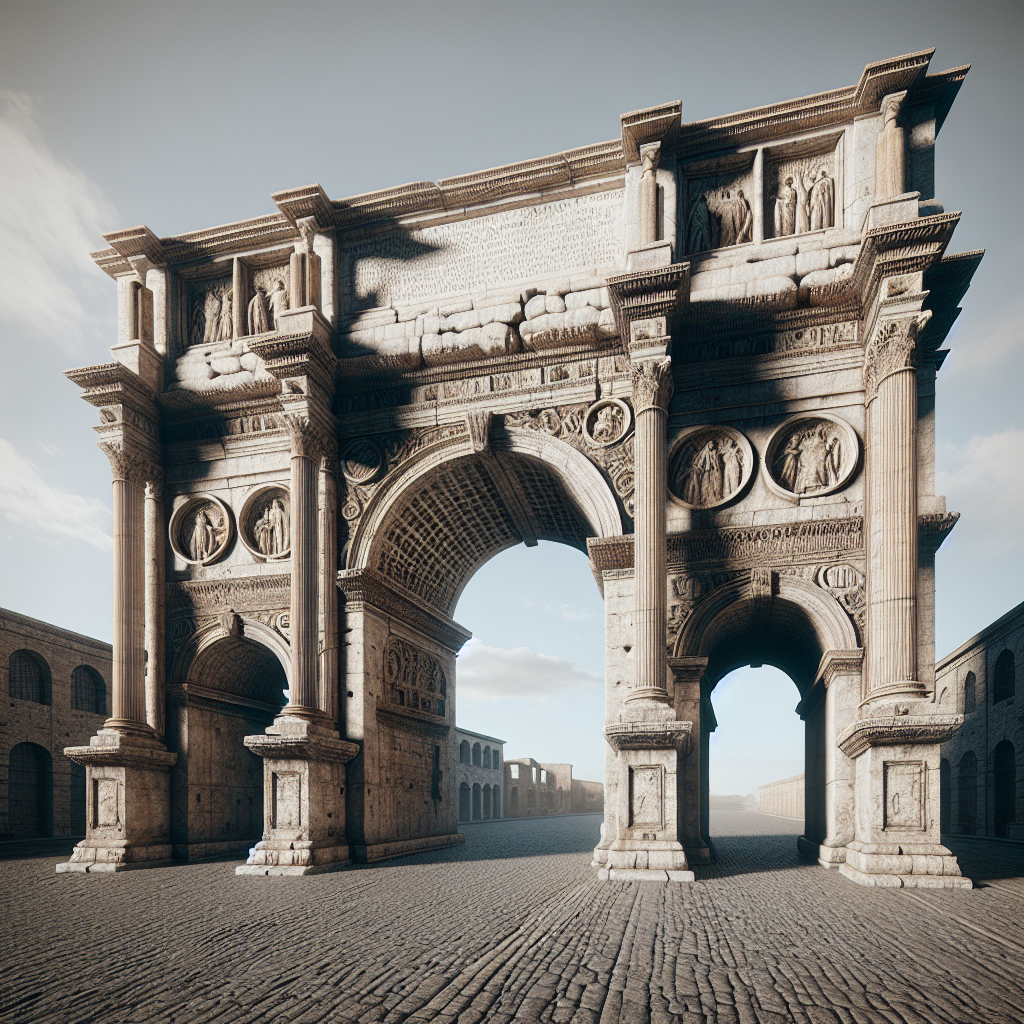

Strolling through the bustling streets of Rome, a city pulsing with history and modern life, you might find yourself captivated by the striking monument known as Porta Maggiore. Situated at a busy crossroads, this ancient gate has stood for centuries as a testament to Rome's enduring spirit. Built in 52 AD by the Roman Emperor Claudius, it forms part of the Aurelian Wall and serves as a passage into the heart of the city. Originally designed to manage the flow of the Aqua Claudia and Anio Novus aqueducts, Porta Maggiore is a marvel of architectural and engineering ingenuity. Now, amidst honking scooters and the hum of daily life, it stands as a reminder of Rome's dynamic past.
Porta Maggiore is more than just an ancient relic to admire. It represents a confluence of cultures and eras. As you stand before its towering arches, you are confronted with the tangible remnants of history meeting modernity. Rome has forever been a city of reinvention, where emperors, artists, and everyday citizens have left their mark. The gate has witnessed centuries of change, from being a critical point in the city's water supply system to becoming a symbol of resilience through the medieval period and beyond. This convergence highlights its political significance, a point of power and infrastructure, turning history lessons into a living experience.
Amid its ancient stones, you might find yourself thinking about the stories Porta Maggiore could tell. Picture the Romans, clad in togas, bustling through this gateway to trade, socialize, or perform state functions. On the one hand, this paints a glorious image of Rome at its peak, a civilization bringing innovations such as aqueducts to the forefront. On the other, it stimulates a reflection on current infrastructures, making us ponder on our priorities today in terms of public utilities and sustainable living. Millennials and Gen Z, known for their activism, might see parallels in the daunting task of balancing cultural heritage with modern progress.
For those with a keen interest in the architectural awe of ancient constructs, Porta Maggiore does not disappoint. Its dual arch setup is as practical as it is grand, with intricate carvings that are a testament to the Roman Empire’s artistic prowess. These carvings serve as history writ in stone, depicting emperors' triumphs and the mythological tales that bolstered the empire's cultural fabric. It's touching to think that artistry and civic duty intertwined so closely in a manner that our present-day civic projects might reclaim.
Yet, as much as this historic arch stands as an object of fascination, it is also a point of contention. Like so many spaces of historical significance, its preservation becomes a topic of debate. Conservation vs. modernization is a theme that regularly echoes through city planning offices and amongst locals who travel past its stony façade each day. How do we maintain such a landmark without detracting from the vibrancy and functionality of modern Roman life? It’s a balancing act that challenges us to consider compromises within our urban landscapes.
While Porta Maggiore invites appreciation and awe, one must not overlook or sanitize history. The Romans left us with legacies that glisten with innovation, yet came also from a society that practiced expansion through conquest, slavery, and other practices we would question today. Helping younger generations understand these complex narratives is a valuable task. Porta Maggiore reminds us that history wasn’t black and white; it is riddled with complexities, much like the dual arch of the structure itself.
Imagine the extraordinary conversations that can arise from visiting this gateway—not just amongst historians or tourists, but among groups of young advocates for social justice. They might gather to debate the mindful integration of historical frameworks within the dynamics of modern society. How do we acknowledge the past while championing a future where equality and sustainability are not merely aspirations but actions?
Porta Maggiore, in its majestic silence, stands vigil as a reminder and a challenge. It encourages us to embrace history’s lessons while questioning its missteps and inspiring us towards a future reinvigorated by these reflections. With each new technological and cultural stride, it beckons us to consider how those lessons might be built upon as the foundation of something enduring and equitable.
To the eyes of Gen Z, Porta Maggiore might be more than a landmark. It could be a canvas—a spatial and intellectual meeting point. Whether you are peering into its arches or rushing past them on a daily commute, this ancient portal might spark a realization that we, too, are part of an ongoing story. A narrative that compels us to think critically, speak empathetically, and act responsibly.