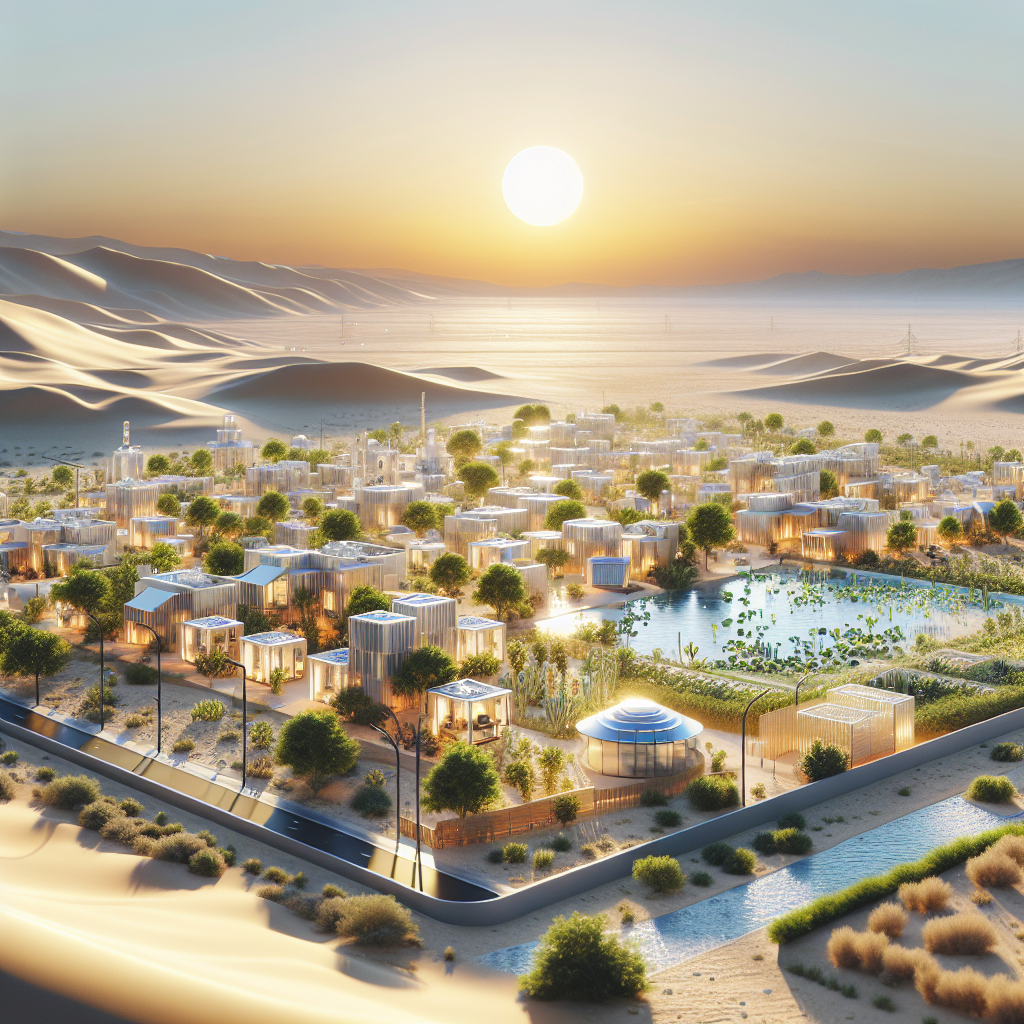

Hidden in the heart of the Negev Desert, Neot Smadar is more than just a mirage—it's a thriving, avant-garde community that offers a fresh perspective on sustainable living. This oasis began its journey in the 1980s when a group of like-minded Israelis sought to create a harmonious environment blending art, agriculture, and philosophy. Their vision was to establish not just an ecological village but a haven where the boundaries of individualism and collectivism blur.
Neot Smadar is an experiment in idealism and a shelter from the chaos of contemporary life. It's a microcosm combining organic farming, innovative architecture, and a collective lifestyle. Here, conversations revolve around how to treat the earth better and how to treat each other with equal respect. The people who live here don't just exist in nature; they engage with it deeply, nurturing it as they would a close friend. Neot Smadar is a place where ancient desert landscapes and modern ideas collide beautifully.
This intriguing community draws attention for its remarkable buildings, such as the Art Center. It's not just a gallery; it's a masterpiece of design itself. The architects took cues from indigenous traditions, bringing in curves, domes, and vibrant facades that merge aesthetics with functionality. Beyond the outward beauty, the building's creation involved many hands and hearts from around the globe, showing Neot Smadar's open-door policy to creative minds.
But why Neot Smadar? Is it possible to survive, let alone thrive, in such harsh conditions? The founding members embraced the challenge of desert cultivation as a metaphor for personal and communal growth. Against a backdrop of barren sand, they grew fruit-bearing trees and a sense of purpose, asserting that even desolation could be transformed with willpower and creativity. This has sparked conversations about environmental sustainability and human resilience, topics especially appealing to Gen Z, who are deeply concerned with climate change and ethical living.
While the place attracts admiration, it is not without its critics. Some skeptics question the practicality of such communities, arguing that they exist in a bubble, unsustainable on a larger scale. They may see Neot Smadar as a utopian dream, isolated from reality's challenges. This viewpoint raises valuable conversations about balance—whether it's possible to harmonize traditional modes of living with modern conveniences without compromising the planet.
Yet those living and visiting Neot Smadar experience something unique—learning from trial and error, designing innovative structures, and experimenting with agricultural techniques. It's a living laboratory, a testament to the creative spirit's potential to reimagine what an eco-friendly village could be. There's something almost poetic in the idea of creating lush gardens in the desert, a tangible manifestation of hope and human tenacity.
In Neot Smadar, youth find reasons to believe in a different future, where collective thinking and resource-sharing are not just ideals but practices. This resonates at a time when conversations about community and environmentalism are more urgent than ever.
A visit to Neot Smadar is not just a trip down a road less traveled, but an invitation to imagine and participate in shaping a future that values the planet and its people. As you walk along its paths and speak to its inhabitants, the silence of the desert gives way to an intricate conversation—one that challenges you to think about how you contribute to your world and what you can bring back to it.
Neot Smadar encourages everyone to take a closer look, to question how they live and what changes they might make. While it may be seen as an isolated experiment by some, for others, it's a source of inspiration for a lifestyle less ordinary. It's a reminder that even in a world that seems on the brink of ecological disaster, small changes and close communities might hold the solutions we seek.