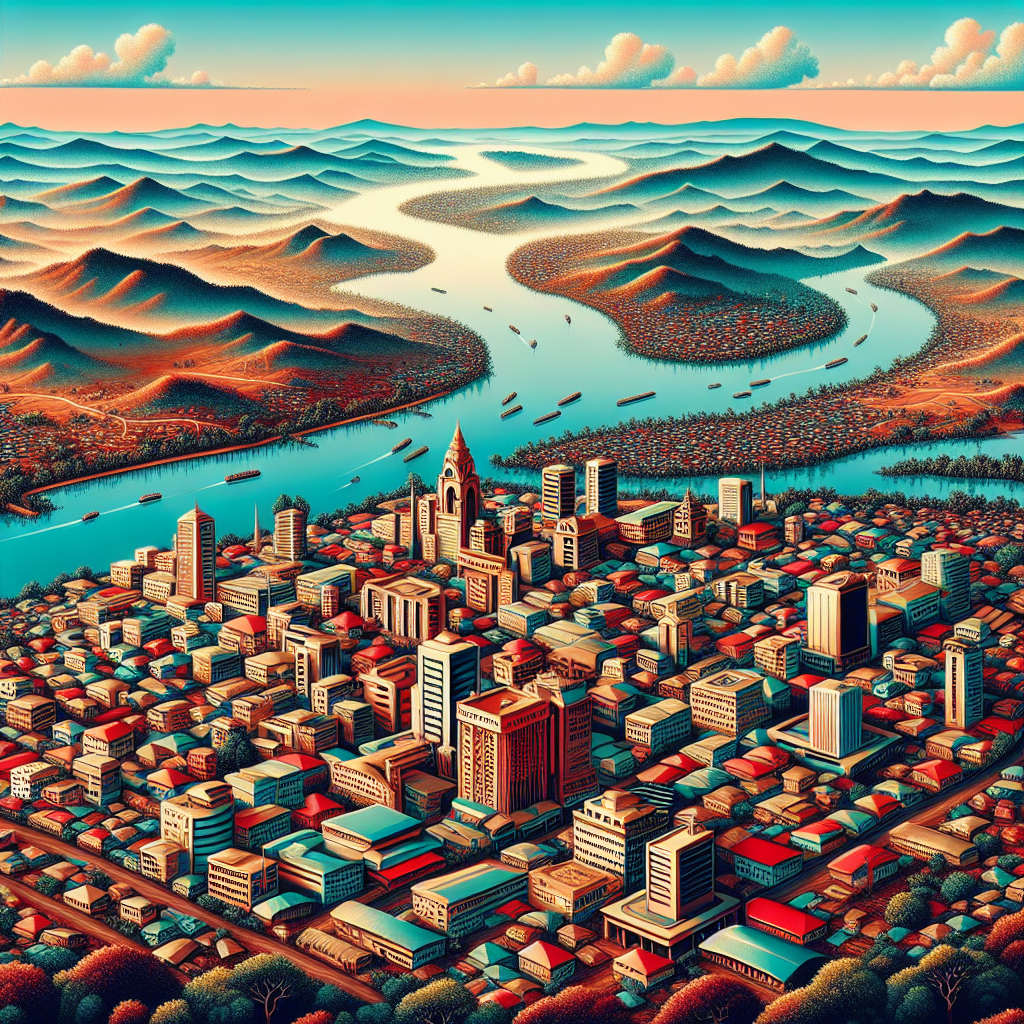

Makurdi, the lively heartbeat of Nigeria's Benue State, captivates with its unique blend of culture, cuisine, and community. Known as the capital city, Makurdi serves as a significant hub for agriculture, education, and river port activities. Established in the early 20th century, it's perched on the banks of the Benue River, one of the country's principal waterways. This city's vibrancy is fueled by the people of the Tiv, Idoma, and Igede ethnic groups, whose traditions and customs converge to create a rich tapestry of cultural diversity. But beyond its surface charm, Makurdi faces challenges that reflect a broader national narrative of growth and struggle.
The city's agricultural backbone cannot be overstated. Known for its fertile lands, Makurdi is a leading producer of yams, rice, and other notable staples, feeding not only its people but contributing significantly to Nigeria's food basket. The proximity to the river enhances its irrigation potential, supporting farming year-round. This abundance, however, is a double-edged sword. Climate change and inconsistent government policies often threaten these agricultural gains, leading to a delicate dance of survival for many farmers who depend heavily on these resources.
Education is another pillar that Makurdi rests upon. The prestigious Benue State University and the Federal University of Agriculture are not just educational institutions but powerful engines driving the city's intellectual and economic progress. They attract students from all over the country, bringing in fresh ideas and youthful energy. These universities offer courses that are highly relevant to the local economy, particularly in agricultural sciences, which further binds the academic environment to the town's roots.
Religion and culture intertwine seamlessly in Makurdi's societal fabric. Though predominantly Christian, the city's people have carved out a space for religious freedom and practice, evidenced by the peaceful coexistence with their Muslim neighbors. Festivals such as the rich and colorful Tiv Kwagh-hir, a cultural dance-drama festivity, showcase the vibrancy of traditional practices that have been preserved through generations. This blending of faith and culture is not without tension, though. Occasionally, national political dynamics trickle down, disrupting this harmony and posing challenges that can test the resilience of the community’s unity.
Of course, it would be remiss not to mention the challenges that Makurdi faces in its infrastructural development. Like many Nigerian cities, the struggle with inadequate infrastructure is evident. Roads are often in disrepair, electrical supply can be erratic, and access to clean water remains inconsistent. These are not just barriers to growth but impediments to a better quality of life, impacting education, healthcare, and economic activities for its half-million-plus inhabitants. The government's role in addressing these needs is critical, yet it constantly battles with issues of corruption and misallocation of resources.
Still, the spirit of the Makurdi people can't be dampened. Entrepreneurship thrives here despite the odds, with small businesses and local markets buzzing with activity. These enterprises are often family-run, weaving a close-knit economic tapestry that ensures survival and resilience. The presence of the river adds another dimension to commerce, bridging the gap between local markets and more extensive, regional trade networks.
The social dynamic in Makurdi is also one of its defining traits. Gen Z, the digital natives, are increasingly steering the dialogue towards innovative solutions, leveraging technology to create new opportunities. Social media has become a tool for activism and community building, helping young voices speak out about the pressing issues they face. While some elders view this technological shift with skepticism, fearing the erosion of traditional values, others understand its potential to foster unity and push for change.
In considering Makurdi’s journey, it's essential to understand the delicate interplay of tradition and modernity. As the city looks to the future, there is a palpable sense of hope mixed with the reality of the challenges ahead. Young people, having grown up in an interconnected world, are dreaming bigger than ever before. They are challenging norms, advocating for more inclusive policies, and demanding transparency from their leaders.
The resilience and adaptability of Makurdi's people serve as a testament to human spirit and innovation. While on one hand, the city grapples with immediate needs, on the other, it yearns for innovation and better governance. It embodies the paradox of Nigerian cities: richly resourced, yet in need of opportunities for growth and development. But the journey of Makurdi is more than a narrative of adversity; it's also a celebration of strength, community, and the indefatigable hope for a better tomorrow.