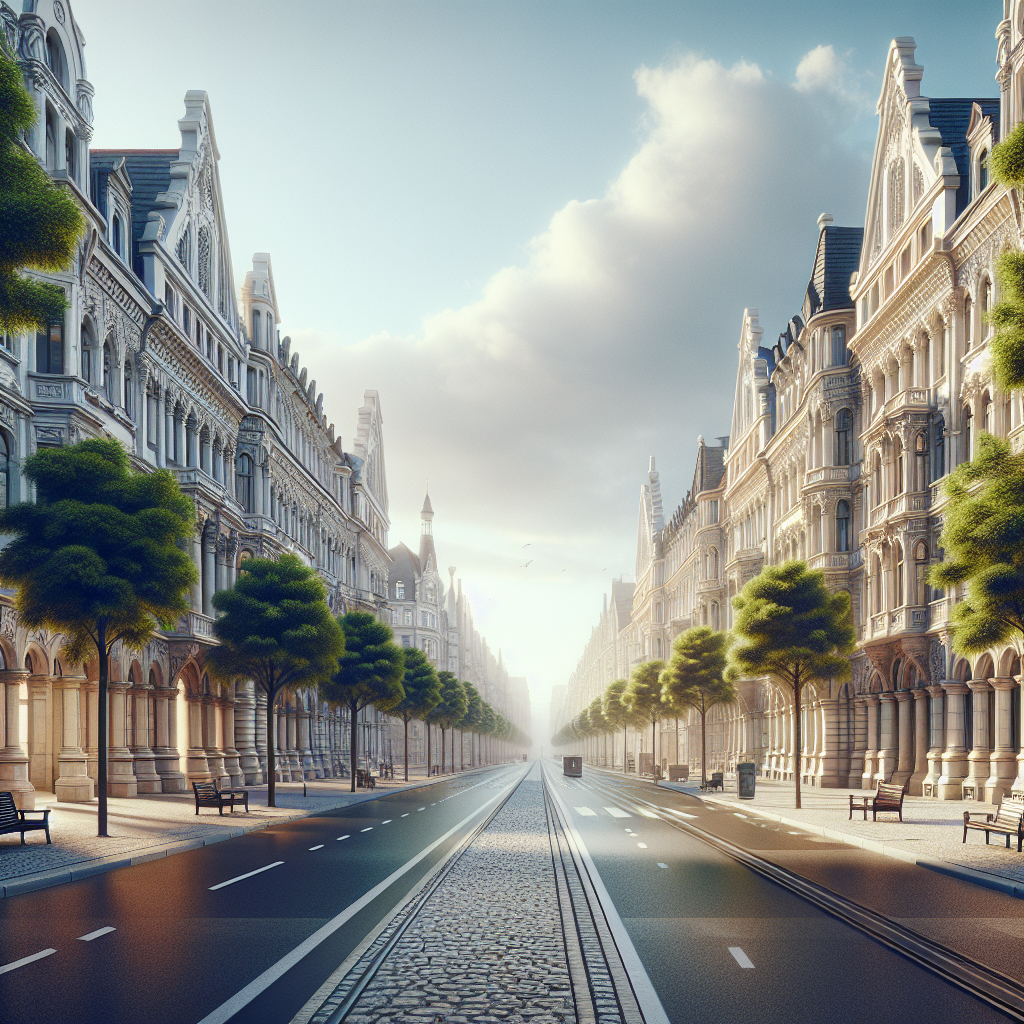

Picture yourself walking down a street that's not just a plain road, but a vivid tapestry of time woven with hubs of knowledge, history, and youthful vigor. Welcome to Ludwigstraße, an iconic boulevard in the heart of Munich, Germany, that captivates with its architectural elegance and stories that stretch across centuries. Originating in the early 19th century, this street grew under the rule of King Ludwig I of Bavaria, whose vision shaped it into a symbol of modern urban planning at the time. Munich, a city famous for its mix of tradition and innovation, acts as the perfect backdrop for this historic street located in the Maxvorstadt district, which is renowned for housing prestigious institutions and cultural landmarks.
Ludwigstraße is more than just a road; it's a legacy of King Ludwig I's ambition to create a new Athens on Isar, combining grandeur with functionality. The street stretches approximately one kilometer, beginning at Odeonsplatz and ending at the Siegestor, itself a triumphal arch and a remnant of the king's dreams for the Bavarian capital. Walking along Ludwigstraße, you encounter a plethora of majestic structures, many hailing from the reign of King Ludwig I, characterized by neoclassical architecture. But beyond its historic allure, Ludwigstraße also breathes the energy and dynamism of today.
Unraveling the magnificence starts with the architectures that line the street. Think of Ludwigstraße as a gallery where iconic neoclassicist buildings proudly exhibit their grandeur. From the Ludwig Maximilian University (LMU), an institution known for academic excellence and progressive thought, to churches like the St. Ludwig's Church, each building prompts profound appreciation for their intricate design and the stories they hold. LMU, with its history of academic prowess, fosters a vibrant student community, injecting youthful energy into the stately atmosphere. This juxtaposition of student life against the historical backdrop makes Ludwigstraße feel alive and constantly evolving.
The street’s role in education can’t be overstated. LMU is one of Europe’s leading research universities and has undergone significant transformations since its relocation to Munich in 1826. Over the decades, its halls have been tread by thinkers, scientists, and activists who have shaped both local and global history. While such places of learning inspire, they also highlight social issues and occasionally reflect broader societal tensions. Debates on education equity and access often find resonance in and around these academic hubs, making them potent symbols of progress and challenges in the modern world.
In contrast to educational grandeur, the religious and cultural buildings enhance Ludwigstraße’s unique character. St. Ludwig's Church, a striking example of religious architecture, features vibrant frescoes, including Peter von Cornelius' "Last Judgment". These elements convey not only faith but tell visual stories of societal values and art evolution. Meanwhile, the Bavarian State Library stands as a bastion of knowledge and a haven for literary enthusiasts. It echoes the tradition of enlightenment where ideas unfurl beyond generations, speaking to curious minds seeking wisdom and solace.
The heart of debating emerges when considering the integration of historical preservation with modern needs. Progressive voices often push for sustainable use of such historically-rich areas, envisioning spaces that honor past while serving the present community's needs. Critics may argue about the costs involved or the potential risk of 'freeze-framing' progress in nostalgia. Balancing tradition with sustainability and accessibility, especially in urban planning, adds layers to the narrative of Ludwigstraße.
Culturally, Ludwigstraße is more than a museum piece. It’s a narrative of innovation. Head to the street during any public event, and you'll witness how dramatically it transforms into a lively communal space. It becomes a canvas for festivals, protests, and leisures, where social consciousness and historical pride meet. This dynamism ensures Ludwigstraße remains pertinent, not just as a historical relic or scholarly playground, but as a living part of Munich's urban experience.
Ludwigstraße’s charm extends beyond structural majesty and intellectual rigor. It offers simple joys: leisurely strolls under tree-lined paths, spontaneous cafes perfect for a cozy chat, or welcoming nooks ideal for people-watching and engulfing yourself in the flow of city life. To walk down Ludwigstraße is to traverse not just physical space, but to journey through time and culture echoed through its buildings.
There’s a warmth to wandering Ludwigstraße, contemplating how each step connects you to the ambitions of past visions and the vibrant aspirations of today. Exploring its legacy and modern life invites reflection on how urban spaces evolve alongside social values and technological advance. Discussions about preserving such spaces often spawn diverse opinions, yet they all converge on finding harmony between honoring heritage and embracing change. Ludwigstraße epitomizes this balance—rich in history yet alive with modern vitality, resonating with those who cherish both narratives and innovation.