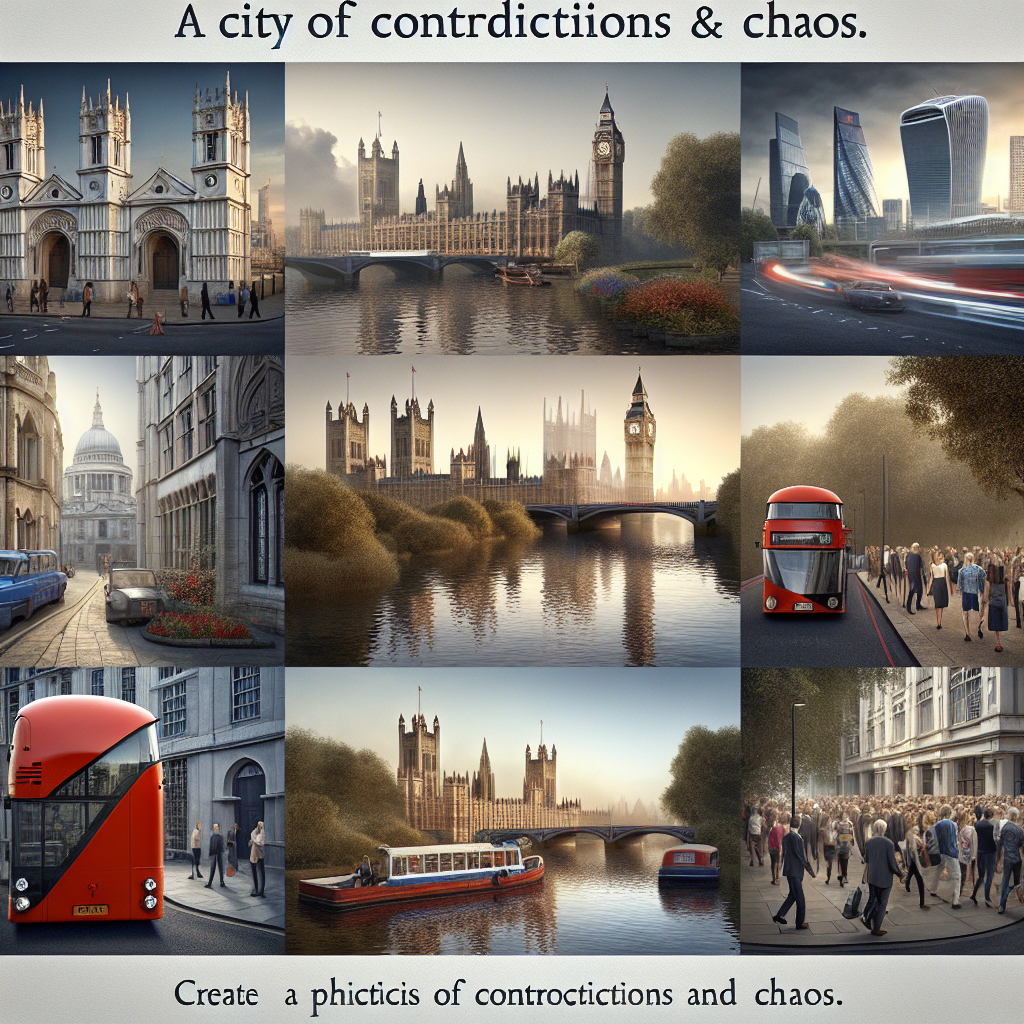

London often boasts its royal charm, glamorous lifestyle, and historic elegance, but there's another face - one that doesn't always sparkle under the spotlight. For those who don't know, 'London in the Raw' isn't just a phrase. It's a 1964 film that peeled back the polished veneer to reveal the city's gritty, authentic spectrum. Why look at London through this lens? To see a city stripped of clichés, understand the harsh realities beneath the tourist destinations, and listen to voices that often go unheard.
The '60s brought to light the vibrancy of London's diversity, the protests against authoritarian control, the strife for progressive change, and a tense socio-political climate. It was a transformative era, as much for the architecture as for the societal currents that flowed through the streets. 'London in the Raw' was daring; it took the viewer on a ride through nightclubs thrumming with raw energy and alleys shaded in anonymity, leaving audiences somewhere between awe and discomfort.
Our present map of London might glide over pockets of grit or poverty, focusing instead on iconic landmarks. Yet, even today, there's a robust underground and a societal heartbeat that mirrors the complexity of the past. News cycles often ignore it, but it's where real stories get written, lived, and fought. Economic hardships, gentrified neighborhoods pushing out long-time residents, and social inequalities are modern-day truths echoing the past feel of London in raw form.
Many tourists fling themselves into London with itineraries packed with the Tower of London, the Changing of the Guard, and Tate Modern. Yet, to see what really makes London tick, you might head south of the river or east towards Tower Hamlets, an area both bustling and frayed, known for its rich tapestry of cultures. Here, the living history unfolds amid street markets laden with foreign spices, and dialects clashing together in vibrant soundscapes.
As we tug at this tapestry, let's admit that underneath its vibrancy is often a tale of survival. There are districts where systemic inequality takes firm root, where power struggles play out not just in Parliament but within community halls and street corners. It's here we find a testing ground for policies spoken about in polished offices but seldom felt by the white collar.
This gritty London allows us to question the balance between progress and loss, between embracing diversity while combating ghettos of poverty. It's not just the fault lines of class or wealth that carve up the city, but the aspirations and resilience of its people crafting stories of hope, each one wrapped in the fabric of their community.
Reflecting on London's raw side isn't a call to dwell on misery. Instead, it's about peering through the illusions and grappling with realities where culture mixes with stark social contrasts yet converges into a pulsating urban landscape. There’s a continuity of counter-cultural narratives stretching from Carnaby Street's heyday to today’s hipster hubs in Hackney, reflecting the core of what 'London in the Raw' unveiled: a complex metropolis rich in diversity and robust in its contradictions.
Let's chat about the conflict inherent in gentrification, which, since 'London in the Raw,' has never drifted from relevance. It's a tale of ambivalence, wrapped neatly in the façade of urban renewal. The promise of revitalizing neighborhoods oftentimes sidelines those who’ve cultivated their history. Trendy cafes emerge as symbols of cultural erasure camouflaged as progress, yet opportunities take shape amid contention.
Finding London beneath layers of transformation means understanding the tension between preserving heritage and embracing the tides of inevitable change. On one hand, refurbishment appears benevolent, a facelift for crumbling stone and blighted blocks. On the other, it evokes a displacement of longtime residents, eroding community nuances through a new gloss of prosperity.
As a city, balancing its open doors to global influences while holding onto local roots remains a complex narrative of change vs. continuity. Public critiques illuminate the struggle cities face: to enjoy growth without sacrificing the diversity that has always been its lifeblood.
When you next wander through London's labyrinth, tune your ears not just to its ceremonial sounds but to the heartbeat of its unexplored quarters. Flick through the archives of lost voices that 'London in the Raw' narratively handed down to us. Despite decades past, the vibrant contradictions of the city in the raw continue to craft the distinct London skyline today.