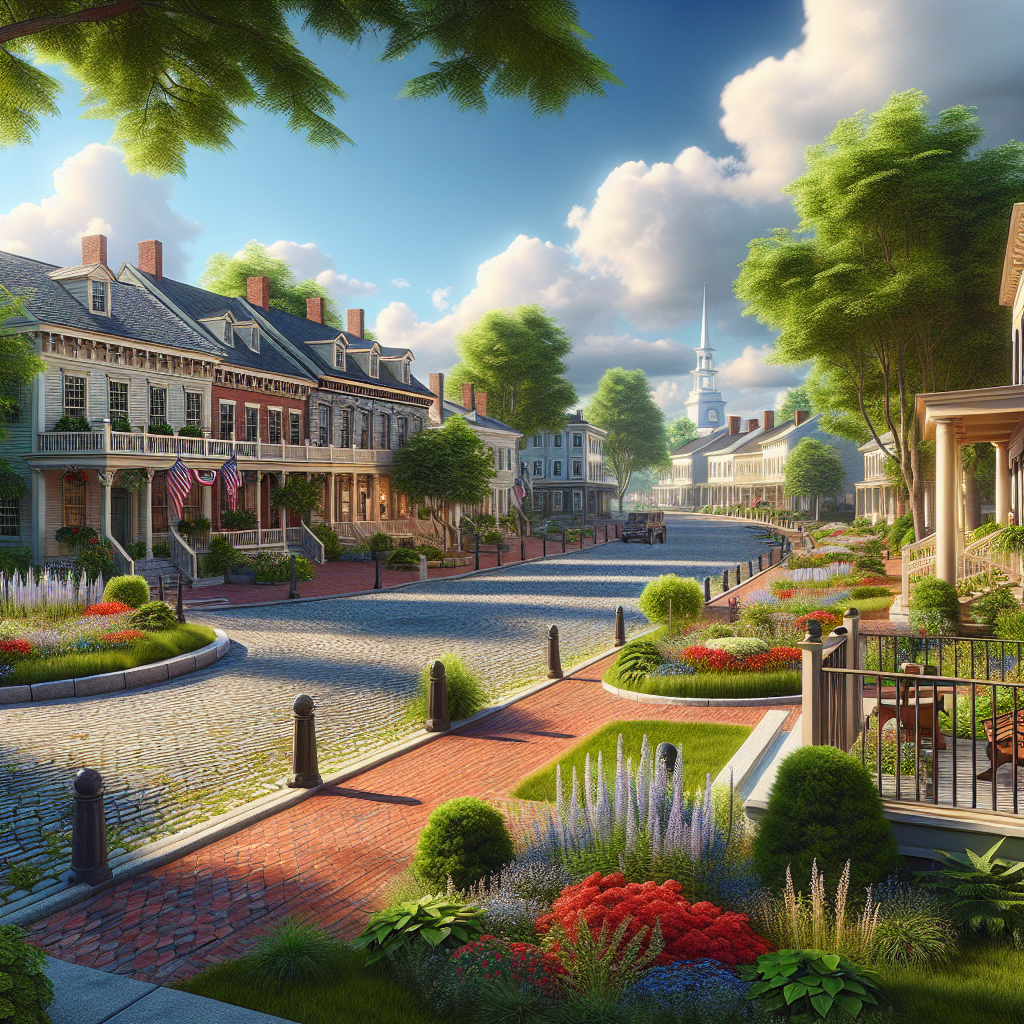

If you've ever wanted to step into a time machine and visit an era where cobblestone streets whispered tales of yesteryears, Limington Historic District might just be your dream destination. Nestled in York County, Maine, this district is like a hidden gem radiating the timeless charm of 19th-century New England. It encompasses a series of structures and streets, each narrating its own unique story since Limington began to thrive as a township in the early 1800s.
The heart of the historic district beats at Limington Village. It's a span of about 13 acres, marked with architectural marvels primarily from the Colonial and Federal eras. These buildings aren't just old relics waiting to crumble; they're pieces of art, lovingly preserved to remind us of our shared past. From the Limington Academy, a testament to educational aspirations, to the Union Church, these structures bear witness to a community that was bustling with ambition and goodwill.
You might find it intriguing that these buildings tell not just stories of prosperity but also of struggle. The district was inducted to the National Register of Historic Places in 1985, a nod to its cultural significance and a shield against the relentless march of modern development which threatens historical sites across the country. Amidst the relentless expansion and technological obsession that seem to consume our zeitgeist, places like Limington remind us of simplicity and a slower pace of life.
Of course, one can't ignore the pressing debates about preservation costs. Detractors argue that funds could instead tackle immediate social issues or modern infrastructure needs. However, proponents might argue that protecting these sites helps maintain a connection to our roots, offering educational platforms and tourism revenue that, in the big picture, pay dividends to the community.
Speaking of the community, it's not just about old buildings. Limington's residents today are guardians of these storied streets, their zeal and pride evident in how they balance growth with preservation. Here, one witnesses the interplay of traditional events and modern-day lifestyles—a blend of quaint agricultural fairs and farmers' markets that attract both locals and visitors.
Walking through Limington Historic District is like flipping through a history book that's alive. Picture spotlessly preserved 19th-century homes flanking the central street, each with its lush gardens and quaint porches. Imagine a crisp fall day with leaves crunching under your feet, offering glimpses into the kind of tight-knit communities that laid down the very foundations of American society.
What makes Limington stand out is its simplicity. The architectonics might not scream opulence, but they emanate authenticity. Each building stands as a totem of craftsmanship—hand-carved woodwork, stone foundations stripped bare by time, and interiors that have witnessed eras evolve. It is this juxtaposition of simplicity and sophisticated artistry that gives the district its unique appeal.
For younger generations, Gen Z included, Limington Historic District offers a chance to reflect on how far we’ve come and to appreciate the values that have endured. The authenticity and historical value of such locations can't be found in a digital archive or a virtual reality tour; they have to be experienced in person. It's about smelling the aged wood, feeling the same breeze that caressed the cheeks of those who walked these streets centuries ago, and hearing the echoes of footsteps that once trod familiarly.
Yet, we can understand why some might feel disconnected from the past. In a world growing increasingly globalized and digitized, historic districts may seem like an irrelevant chapter in a fast-moving book. However, they allow us exposure to perspectives beyond our immediate digital bubbles, acting as reminders that modernity doesn’t automatically equate to better, but to different.
What's special is how these stories and experiences are communicated through interactions with the local guides and residents who elevate the visit. It’s about the shared human experience and memories, transcending generational gaps while enriching our perspectives.
The commitment to conservation seen within Limington is subtle, yet impactful. It’s about maintaining architectural integrity and engaging local communities in conversation—a delicate balance that requires both passion and pragmatism. Visiting or learning about Limington could spark curiosity in Gen Z folks, potentially informing careers in fields like history, architecture, or environmental conservation.
Yes, the conversation around historic districts like Limington is wide-ranging. It touches on politics, community, economics, and identity. It embodies how varied narratives can coexist and how appreciating history is an acknowledgment of diverse realities, past and present. The existence of this timeless district embodies a moving tale of who we are and perhaps more importantly, who we choose to be.