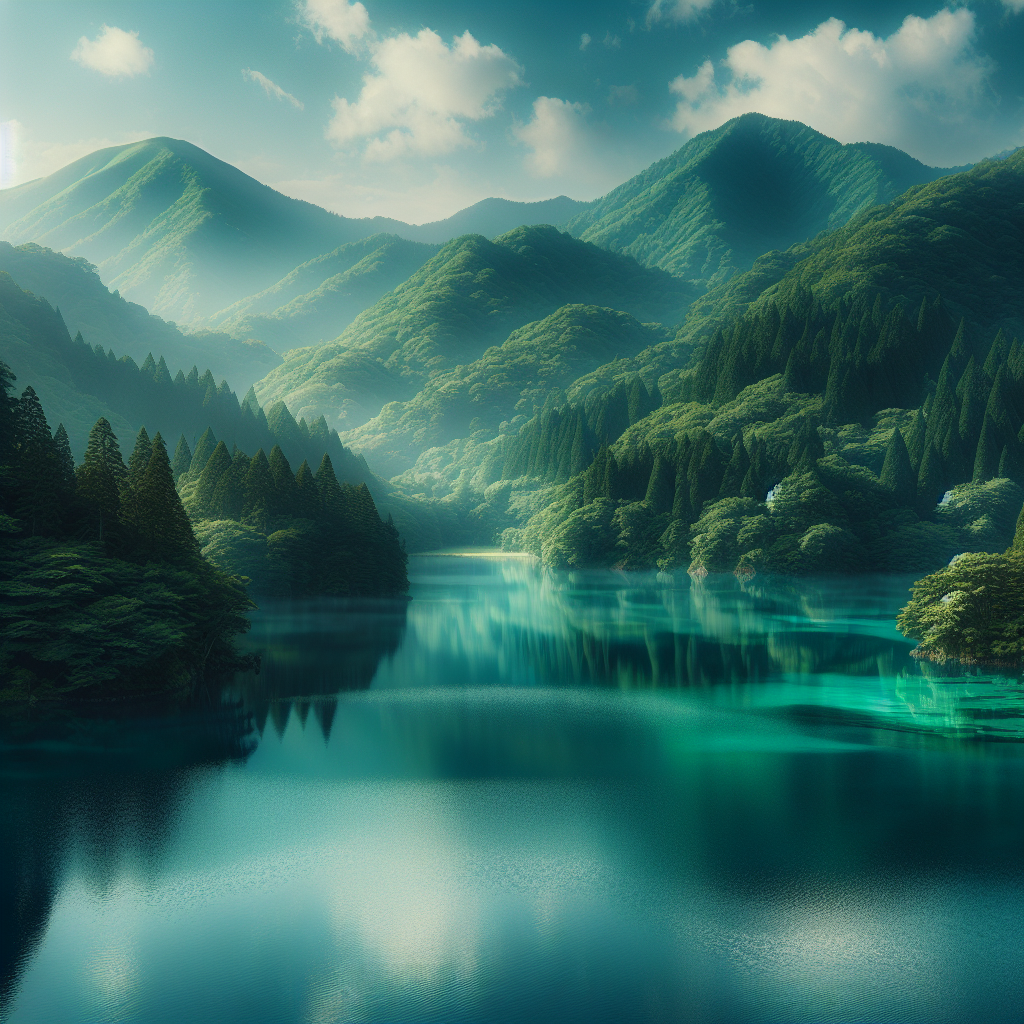

Lake Suigetsu is not just another picturesque lake; it's a shimmering jewel tucked away in Fukui Prefecture, Japan, and it holds the secrets of millennia both above and below its waters. This natural marvel has entranced scientists with its tranquil beauty, standing as a witness to nearly 70,000 years of climactic stories layered patiently at its depths. These age-old stories, recorded without a laptop or smartphone but rather in annual sediment layers called "varves," are key to understanding Earth's history.
Lake Suigetsu, alongside its neighboring lakes Mikata, Suga, and Kugushi, forms part of the Five Lakes of Mikata. This area provides a stunning scene of deep blue water encircled by lush greenery, a spot where travelers can pause and appreciate nature's hand. However—don't be fooled by its serene appearance—below that tranquil surface lies vital information that helps scientists refine radiocarbon dating, a critical method used in archaeology and history for determining the age of ancient objects. And yes, this matters to us today because knowing our past can guide our future choices.
From your phone's screen, the lake might look like an image worth turning into a digital wallpaper, but those layers of varves are far more than just nature's artistry. These layers give us a timeline in physical form. Initially, recognizing the potential of these layers began in the 1990s when researchers realized that Lake Suigetsu's sediments could provide a precise, continuous climate record. It's almost like flipping through Earth's history, page by varve-page.
This scientific breakthrough was made possible thanks to the distinct seasonal climate in Japan, which prompts each year's sediment layer deposition in a systematic rhythm. Each varve is made visible and counts like a natural calendar, recording climate changes and volcanic eruptions over time. For years, scientists traveled to Fukui Prefecture to extract sediment cores spanning 73 meters to measure the varves. What followed were countless hours of scrutiny, aiming at aligning these natural records with carbon dating timelines.
Some might argue that allocating resources to study sediment layers in a remote lake is indulgent when we face pressing global issues. Why prioritize historical timelines when we're in the midst of climate crises and social upheaval? But here's where understanding the past becomes our compass. Lake Suigetsu's data are crucial not only for dating ancient artifacts but also for contextualizing our climate trajectory. The past might not be a comforter for today’s realities, but it provides insights that can steer policy decisions and foster innovation to counter environmental challenges.
Yet, it’s not just scientists who are drawn to Lake Suigetsu. Young travelers, history aficionados, and lovers of myths and legends, find this lake captivating too. Accompanying its status as a wellspring of scientific data, the lake has inspired folklore and artistic expression. Locals spin tales of mirrors and moons, with "Suigetsu" translating to the "Moon on the Water"—an ethereal name for a lake that reflects the skies and secrets of the past.
Artistic allure aside, tourism around Lake Suigetsu is fostered by its colorful autumn foliage and springtime cherry blossoms that mirror in its waters. That picture-perfect scenery is tempting, yet there's a deeper appreciation and connection one can foster with the environment, a kind of reverence instilled by standing before something that holds history. Suigetsu isn’t just a postcard—it's a silent testimony to the passage of time.
Critics might not appreciate the relevance of analyzing sediment layers in the grand scheme of potential environmental policies or education curriculums. Some may propose diverting funds to more immediate ecological restoration projects; others might favor channels like direct activism over indirect scientific studies. All viewpoints carry their merits. Balancing short-term needs with long-term research is an ongoing conversation. Perhaps the influence of such studies isn't immediate but undeniably pivotal in building a bedrock for informed decision-making.
This mysterious body of water is guaranteed to captivate those who visit. With its promise of serenity and scientific richness, it attracts more environmentally conscious globetrotters who cherish ways to improve their communities while preserving history. Lake Suigetsu serves as a bright reminder that nature is as valuable for its quiet presence as its scientific revelations. It urges us to respect and learn from the perennial whispers of biodiversity around us.
Ultimately, Lake Suigetsu embodies a fabulous marriage of science, nature, and cultural significance, a place where factual data and fantastic folklore weave together. As climate change becomes a larger character in our daily lives, understanding these histories may seem like reading a fantasy novel to some, but to others, it’s a critical source of knowledge for pursuing a sustainable future. And so, Lake Suigetsu stands, as it has for millennia, a reflective mirror for both the Earth and ourselves.