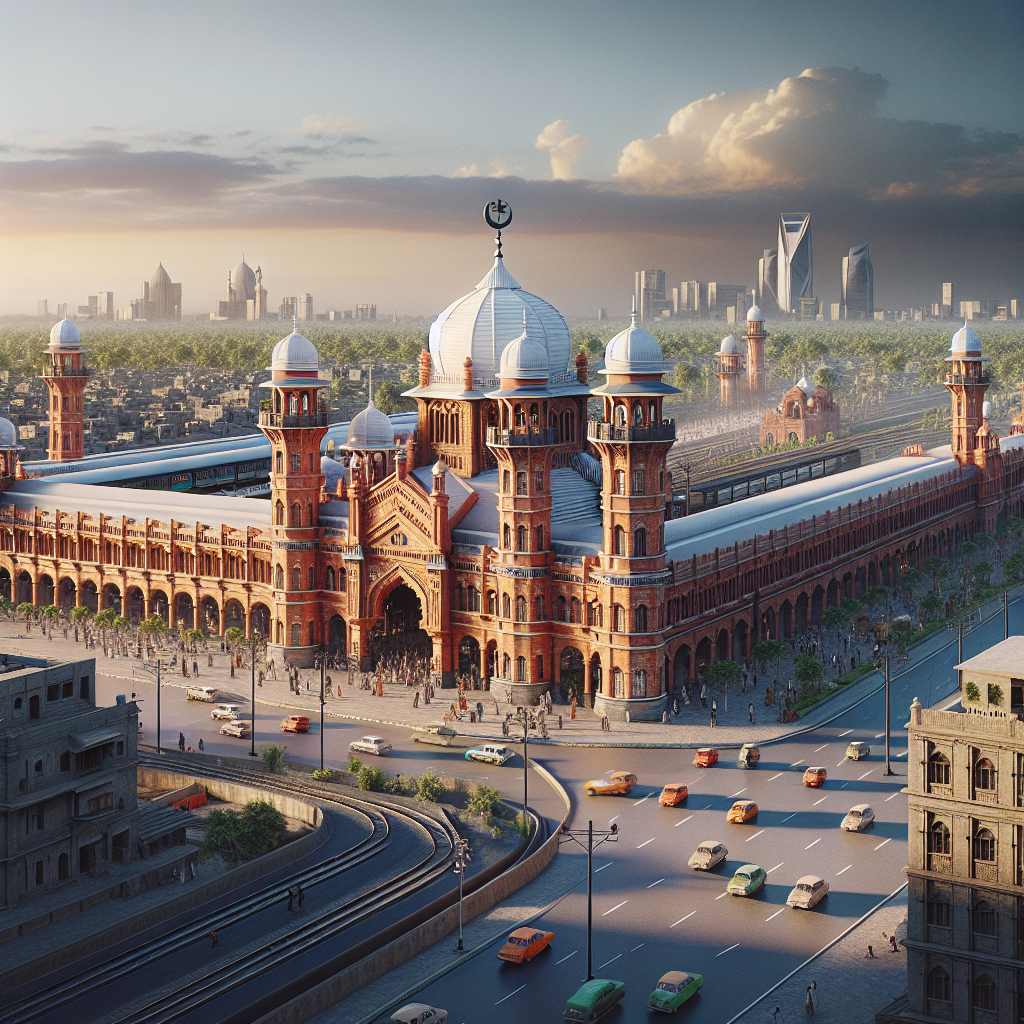

Step into Lahore Junction railway station, and it's like setting foot into a swirling mix of history, culture, and movement. This iconic site, located in the bustling heart of Lahore, Pakistan, is not just a stop on a railway line but a witness to over a century of social change and architectural grandeur. Constructed during the British Raj, its origins date back to 1860. Here, the past echoes in its colonial-era architecture while the modern-day hustle reminds us of its role as a pivotal transport hub.
What makes Lahore Junction special is the tapestry of stories it weaves. It stands as one of the busiest stations in Pakistan, with thousands of passengers passing through its platforms daily. Commuters range from travelers eager to explore the vast landscapes of Pakistan to locals going about their day-to-day business. This constant flow of people speaks volumes of the station's significance in knitting together the fabric of urban life.
Inside the station, history buffs can bask in its Victorian and Gothic Revival structure, a testament to an era when the British rulers left their visible mark on the subcontinent. The pointed arches and red-brick facade are not just architectural details; they are chapters of a narrative intertwining colonial influences with native resilience.
For the younger generations, especially Gen Z, understanding such spaces is like opening a portal to an era they might not have directly experienced. It offers a lens to view how colonialism subtly infiltrates modern infrastructure, and how these remnants cohabit within today's spaces.
The station is not just about the past, though. It's also a symbol of modernity's embrace. Technological upgrades have seen the incorporation of digital displays, ticketing systems, and security enhancements, making the station a blend of old-world charm and contemporary efficiency. These changes aim to accommodate an ever-growing number of passengers more comfortably and safely, showing how transport continues to adapt to societal needs.
Climate change and sustainability discussions also shape how we perceive such infrastructures today. With an increased focus on minimizing carbon footprints, railways are gaining attention as a more sustainable mode of transport compared to road vehicles. For many, using the train marks a shift towards environmentally conscious decisions, adding another layer of relevance to stations like Lahore Junction.
Differences in view might arise, especially when discussing conservation versus modernization. Some might argue that enhancing functionality and modern facilities occasionally overshadows heritage preservation. Bridging these two aspects requires thoughtful planning, ensuring that the station meets contemporary requirements without erasing its historical essence. Preservationists dream of maintaining its original glory, while others look towards innovation.
This conversational topic about balancing development with historical respect encourages young people to think critically about progress and tradition's intersection. Lahore Junction, in essence, is not simply a departure and arrival space but a canvas for architectural discussions and a reflection of societal evolution.
Food stalls and vendors in the station yard add an entirely different flavor. Offering everything from traditional snacks to modern-day quick bites, these informal eateries are a microcosm of Lahore's broader culinary culture. They serve as places where culinary traditions meet the fast-paced lives of travel-weary passengers, providing a brief pause with a taste of local life.
In this melting pot of activity, it’s vital to remember the workers who keep it all running. From the platforms to the back offices, individuals work diligently to maintain the station's operations round the clock. Their roles are crucial in providing safety and services, and their stories remind us that behind every operational marvel are the efforts of ordinary people.
Lahore Junction is not just a station; it's a living entity, bustling with the rhythms of daily life, stirred by the echoes of the past, and shaped by future aspirations. Stepping into its world is like stepping into a narrative of time, where every track and beam tells a story waiting to be heard. Embracing its significance goes beyond acknowledging its past; it involves seeing its living legacy continue to evolve with each passing train.