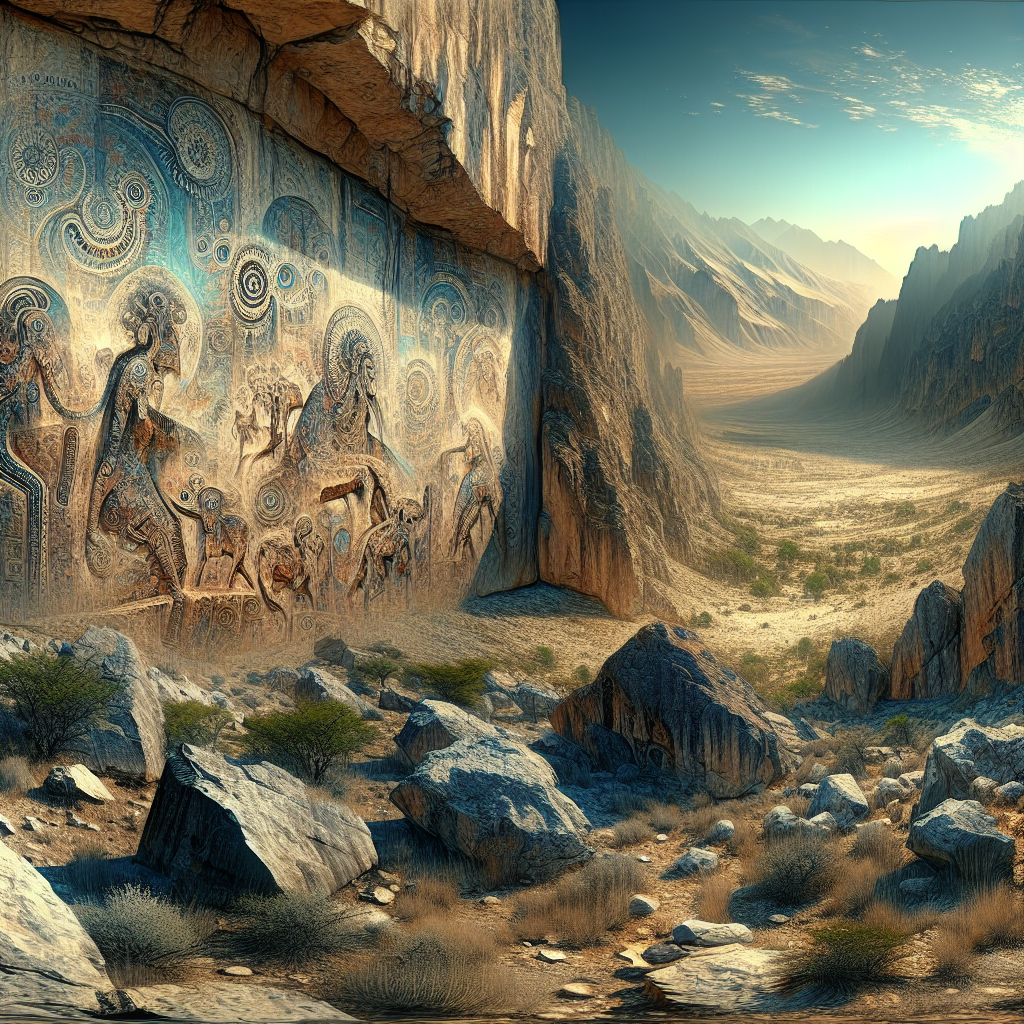

If ancient history painted a picture book, Laas Geel would be its most captivating chapter. Nestled in the verdant embrace of the Woqooyi Galbeed region near Hargeisa, Somalia, Laas Geel is a collection of rock art that has endured for millennia. It was rediscovered in 2002 by a team of French researchers who were enthralled by its breathtaking depiction of early pastoralist life. The caves offer a window into the past, presenting vivid imagery of cattle and human figures painted with rich, vibrant colors that have withstood the test of time. It's believed that these paintings date back to between 3,000 and 9,000 years ago, speaking volumes of the ancient civilizations that once thrived here.
Laas Geel’s vibrant paintings shine with hues of intense red, ochre, and white; it's a fascinating insight into what life might have been when this area was teeming with both wildlife and humans in harmony. Visitors describe the place as a serene time capsule, untouched by the rapid pace of modernity, offering a humbling reminder of the ancient roots shared by humanity. But why does this site matter beyond its artistic grandeur? Simply put, it's a crucial piece in the puzzle of understanding human evolution and migration.
The site, though not widely known, has been gaining increased attention due to its cultural value and scientific importance. It tells a story that the history books rarely cover, offering insights into the socio-economic conditions of early humans in East Africa. As Laas Geel garners more interest, it’s crucial to consider the conversation around conservation. The conversation isn't just about preserving history; it’s about respecting the narratives of people who lived here long before modern borders were drawn.
Some people argue that these cave paintings, while mesmerizing, receive unnecessary attention compared to more globally recognized sites. However, focusing on Laas Geel reaffirms a commitment to understanding diverse historical perspectives, particularly those outside the Western-centric narrative that often dominates scholarly discourse. This is crucial for not only historians but also for cultural preservationists aiming to protect indigenous knowledge systems.
Speaking to local perspectives, the Somali people view Laas Geel as a cornerstone of their cultural heritage. During decades of conflict, the site remained a symbol of resilience, standing through turbulence and becoming a reservoir of national pride. It's not just an archaeological site; it represents a deeply personal connection to the land and the ancestors who once roamed these plains.
For Gen Z and beyond, Laas Geel stands as an evocative reminder of the importance of balancing history with modern development. In an age where technology often seems to eclipse tradition, visiting or learning about such places reinforces a consciousness of where we come from. It subtly nudges us to pause and reflect on the ingenuity of ancient societies that laid the groundwork for our current world.
However, preservation of Laas Geel is a daunting task. The region’s political instability coupled with a lack of funding for conservation poses significant threats. Discussions about whether international cooperation should play a bigger role in protecting such sites are ongoing. Some believe governmental bodies should prioritize funding and resource allocation for local preservation efforts, while others advocate for international intervention to assure that priceless sites like Laas Geel can be maintained without political biases.
The discussion around Laas Geel isn't just about art or history; it’s a broader reflection of how societies choose to engage with and preserve their past. As young global citizens, engaging with such sites informs our understanding of different cultures and their contributions to our shared history.
This vibrant piece of humanity’s tapestry encourages an exploration of ancient creativity and life. Encouraging discussions on cultural heritage leads us down a path of empathy, fostering global connections beyond geographical and political boundaries. As Laas Geel stands resilient, it challenges us to appreciate the intricate tapestry of human history and the powerful stories painted on the walls of time.