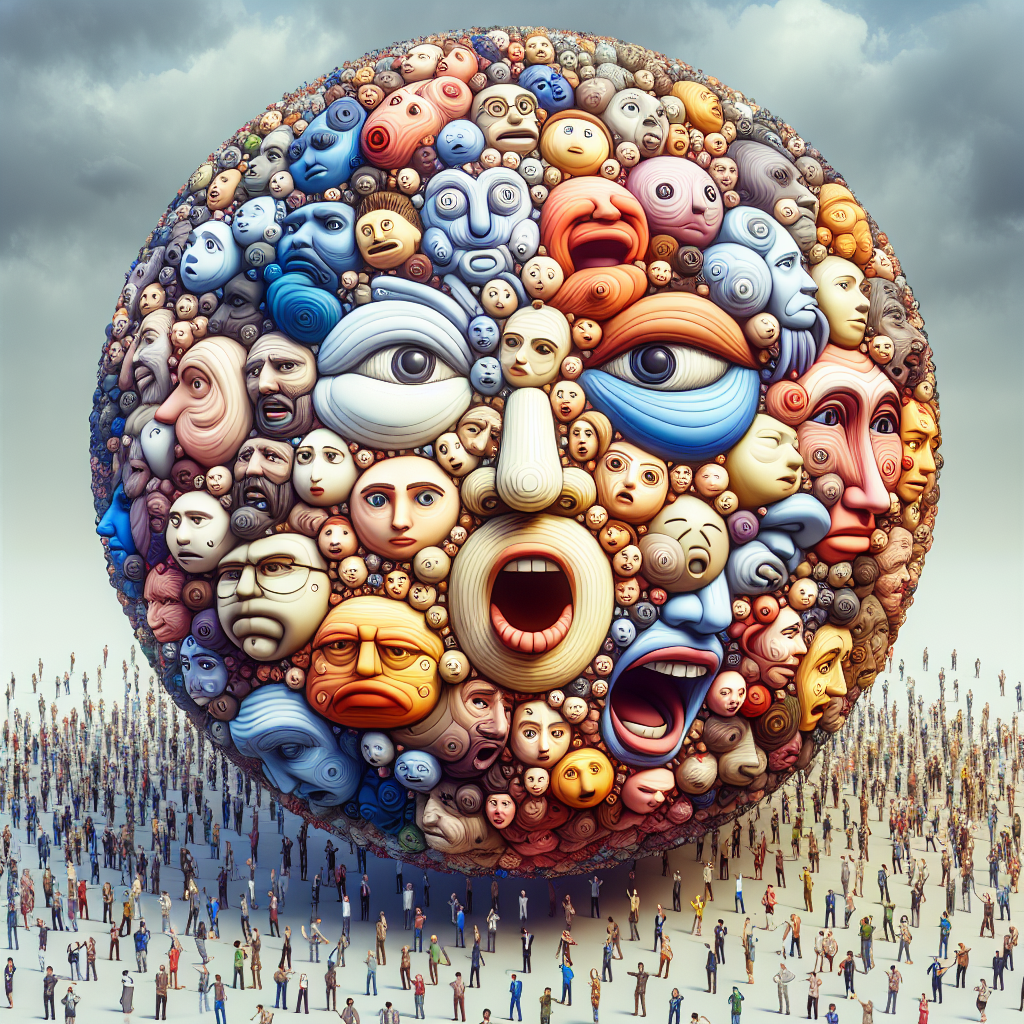

Imagine stepping into a room where every voice forms a mosaic of belief, opinion, and sometimes chaos; that's the realm of 'L'Opinion publique.' This French term, translating to 'public opinion,' encapsulates the collective views and sentiments prevalent within a society at a particular moment in time. It's been around for centuries, influencing everything from elections to revolutions. But what makes it so compelling today? Public opinion now chiefly thrives in digital spaces—Twitter threads, TikTok trends, hashtags, and viral memes shape how it ebbs and flows.
Throughout history, public opinion has often dictated societal norms, political movements, and policy changes. Back in the 18th century, Jean-Jacques Rousseau posited that the general will of the populace was paramount, acting as the ultimate guide for governing a society. Today, the idea has evolved, yet it retains the power to inform and influence actions and thoughts on global, national, and even local scales.
Political thinkers have long debated on whether public opinion is a measure of true democratic engagement or merely a reflection of transient, often uninformed, sentiments. In our current age, where social media democratizes information—and misinformation—this debate is more relevant than ever. Online platforms have given a megaphone to voices that might have been marginalized in traditional media landscapes.
For Gen Z, who have never known a world without the internet, public opinion online is as tangible as any poll or survey. This generation often uses digital platforms to advocate for issues like climate change, racial justice, and gender equality. They're savvy enough to recognize the echo chambers that can form but are also harnessing the power of these platforms to galvanize real-world change.
Yet, not everyone is onboard with the shifting mechanics of public opinion. Critics argue that the unregulated nature of online expressions leads to a dangerous spread of fake news and a potential erosion of critical thinking skills. Even purportedly democratic spaces can transform into arenas of polarization. Consider how some echo chambers can propagate extreme ideologies, convincing individuals that their biased views are not only valid but widely accepted.
Public opinion isn't just shaped by the loudest voices; sometimes, it's the silence that speaks volumes. The phenomenon of 'social desirability bias' often leads people to express views that align more with societal norms than their personal beliefs. This can skew polls and hinder honest discourse. It's a reminder of the pressures people face in wanting to belong, to be seen as 'part of the group,' especially in Gen Z’s interconnected world.
The essence of 'L'Opinion publique' is a double-edged sword. On one hand, it democratizes discussion, enabling diverse voices to share experiences and ideas, which can lead to comprehensive, inclusive policies and societal norms. On the other hand, it can stifle individual thought, as people fear the wrath of public backlash or the unsanctioned status of being 'canceled.'
Understanding the tapestry of public opinion also means realizing its fluid nature. Today's trending topic is tomorrow’s forgotten conversation, replaced by a new flood of data and perspectives. Yet, its influence can be long-lasting; opinions formed in these fleeting moments often set the stage for future discourse.
Governments and corporate entities are hyper-aware of public sentiment, investing heavily in analytics to capture the essence of how people are feeling and thinking. They recognize the potency of these collective voices and often adjust their strategies accordingly. But this raises questions: Can passion truly outrun precision, and at what cost?
To navigate this complex landscape, it’s crucial for younger generations to cultivate an awareness of their digital footprints. Promoting media literacy and critical thinking skills among friends and peers can help create spaces where opinions are informed and respected, rather than manipulated.
Talking to someone with differing views can be as eye-opening as scrolling through a feed filled with like-minded opinions. Engaging respectfully in these conversations—online or offline—can spark real change. It’s where understanding flourishes beyond the constraints of a screen and where empathy becomes a powerful tool to combat misinformation and divisiveness.
Public opinion will forever play a pivotal role in shaping our world, whether through colonial-era pamphlets, 24-hour news cycles, or TikTok videos. Its ever-changing dynamics challenge us to consider how we gather, interpret, and act upon these collective beliefs. Embracing this challenge means refining our ability to listen, adapt, and engage in a world that grows more interconnected each day.