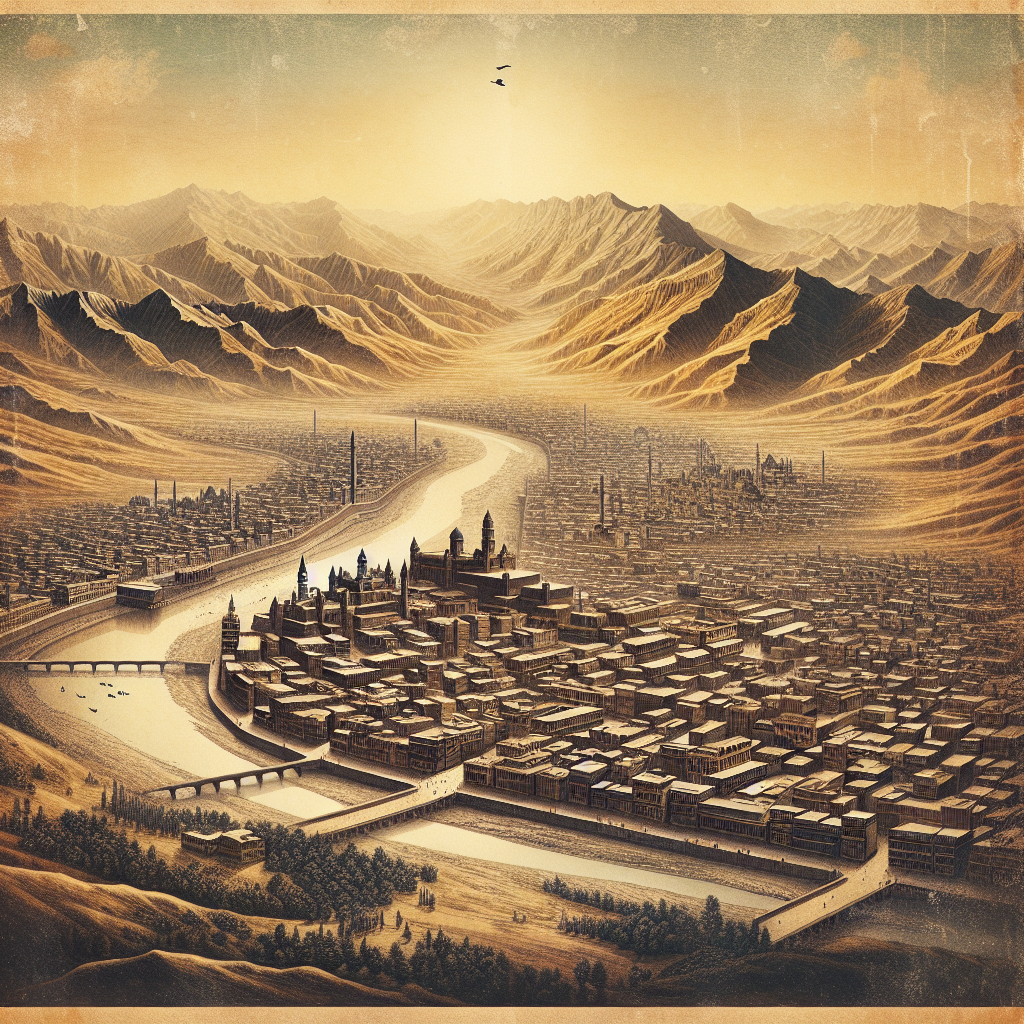

Let’s wander where the colors are as vibrant as the stories that knit a region together. Kurdistan Province, located in western Iran, is home to an incredibly rich tapestry of culture, history, and striking landscapes. It is a land where ancient traditions collide with the whispers of modernity, leaving an imprint that’s both complex and vivid.
Kurdistan means “Land of the Kurds,” and it is populated primarily by the Kurdish people, an ethnic minority group with deep historical roots in the region. The province is known not just for its diverse communities, but also for its rugged mountains, sprawling valleys, and cities that tell tales of resilience and identity. Founded as a province in modern Iran, Kurdistan boasts a collection of towns and cities, among them Sanandaj, the vibrant capital that serves as a focal point of Kurdish cultural expression.
Diving into the layers of Kurdistan's history, it is essential to touch upon the notion of borders. These lines drawn on maps by those who write the broader narratives often obscure the more personal stories lived by individuals. Living on the periphery, both geographically and politically, Kurds in Iran, like many of their people spread across neighboring countries, have faced challenges defining their identity within nation-states often dominated by other ethnic groups. This backdrop shapes a symphony of resilience and a desire for cultural preservation that is palpable in their music, festivals, and everyday life.
In Sanandaj and other parts of Kurdistan Province, the old and new coexist in a delicate balance. Traditional Kurdish music, with its strong beats and evocative rhythms, finds harmonizing voices in the youthful exponents who breathe freshness into ancient tunes. The city is also home to numerous cultural institutions dedicated to preserving Kurdish culture, while simultaneously offering a platform for modern interpretations and creative explorations.
Equally compelling is the natural beauty of the province. Journeying through Kurdistan, one is greeted by the majestic Zagros Mountains that wrap around the landscape like a protective embrace. These dramatic vistas offer not only aesthetic inspiration but are also central to agricultural practices that sustain local communities. Rolling hills and fertile pastures yield crops that find their way into markets bursting with color and variety—a testament to the interdependence of people and land.
But as with many regions characterized by rich diversity and complex histories, Kurdistan Province faces its own share of socio-economic challenges. Access to education and economic opportunities remain critical issues, with government policy occasionally clashing with the needs and aspirations of the Kurdish population. Representation and equality, often taken for granted in more homogeneous settings, are frequent focal points for spirited debates and activism.
Empathy for differing viewpoints is crucial here. While there are valid calls for greater autonomy within the province, one cannot ignore the geopolitical intricacies that complicate such discourse. Balancing local aspirations with national unity is a tightrope walk that requires careful negotiation, compromise, and, above all, mutual respect.
Kurdistan resonates with a generation that’s coming of age in a time of rapid technological and cultural shifts. Gen Z, with its hallmark diversity and global perspective, may find value connecting with the universal themes of identity, belonging, and resilience that Kurdistan embodies. For students of global cultures, Kurdistan is more than a province; it’s a living classroom of history, geography, and sociology, producing narratives that inspire broader conversations about human rights, cultural preservation, and the shared hope for a peaceful and prosperous future.
Kurdistan’s allure isn’t just its tangible beauty; it’s the indomitable spirit of its people, a spirit that survives borders and cultural impositions. In a world increasingly aware of cultural nuance and borders that can either divide or unite, Kurdistan stands as a testament to the power of cultural bonds that transcend mere lines on a map.