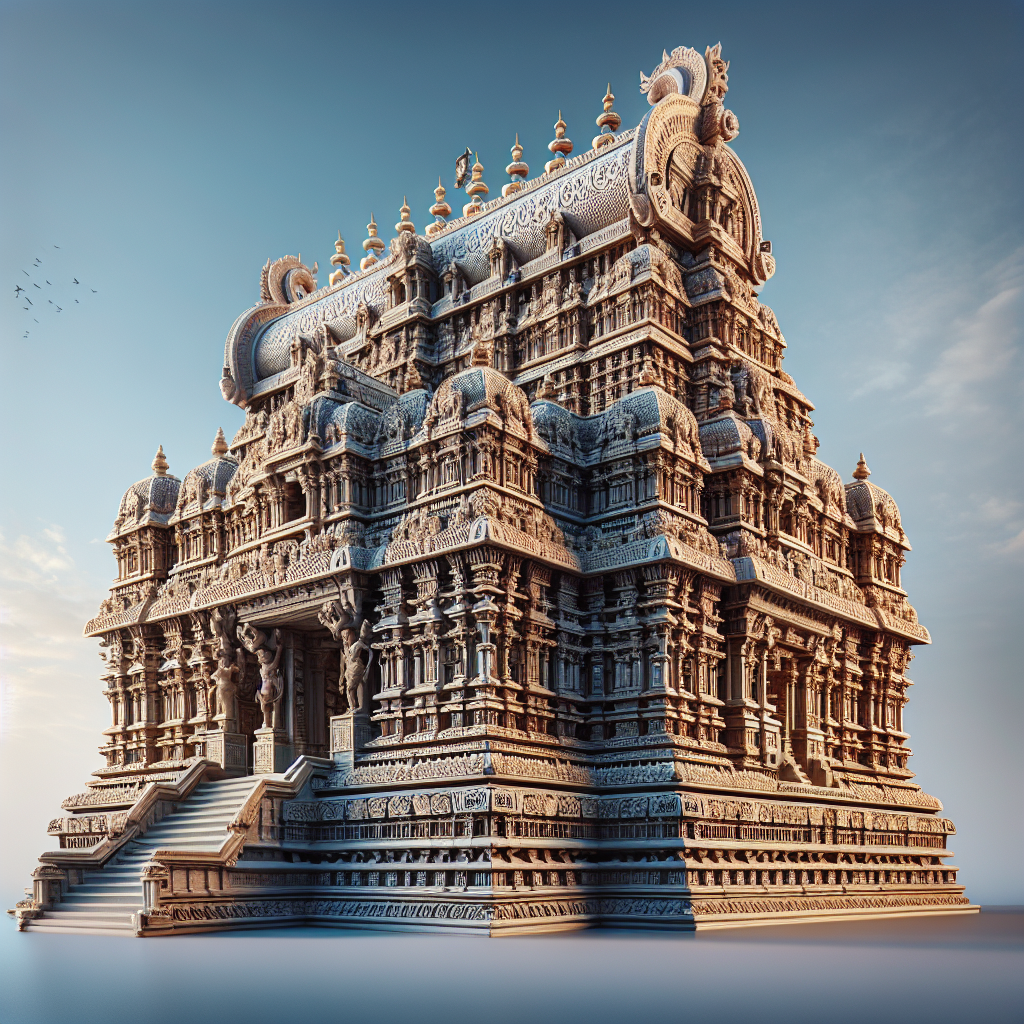

Imagine stepping into a realm where history whispers through ancient stones and spirituality dances with enchanting intricacy. That's exactly what happens when you visit the Kodeeswarar Temple, a historical and cultural jewel nestled in the heart of Tamil Nadu, India. The temple is believed to have been built in the Chola era, around the 10th century, and is dedicated to Lord Shiva, who is worshipped here as Kodeeswarar. Located in Kumbakonam, it's a pilgrimage site that has attracted devotees and curious travelers alike for centuries. But beyond its religious significance, the temple stands as a testament to the architectural brilliance of a bygone era.
When you wander through the temple grounds, it's hard not to be captivated by the intricate carvings that adorn its pillars and walls. Each stone seems to tell a story, depicting scenes from Hindu mythology and folklore. You may find yourself lost in admiration as you examine the skillful artistry that captures celestial beings and religious motifs with breathtaking precision. It's a place where art meets devotion, transcending time.
Stepping inside, the ambience shifts to a more sacred tone. The scent of incense fills the air, mingling with the soft hum of prayers. The sanctum sanctorum of Kodeeswarar houses the main Shiva Lingam, which draws both reverence and awe. For many visitors, the experience is almost surreal, a pull that goes beyond mere visual allure to something deeper, something profoundly spiritual.
The temple complex isn't just a feast for the eyes, but also holds layers of historical curiosity. During periods of turmoil and change, Kodeeswarar Temple stood resilient, witnessing the rise and fall of empires, the ebb and flow of dynasties. It's fascinating to think about the countless lives that have passed through its doors over the centuries, each adding their own layer to its rich tapestry.
But history and architecture aren't the only attractions. The temple reverberates with traditions and rituals that have continued uninterrupted through generations. Festivals here are vibrant affairs, with the Maha Shivaratri standing out as a particularly grand celebration. Thousands gather under the night sky, illuminated by oil lamps, to honor Lord Shiva with music, dance, and communal devotion. It's an experience that combines the exuberance of festival fervor with deep-rooted spiritual undertones.
In today's world, the significance of preserving such heritage sites becomes even more pronounced. As urbanization marches forward, temples like Kodeeswarar serve as crucial links to our past, reminders of cultural practices and beliefs that have withstood the test of time. They offer a sense of continuity in a rapidly changing world. However, conservation efforts are not without challenges, as maintenance requires resources and dedication from both governmental bodies and local communities. It's a delicate balance between preserving history and accommodating the needs of a modern society.
Interestingly, the attitude towards heritage conservation can vary. While many appreciate the intrinsic value of historical sites, others may argue that resources should be allocated to more immediate needs like education and healthcare. This is a valid concern, especially when viewed through the lens of socioeconomic disparities. However, one could also consider that places like the Kodeeswarar Temple hold tangible and intangible benefits—fostering tourism, offering educational insights, and enhancing community identity are just a few examples.
Exploring such a revered site can also spark meaningful conversations. It's a crossroads where past and present meet, provoking thought about how traditions shape modern identity. For Gen Z, who are navigating a world full of both global influences and local heritage, such interactions can be particularly compelling. The temple is not just a relic of yesteryears but a living testament to cultural survival and adaptation.
Perhaps what makes Kodeeswarar Temple truly special is its ability to transcend the labels of religion, culture, and history, becoming a sanctuary for those seeking peace, inspiration, or a deeper understanding of life's intricate tapestry. In a time where global connectivity sometimes results in cultural homogenization, places like Kodeeswarar remind us of the beautiful diversity and depth of human heritage.