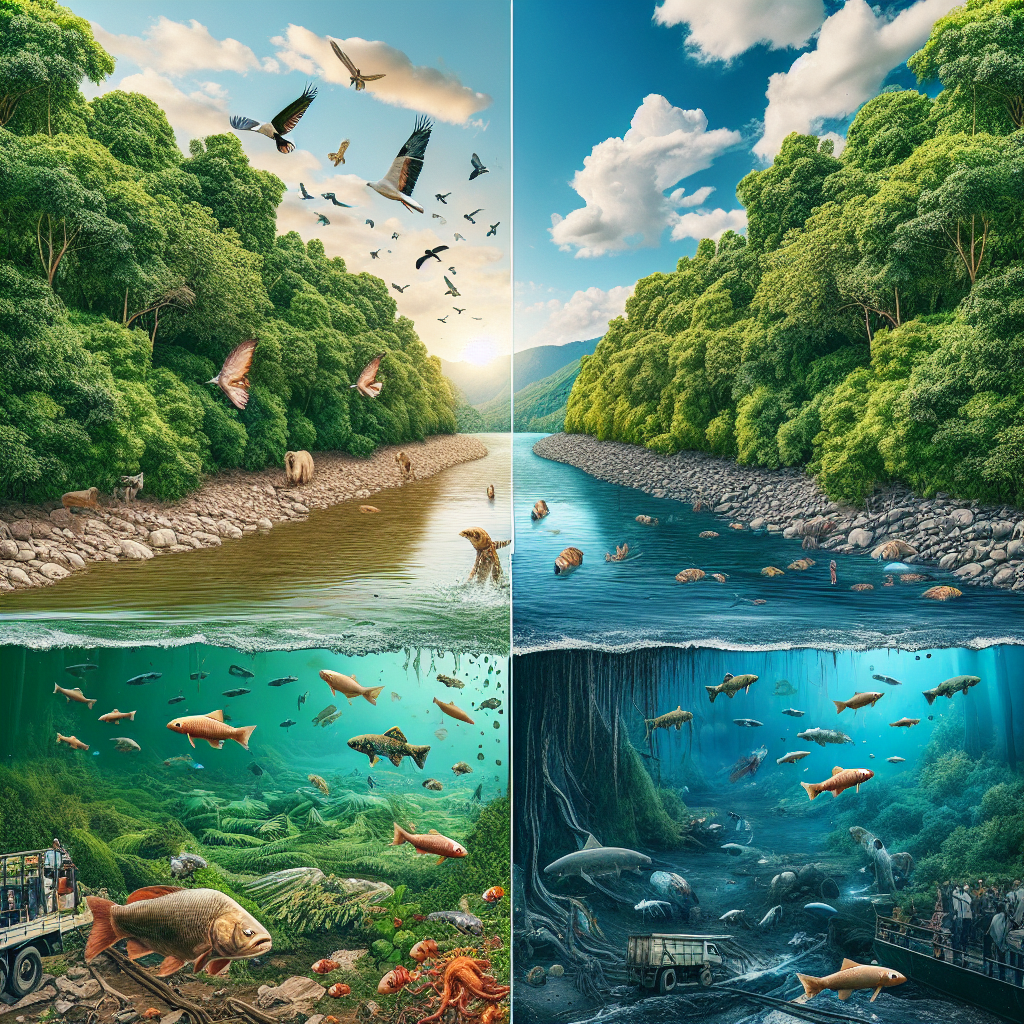

What if I told you there’s a river where legends flow alongside its waters, where history meets mystery every single day? Let me introduce you to Kalu Ganga, or Black River, as it is named for the dark color of its waters. It's one of the major rivers in Sri Lanka, weaving its way from the sacred supply at Sri Pada almost 129 kilometers down to the Indian Ocean near Kalutara. Kalu Ganga isn't just a river; it's an experience that has shaped livelihoods, rituals, and so much more.
Sri Lanka, an island nation rich with biodiversity and cultural wealth, has always been a country bound by its natural beauty. Kalu Ganga flows primarily through the Sabaragamuwa Province and the Western Province, feeding wetlands, paddy fields, and even the local communities that reside along its banks. This river carries not only water but also tales of the land's past and present. It supports both, the farmers who rely on it for irrigation and the monks who gather for daily rituals. The first question is usually why the river is called 'Kalu' or 'black'. It’s all about the silt and the dense forest cover along its path, giving it a signature dark hue.
Visiting Kalu Ganga is almost like stepping back in time. Local belief holds that the river has mystical power from the moment it begins its journey. There is an old Sri Lankan tale about how the river was created when a Buddhist monk’s vessel was overturned by evil forces, losing sacred relics to the river's depths. Whether you believe in the story or not, it adds a layer of intrigue to the already mysterious waters. It’s hard to resist the allure when you're actually there, seeing the sun reflect on its surface, listening to the rhythmic flow of water that seems like it has secrets of its own to tell.
The biodiversity supported by the river is impressive. Fish, birds, reptiles—an entire ecosystem that thrives in a delicate balance maintained by nature’s hand. Environmentalists are passionate about preserving these natural habitats. They frequently advocate for conservation efforts, arguing that the river is not just a resource but a lifeline that supports countless forms of life, each with a role too important to ignore. From tiny plankton, serving as food for fish, all the way up to eagles that soar above the river's course, the web of life here is incredibly intricate.
It’s not all rosy, though. Challenges like deforestation, waste disposal, and riverbed mining are constant threats. Environmentalists face opposition from some local industries that feel economic growth should take priority over conservation. They argue that development can happen in tandem with environmental preservation. However, finding common ground isn’t easy. Balancing economic ambitions with ecological preservation is like walking a tightrope, but it’s a conversation we absolutely need to have more often.
Kalu Ganga is also a symbolic boundary in Sri Lankan culture, marking not just physical divisions of land but also cultural and spiritual divides. To many Sri Lankans, the river represents life’s flow—an unending cycle of beginnings and ends. It signifies the challenges and rewards of living in harmony with nature. The river plays an integral role during the monsoon season, its waters swelling and spreading almost like an unleashed spirit. The challenges during this time are significant, with floods often affecting agriculture and infrastructure, but still, they are seen as part of the river’s nature to be understood and respected.
Professionals from all walks of life including hydrologists, local leaders, and community members are collaborating in some areas to innovate irrigation techniques and build flood defenses. Advancements in technology provide an opportunity for humans to work with nature, not just against it. This aids in avoiding the catastrophic flooding that turns life topsy-turvy for everyone around the river. Yet, one can't ignore the voices that remind us that these advancements need equitable implementation to be effective and leave no community behind.
One fascinating aspect of the Kalu Ganga is its impact on arts and folklore in the region. Artists draw inspiration from its scenic views and the serene ambiance the river provides. Songs, poems, and folklore often include the river as a backdrop or even a character, symbolizing freedom, serenity, or sometimes danger, given its capricious floods. It is this ability of the river to embody so many emotions and experiences that make it an invaluable part of Sri Lankan cultural identity.
And while you might think the river runs as an endless loop, crossing the same paths endlessly, remember it's always changing, just as the lives surrounding it. New generations are enacting traditional rituals and creating new stories based around Kalu Ganga. They bring hope that future dialogues and actions will strike the right balance, respecting both progress and preservation. Anyone who crosses paths with Kalu Ganga will tell you it’s not just a river. It’s a lifeblood, flowing silently yet powerfully, whispering stories of the past while charting a course for the future.