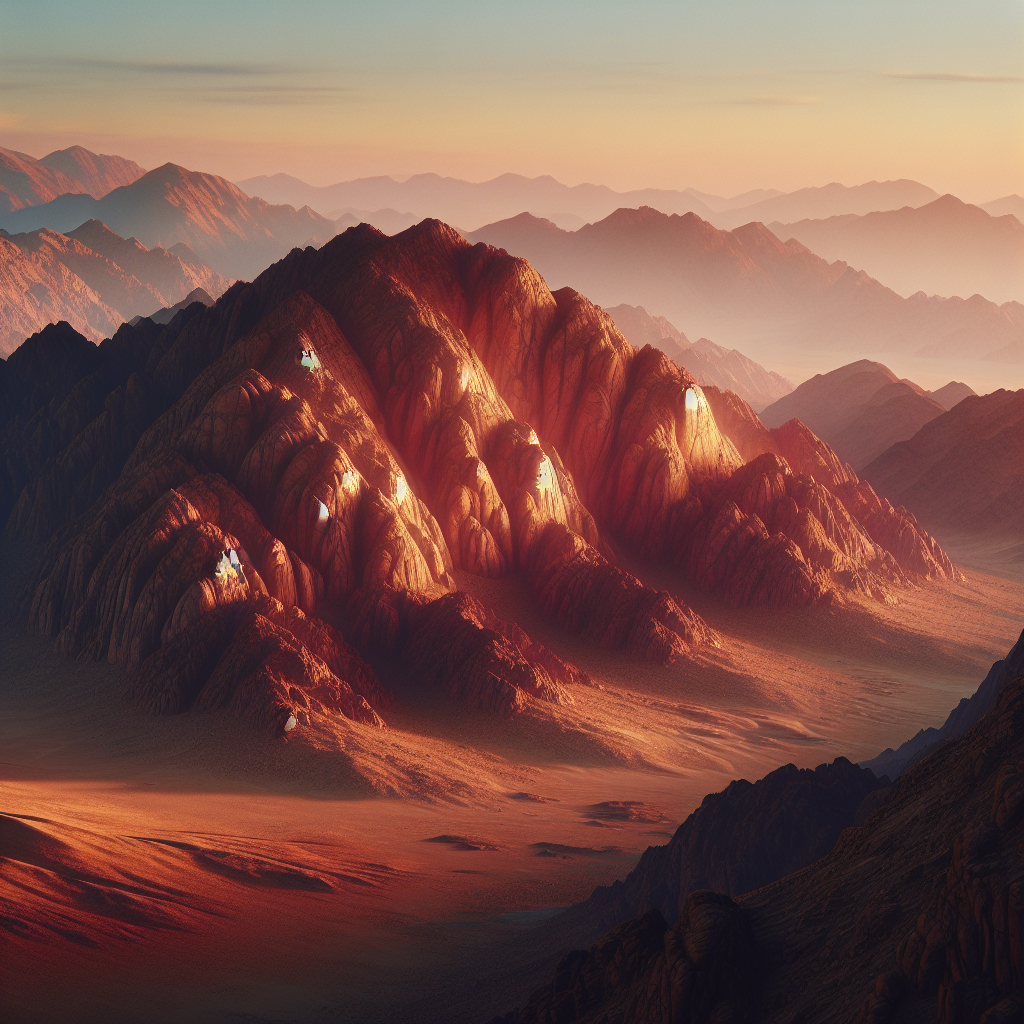

Have you ever wondered if one mountain could hold centuries of mysteries within its rocky facade? Jabal Maqla, located in the northwestern territories of Saudi Arabia, is just that fascinating enigma that continues to stir debates among scholars and adventurers alike. This majestic peak, part of the greater Jebel al-Lawz range, has been a subject of intrigue, often linked speculatively with divine events and ancient civilizations. Over the decades, this particular mountain has been shrouded with stories of sacred paths, explored and untouched, continuing to inspire exploration and discourse.
Jabal Maqla wears a cloak of myths, primarily due to its stunning and somewhat peculiar, blackened peak, which contrasts extremely with its surroundings. This coloration has sparked speculation and theories, leading intrigued minds to connect it with biblical events. Some theorists propose that it is the real Mount Sinai, where Moses received the Ten Commandments. While there’s no scientific consensus supporting this claim, the allure of the unknown continues to captivate many. In contrast, historians argue that these tales arose from an era of oral traditions and cultural stories, lacking empirical evidence.
Despite the ethereal myths surrounding the mountain, Jabal Maqla also offers more tangible natural and archaeological appeals. Geologically, it's a spectacular formation, featuring rocks and terrains that have intrigued geologists and climatologists. Its isolation and harsh environment have preserved unique ecosystems, presenting a bounty for ecological studies. Nearby, ancient petroglyphs and archaeological sites hint at early human activity, providing clues about past inhabitants and their interactions with the region’s challenging landscape.
For the local communities residing near Jabal Maqla, the mountain is more than a mysterious historical footnote; it is part of their everyday existence. The harsh terrains are not only a backdrop but a land filled with resources and challenges. The Bedouin tribes, who have thrived in these arid regions for generations, maintain a spiritual and symbiotic relationship with the land. They often find humor and wisdom in the mountain’s stories, reminding us of the significance of myth as a cultural heart.
In recent years, Jabal Maqla has begun transforming into a point of interest for adventure tourism and nature enthusiasts. With the opening of Saudi Arabia to more global visitors, there's increasing attention towards natural explorations and expeditionary tourism. This brings economic potential but also poses a threat of commercialization that may disrupt its delicate ecosystems and cultural dynamics. It’s crucial to strike a balance that fosters sustainable tourism without erasing the threads of tradition and history that bind the region.
For those skeptical of Jabal Maqla's mythical status, it's important to recognize the significance of such legends in cultural narratives. Whether or not it's the biblical mountain, myths play a fundamental role in shaping collective historical consciousness. They connect modern society with the experiences of those who walked the earth long before us, serving to ignite curiosity and reflection. The skeptics, in their quest for factuality, challenge us to explore further, pushing the boundaries of historical knowledge and challenging our interpretations.
It’s this duality that makes Jabal Maqla so fascinating—a mountain rooted in tangible reality yet soaring in the realms of myth. This balance between science and story, rock and legend, mirrors the wider dialogues happening in global cultures, as the past is constantly revisited to inform the networks of a shared future. Approaching Jabal Maqla with a sense of curiosity and respect deepens our appreciation for both the earth itself and the stories that help to define it. What Jabal Maqla symbolically reinforces is the importance of engaging with our world’s wonders thoughtfully and kindly, questioning gracefully and exploring responsibly.