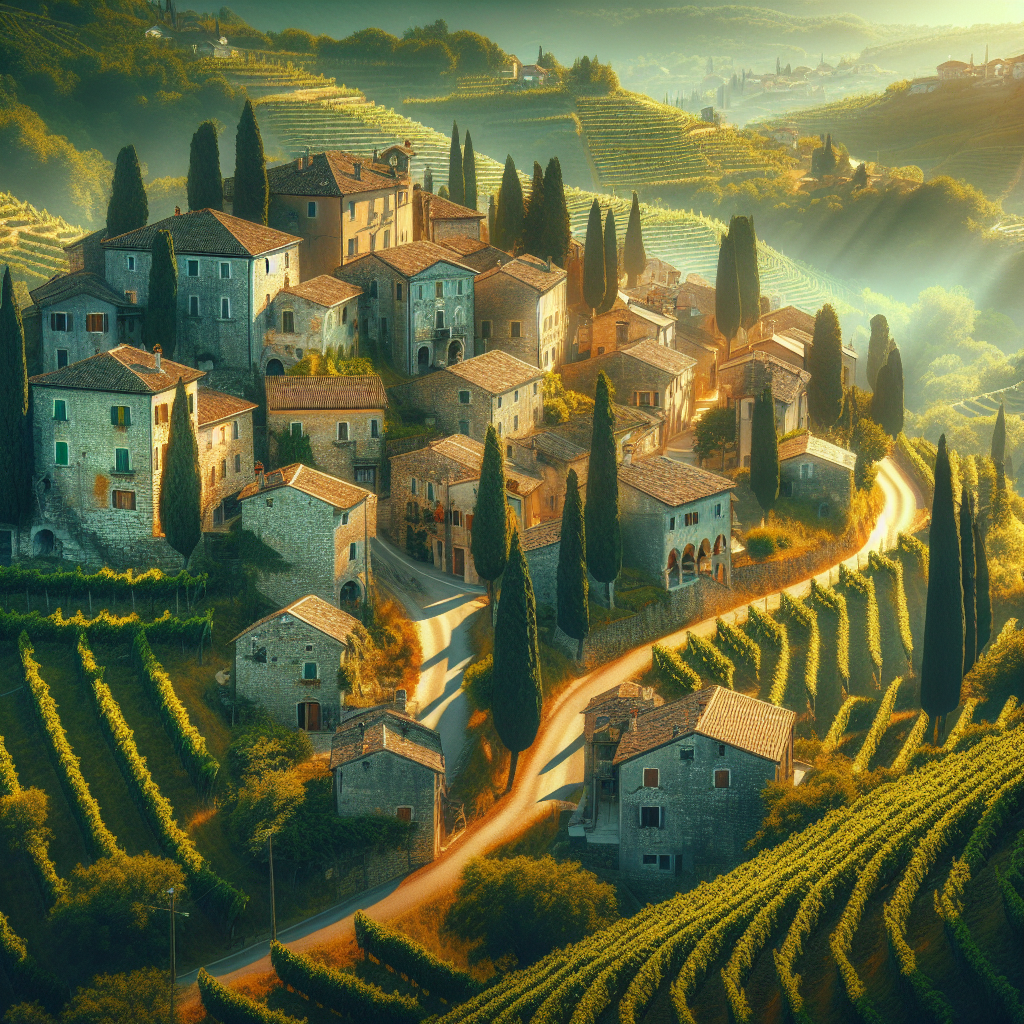

If towns were books, Hum in Croatia’s Istria County would be that slim volume stuffed on the shelf between tomes of epic novels and encyclopedic catalogues. Known for being the 'smallest town in the world,' Hum presents an alluring blend of historic charm and cultural intrigue, inviting those who stumble upon it into a story that seems almost out of a fairytale. Nestled in the rolling hills of Istria, this pint-sized town has held its title impressively close to its heart, drawing curious wanderers to explore its cobbled paths and centuries-old stone buildings.
Dating back to the 11th century, Hum’s history is as vibrant as its lush surroundings. Though officially recorded populations are gracefully low, averaging around 30 inhabitants, this does not mean the town lacks life. Quite the contrary; its small-scale liveliness springs forth both from its residents and the multitude of summertime visitors seeking a snippet of a bygone era. This trip down history lane, however, isn’t free from contention; after all, what precisely qualifies as a 'town' can be profoundly subjective, contingent upon cultural and administrative nuances.
A haven for history buffs, Hum offers an exquisite tapestry of medieval architecture, wrought around the remnants of its defensive walls and a striking Romanesque church. The Church of Saint Jerome, adorned with stunning frescoes, boasts a poetic allure, echoing the Byzantine legacy. Stepping into the town square, which arguably constitutes Hum's heart, you find yourself wrapped in a silence only disrupted by gentle winds rustling through olive groves. This calming serenity challenges the urban hustle and bustle, serving as a gentle reminder of a simpler time.
Food has its special place in Hum, not just as sustenance but as a cultural beacon. The region's famed honey brandy, known locally as 'biska,' is a beloved concoction derived from mistletoe, honey, and local grapes. The taste is akin to a liquid embrace, warming and unexpected. Restaurants in Hum serve traditional Istrian cuisine, rich with truffles, olive oil, and fresh produce. Such culinary delights are a testament to the region's agricultural prowess and its commitment to sustainable, community-focused practices.
For someone used to the vast labyrinthine structures of urban landscapes, Hum can appear deceptively quiet. But here lies its charm. This town presents an opportunity to witness a community that thrives on genuine human connections, a rarity in this digital age. The townsfolk participate in local governance, often through communal discussions that echo the principles of direct democracy. While this may sound like a utopian ideal, Hum’s reality is proof that smaller communities can adopt governance structures that prioritize cooperation and local needs over bureaucratic interests.
The town's coexistence with modernity might be unorthodox, but it showcases a harmony that challenges conventional norms. Younger generations advocate for balance; they respect the town's historic nature while recognizing the importance of access to information and digital resources. There's a whispered conversation about integrating technology without disruption—a notion not just relevant to Hum, but also to grandes villes of the world juggling tradition against the tech tide. This cultural discourse makes Hum a poignant microcosm of broader societal debates.
For travelers embarking on this minor journey, getting to Hum involves driving through the picturesque landscapes of Istria, whether from the lively city of Rijeka or the coastal town of Poreč. The travel itself is part of the experience—each bend in the road reveals another postcard-perfect vista that underscores Istria's natural beauty. Once in Hum, the town is exist without guides or itineraries, letting visitors embrace a more organic exploration.
Debates around the significance and sustainability of such small communities continue to stir globally. On one hand, preserving towns like Hum is seen as safeguarding cultural heritage and supporting diversity. Opponents often argue about the practicality of maintaining such micro-populations, suggesting these are romanticized notions that might not withstand modern economic pressures. Despite such debates, there's little doubt that experiencing Hum offers a glimpse into the patience and perseverance of human history.
Exploring Hum, whether from a literary, culinary, or even political perspective, offers much to reflect upon. This tiny town in Istria County does more than just capture the imagination; it reframes how we interpret community and belonging. Hum might be small, but its story is an immense testament to humanity's enduring spirit.