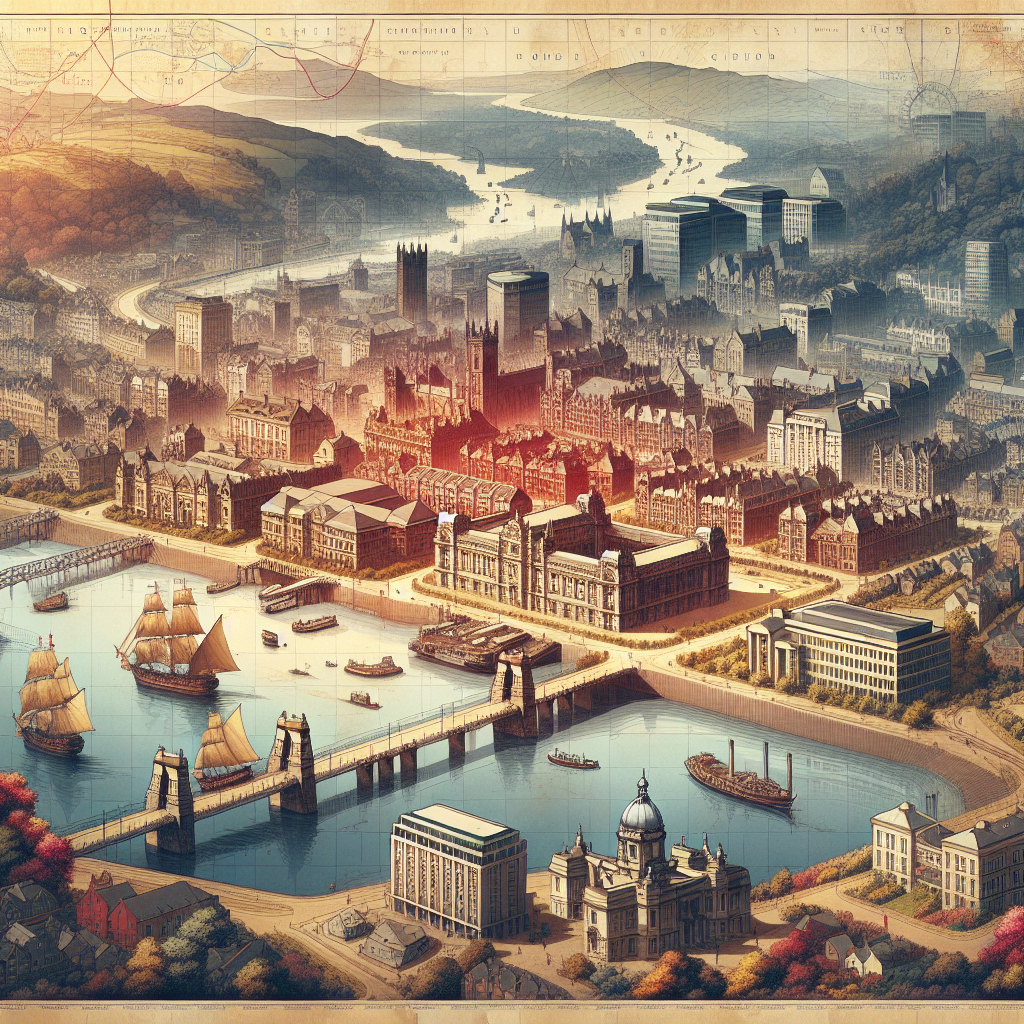

Cardiff, the vibrant heart of Wales, is not just a city; it's a thrilling epic of transformation that begins its journey in the misty annals of time. This intriguing metropolis, situated at the southern tip of Wales, was a sleepy coastal town that evolved into a bustling hub thanks largely to the Industrial Revolution. In the 19th century, Cardiff skyrocketed to fame as one of the world's largest coal-exporting ports. So how did a small medieval town become a modern cultural and economic powerhouse? Let's travel back in time.
The area's history harks back to ancient times—almost 2000 years ago—when the Romans built a fort on the site. Yet it wasn't until centuries later, under Norman influence, that Cardiff Castle as we identify it today emerged. The strategic location at the confluence of the River Taff and the Severn Estuary made Cardiff significant in various historical epochs, including the Norman Conquest and the English Civil War.
Moving forward into the 18th century, the sleepy town watched as the dawn of industrialization brought monumental changes. The canals constructed in 1794, and later the Glamorganshire Canal, facilitated coal transport from the South Wales valleys, fundamentally redefining Cardiff's economic landscape. This feat catapulted the town into prominence on the international stage. Its docks, expanded under the supervision of the influential 2nd Marquess of Bute, transformed Cardiff into a magnet for industry and innovation. By the late 1800s, Cardiff boasted the world's largest coal-exporting port.
Industrial success attracted people from across the world. As a melting pot of different cultures and identities, early Cardiff was a patchwork of traditions. Communities from Irish, Somali, Yemeni, and Italian backgrounds enriched Cardiff's tapestry, blending customs while confronting challenges from their coexistence. By exploring these diverse narratives, we discover a Cardiff reflective of global interconnectedness—a point that resonates strongly even in today's politically complex climate.
The rapid industrial growth continued into the 20th century. However, global shifts in the coal industry after the Second World War cast a long shadow over Cardiff's fortune. A decline in coal exports necessitated a transformation in identity. The city began to pivot towards service industries and culture as economic mainstays.
By the late 20th century, Cardiff embraced its new role—a shift from industry to a balanced blend of culture, commerce, and governance. In 1955, Cardiff was named the capital of Wales. This designation spurred investments, initiating a cultural renaissance forming the base of the modern cityscape today. Over the past few decades, developments such as Cardiff Bay—a marvel of urban regeneration—offer proof of Cardiff's steadfast reinvention. Where once oil tankers docked silent ships, now a vibrant waterfront hosts dynamic lifestyle and business hubs.
As we look around modern Cardiff, its historical narratives remain ever-present yet seamlessly woven into its identity. Landmarks such as Cardiff Castle and National Museum Cardiff coexist alongside the Wales Millennium Centre and gleaming stadiums like Principality Stadium that host global events. With its lively arts scene, world-class sports facilities, and vigorous commitment to preserving Welsh culture, Cardiff seems to march optimistically into the future.
Engaging with Cardiff's history highlights the themes central to our contemporary lives—adaptability and resilience. Despite economic shifts, Cardiff has strived to serve as an inclusive space that speaks to the value of cultural diversity and coexistence. However, tensions related to race and immigration continue to challenge the city, mirroring global debates about identity in our fast-changing world.
Opposition sometimes voices concerns over rapid urban development and gentrification echoing in his history-savvy corners as it displaces local traditions. What's vital is harmonizing progress while sustaining warm legacies, principles that instate a sense of cohesion among the residents.
Cardiff is not only a story about changing economies and cultural evolution; it's a lesson on embracing change without forgetting one's roots. Through determination and creative foresight, Cardiff transformed adversity into opportunity, creating a vibrant city steeped in historical wisdom, constantly in motion. Exploring Cardiff—physically or historically—means witnessing this vibrant interplay of past, present, and future, a tale worth sharing with each new wave of curious visitors.