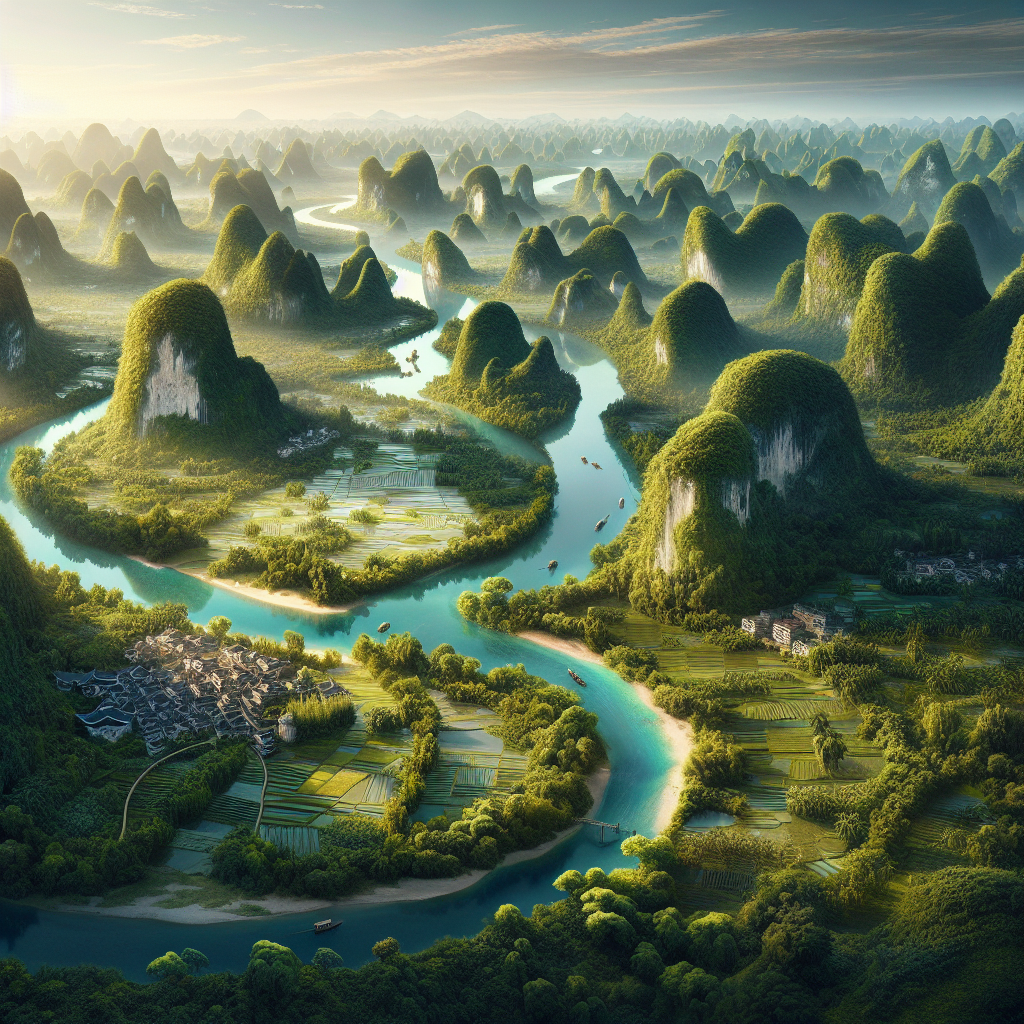

Imagine a place where jagged karst mountains seem to reach for the sky while tranquil rivers carve their way through ancient landscapes below. Welcome to Guangxi, a deeply captivating region in southern China that blends jaw-dropping natural beauty with a rich tapestry of cultural diversity. This area, bordered by Vietnam to the southwest, isn't just a visual feast; it's a historical and cultural odyssey. Inhabited by a melting pot of ethnic minorities, including the Zhuang and Yao people, Guangxi is a window into both China's ancient past and its dynamic present.
Guangxi has always been a place of intrigue due to its distinct topography and the diverse people it shelters. Located amid limestone hills, its capital, Nanning, provides a stark contrast to the serene countryside. This bustling city is a study in modern Chinese life, where skyscrapers seem almost like the bare bones of a lofty dream, yet surrounding its urban sprawl are verdant green landscapes and quaint villages that echo with echoes of a simpler time. Yet, what makes Guangxi truly unique isn't just its geography or its people but how these elements coexist.
The region's stunning landscape has long been a muse for artists and poets. Travelers flock to Yangshuo to float along the Li River, weaving between those iconic karst formations that rise imperiously from the earth. But Guangxi is not just about admiring landscapes. These landforms have provided substantial challenges. Farming, construction, and connectivity have been historically arduous to navigate here. Residents have adapted ingeniously, sculpting terraced rice fields that are works of art in themselves, illustrating the resilience and creativity of the local population. These terraces are an organic manifestation of Guangxi's spirit.
Yet, as with all regions rich in natural resources, there has been a constant tug-of-war between economic development and environmental preservation. Guangxi's decision-makers face the classic struggle of achieving economic growth while conserving their unique ecological environment and respecting the ways of the people who have lived there for centuries. Tourism has been both a boon and a challenge. On one hand, it brings much-needed revenue and job opportunities for locals. On the other, the ecological footprint of increasing tourist activity is a pressing concern, especially for youth who are acutely aware of global environmental issues.
Guangxi's intermingling of ethnicities gives it a unique cultural flair. It's home to more than a dozen ethnic groups, with the Zhuang being the largest. The Zhuang people are known for their vibrant Laibin Festival, which bursts with energetic performances and rich costumes, providing a vibrant tapestry for cultural enthusiasts to explore. The sheer diversity in culture and language opens opportunities for cultural exchanges and a deeper understanding of China's non-Han populations. It challenges the homogeneous narrative that often accompanies discussions on China and provides fertile ground for cross-ethnic understanding and cooperation.
Yet, political sensitivities skirt the edges of Guangxi's cultural richness. Like most of China, Guangxi is under the jurisdiction of central government policies, and there are inevitable frictions when it comes to the rights of ethnic minorities. The balancing act between maintaining the cultural heritage of these groups and advancing modern standards of living is precarious. While the younger generations in Guangxi are pushing for more opportunities and upward mobility, they are also becoming more engaged in conserving traditions, creating a fusion of old and new that's both inspiring and challenging.
The future of Guangxi lies in a delicate balance. As global attention shifts increasingly towards sustainability, regions like Guangxi are drawing interest for their ecological significance and cultural wealth. The youth here have a significant role to play in this evolution. They're well aware of the pressures of globalization, tech innovation, and the need for economic growth. At the same time, they carry the weight of conserving a land and culture that might easily be eroded by fast-paced development.
Guangxi invites curiosity and fosters an appreciation for the complexity of human civilization coexisting with nature. It's reflective of larger global conversations about cultural preservation, economic development, and ecological conservation. As Guangxi continues to grow, it provides a model for considering how to reconcile these sometimes conflicting priorities. For those looking outwards towards solving global issues, Guangxi is a microcosm of the world's challenges and possibilities.