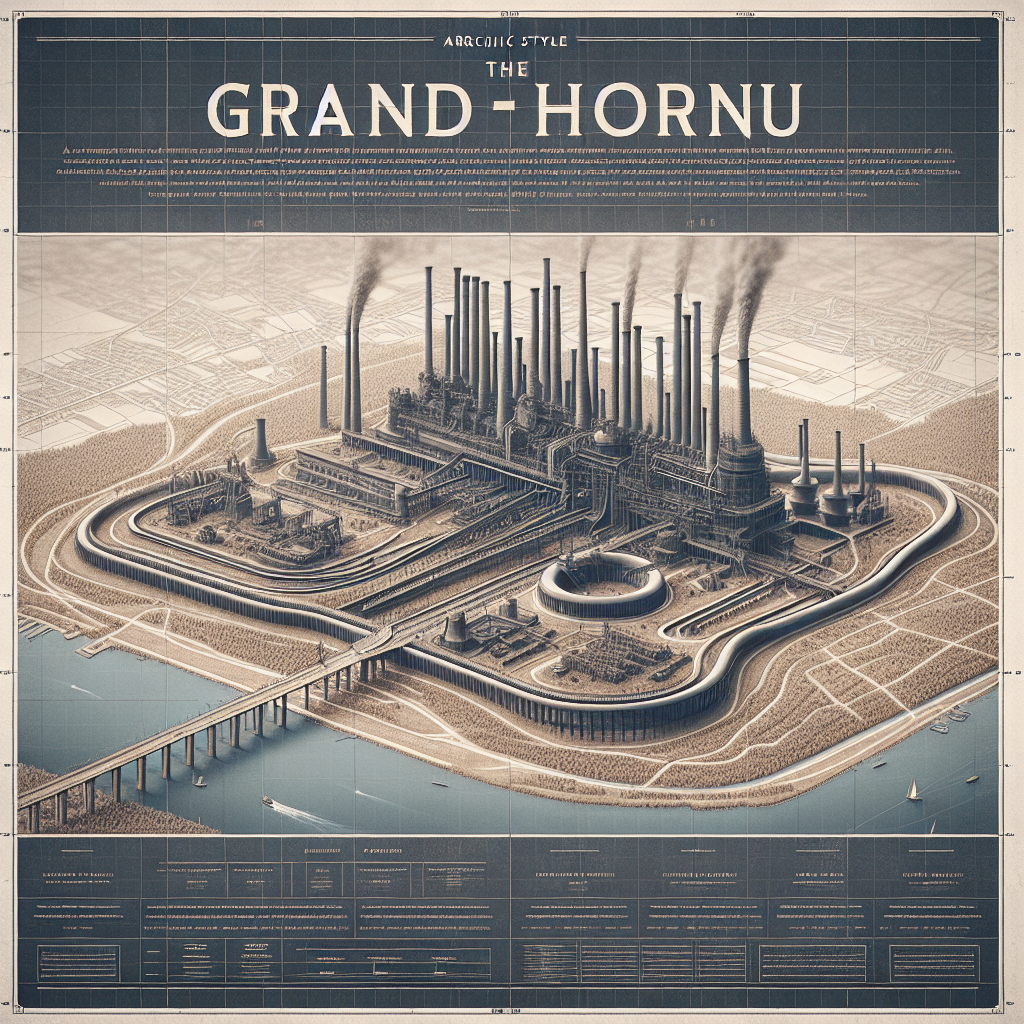

Imagine a time capsule in the form of a 19th-century industrial masterpiece, offering a voyage back to an era of coal and creativity. Welcome to the Grand-Hornu, a remarkable relic situated in Belgium, initially brought to life by the ambitious industrialist Henri De Gorge in the early 1800s. Nestled in the region of Wallonia, this former coal mining complex stands as a blend of historical grit and profound restoration, reflecting the dreams and aspirations of a society that once thrived on coal. But more than an ode to industrial heritage, this site, now inscribed as a UNESCO World Heritage Site, presents a crucial commentary on the evolution of labor, architecture, and art.
Grand-Hornu is not just about vast swathes of soot-covered bricks or gigantic coal pits. It's about vision. Henri De Gorge didn't see a mere coal mine; he envisioned a utopian world. As you wander through the carefully designed workers' housing, cultural hubs, and extensive gardens, you witness traces of an industrial revolution that catered not just to labor but to life. It hints at a societal experiment where workers lived in relatively humane and community-centered environments, hinting at progressive ideas for its time.
Upon visiting today, Grand-Hornu offers more than its historical architecture. It houses the Museum of Contemporary Arts (MAC’s), turning the narrative from coal to creativity. MAC’s isn't just a space but an experience where modern art rises against industrial nostalgia. Exploring its corridors, you sense how art interprets the past and challenges the present. Installations and exhibitions often comment on social justice, environment, and human rights, creating dialogues that resonate with the young and old alike.
Even if you're someone who rolls their eyes at historical monuments, Grand-Hornu taps into a curiosity about how societies evolve. It encourages questions. How did 19th-century coal drive today’s digital revolution? How do these old walls accommodate contemporary art? The site sits stoically as a witness to change, surviving the blows of industrial decline by adapting its purpose. It's a nod to how progress can root itself deeply in history while gazing toward tomorrow.
Now, voices of opposition might argue that such historical sites, while rich in heritage, are isolated relics detached from contemporary issues. Critics might suggest that funds could serve more immediate societal needs rather than preserving these old bricks. In fairness, there’s merit in questioning resource allocation when communities worldwide face urgent challenges across the spectrum, from poverty to climate change.
However, looking at Grand-Hornu, it's clear that such sites are not just about preservation but about engagement. By intertwining history with contemporary art, it becomes a platform for dialogue, linking past ideals with current contexts. It underscores the importance of cultural continuity and the value of history as a framework to understand and sometimes challenge the present.
For a generation that's keenly aware of social justice and innovation, Grand-Hornu offers context. It shines a light on working-class stories, the origins of industrial design, and the evolution of community living. It's a place where politics of the past engage discussions of today, ideal for Gen Z's curiosity about identity, history, and intersectionality.
Grand-Hornu isn't merely reflective; it’s active. The site hosts workshops, discussions, and creative exhibitions that align with progressive tenets Gen Z often supports. Anyone visiting can find themselves in soulful engagement with themes such as sustainability, fair labor practices, and community rights, making it a canvas for contemporary socio-political discourse.
Yet, maintaining such a site is a balancing act. Balancing historical reverence with contemporary relevance requires strategies that are inclusive and forward-thinking. Sustaining these legacies involves not just architects or historians but communities who see these places as part of a broader narrative.
Grand-Hornu's appeal transcends a typical museum experience. It's a philosophical space, challenging its visitors to reflect on the intersections of history, technology, and art. It stands as a reminder that societies are not just built; they evolve. In preserving Grand-Hornu, we subscribe to the idea that history is fluid, that what served as an industrial hub can transform into a beacon of modern art and engagement.
For anyone with a pulse on social change and cultural engagement, understanding sites like Grand-Hornu matters. These spaces aren’t retreats into history; they're springboards for future narratives, advocating the importance of remembering and learning from the past. As you wander through the impressive structure, it's evident that Grand-Hornu is more than a destination – it’s a dialogue. One that challenges us to consider how the past informs the present and influences what lies ahead in this ever-evolving scrapbook of human society.