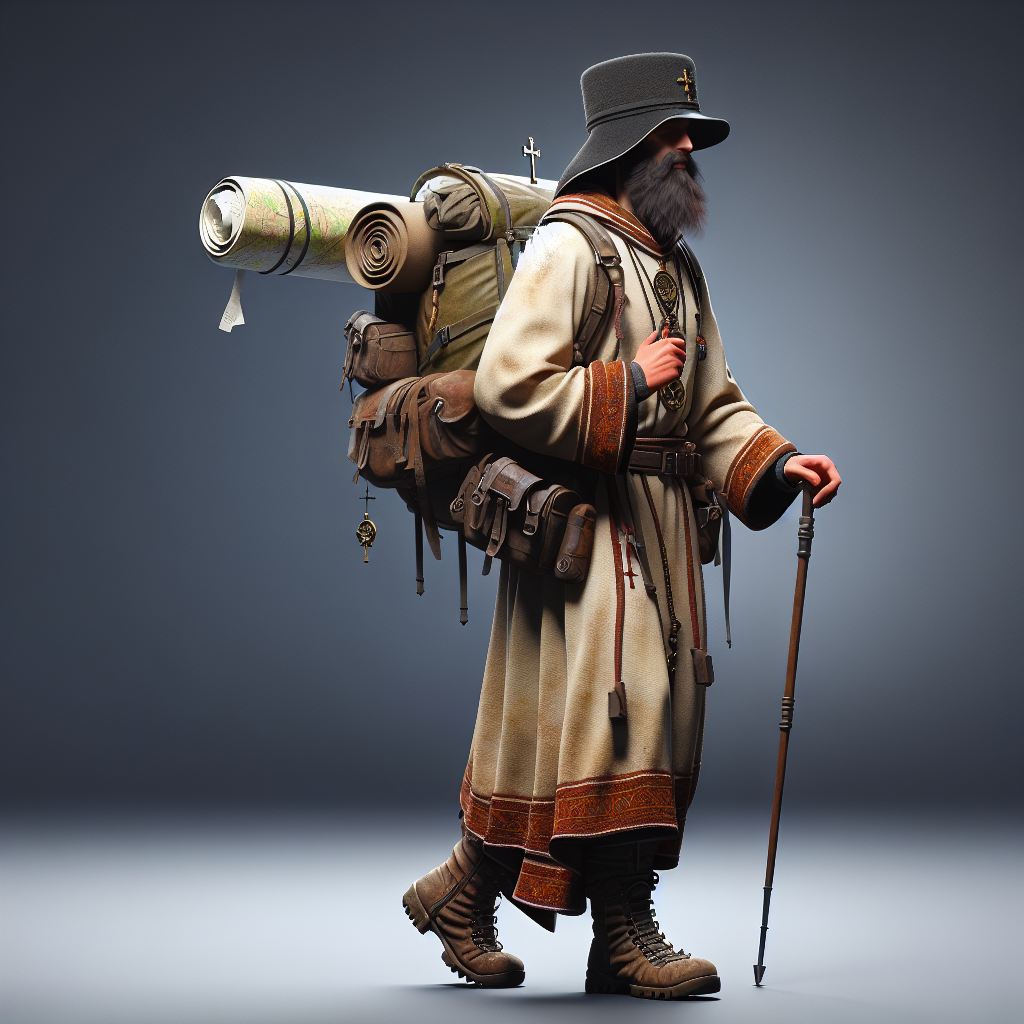

If you think historical figures are just dusty names in ancient books, think again; Gerasim Zelić is here to change that perception. Born in 1752 along the border of what we now know as Serbia and Croatia, Zelić was a Serbian monk, whose adventures could rival any Netflix series. Living through a transformative era, he traversed the Ottoman Empire, the Habsburg Monarchy, and even Russia, serving as a chronicler and a travel writer who documented everything from the political landscapes he encountered to the nuances of different cultures.
Zelić embraced his roots as a Serbian Orthodox Christian monk and used his position to both explore and contribute to a world in flux, always eager to learn more about different societies. He had the rare vantage point to witness the interplay of Christianity and Islam in the Balkans and beyond, providing a unique perspective during a time of vast political changes and cultural exchanges. He was more than a monk; he was a diplomat, a historian, a bridge between worlds.
One might assume living in a predominantly religious society made him one-dimensional, but his diaries reveal an adaptable, curious mind. These writings serve as a treasure trove for anyone interested in the era's geopolitics, offering insights into the lives of the people and the changing boundaries that played such a significant role in shaping today’s Europe. His work stands out not just for its historical value, but also for its empathetic engagement with different peoples and cultures.
Zelić’s meticulous documentation made him a key figure in understanding the late 18th and early 19th centuries. His travels through turbulent regions provided firsthand accounts of political and social climates. These records give us glimpses into the everyday lives of people, often overlooked by grand narratives of history. Zelić had the uncanny ability to humanize even the most abstract events and render them in full color, touching on themes that still resonate today, such as migration, identity, and the complexities of cross-cultural interactions.
From an early age, Zelić understood the power of education and communication. In a period when literacy was not widespread, his ability to read and write in multiple languages allowed him to bridge gaps between different ethno-religious communities. His manuscripts don't just highlight political turmoil or the movement of armies; they capture the essence of human stories. They tell us about the bazaars bustling with life, the quiet moments of reflection one finds in a monastery, and the intertwining paths people take in pursuit of meaning.
Gerasim Zelić's writings reflect a world grappling with its identity, complex and divided yet united in its basic human struggles and achievements. Consider this: way before globalization became a catchphrase, Zelić was living it, engaging with the philosophical and existential questions that transcend time. What defines a community? How does faith shape societies? What can one person do in a world that seems consumed by vast empires and sweeping tides of change?
Not everyone agrees with the romanticization of figures like Zelić, though. Some argue that focusing on individuals can obscure broader systemic issues, pushing us to find heroes rather than collectives deserving of attention. History, after all, is often written by those in power, and the stories we choose to elevate can overshadow untold narratives. This perspective invites us to be cautious about who we celebrate and to challenge ourselves to hear the voices outside the mainstream.
Yet, should we dismiss the individuals whose lives provide a window into past societies? Critics and admirers alike can agree on one thing: human experiences are diverse and often contradictory. They add richness to our understanding, showing us that history is not a single-threaded tale but a tapestry woven through the lives of many, each valuable in its own way. The tales of Gerasim Zelić not only preserve the past but also provoke us to reflect on our present, to embrace diversity and underscore human rights, two tenets that resonate strongly with liberal ideals.
Zelić's story echoes some of the pressing issues we face today — navigating multiculturalism, fostering dialogue among religions, and understanding identity in an ever-changing world. While his lifetime was marked by empires, wars, and quests for power, he chose to focus on the shared humanity beneath it all. In an era where headlines scream of division, perhaps his legacy reminds us that connection and understanding are possible.
The legacy of figures like Gerasim Zelić reminds us of the long arc of history. While each generation confronts new challenges, we also walk paths paved by predecessors who grappled with similar questions and struggles. Stories like his are a reminder that though eras come and go, human curiosity, resilience, and the thirst for knowledge remain eternal.