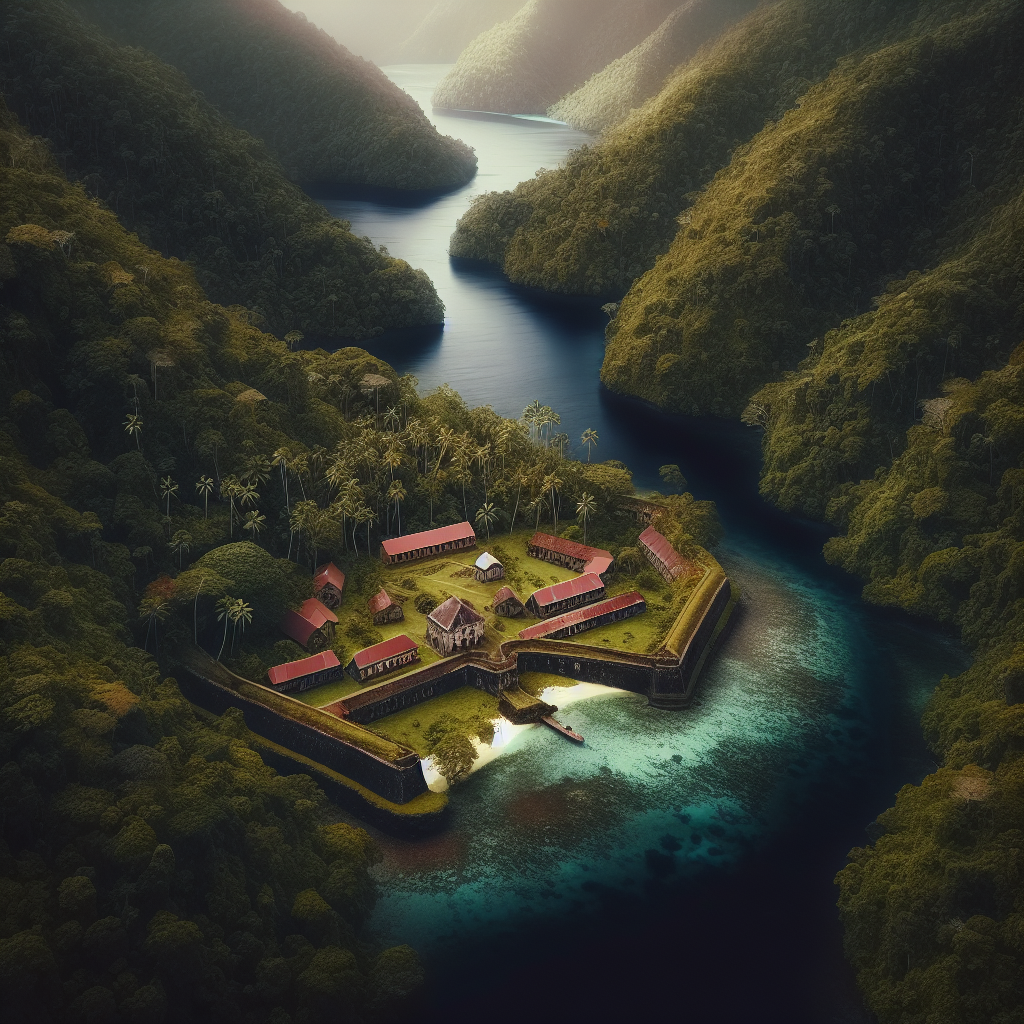

Tucked away in the remote azure of the Pacific is Nuku Hiva, an island that feels crafted from pure imagination. Here lies Fort Madison, a historic site whose story is as intriguing as the island itself. Built during the early 19th century, Fort Madison was once a testament to America's brief and somewhat forgotten venture into Pacific colonialism. The United States had its eyes set on a distant archipelago in the Marquesas Islands, a move that symbolized ambition more than necessity. For Gen Z, obsessed with the road less traveled, Fort Madison offers a unique peek into geopolitics that existed before the digital age established our interconnected world.
Fort Madison stands out as a relic from a time when nations scrambled to stake claims on unfamiliar lands. Created in 1813 by Captain David Porter of the U.S. Navy, the fort was established during the War of 1812 as a strategic effort against British forces and as a projection of U.S. naval power into the Pacific. While the U.S. strategy ultimately faded—much like the soil it was built on—the fort gives today's travelers a fascinating look at how territorial claims were forged with just as much bravado as they are today, albeit without social media hashtags to drive interest.
The trek to Nuku Hiva is not for the faint of heart, or those who rely on Google Maps to show them the way. Yet, perhaps the intrigue is the journey itself. Reaching this enchanting island requires a mix of flights and ferries, with travelers disembarking like explorers searching for a new world. The island, part of French Polynesia, provides landscapes as diverse as the cultures and wildlife habituating its shores. Unpaved roads wind through lush forests that seem fed on legends, rather than simple rainfall, and lead you to a historical site where the echoes of cannon fire once drowned out the cries of native birds.
Standing at Fort Madison, amidst its ruinous charm, one might wonder why more people aren't drawn to such storied places. After all, in a world where Instagram's allure holds strong, there is little room for pixelated pictures of what once was. Nevertheless, each moss-covered stone in Fort Madison is imbued with stories of sailors, weathered and weary, catching their breath in a safe haven before setting sail for conflict anew. The site becomes an evocative reminder that history is omnipresent, informing us even when we choose not to listen.
Like any colonial venture of past times, Fort Madison invokes a mixed reaction. Some might see this fortification, which aimed to project power and influence, as an arrogant display of foreign dominance. Others might argue that it was a necessary part of shaping today's broader geopolitical landscape. For Gen Z, who value authenticity and sustainability over relics of conquest, Fort Madison provides a canvas to question what came before and consider what kind of legacy we intend to leave behind.
The indigenous people, known as the Marquesans, have their own view of the history that unfolded here. Their narratives, often overshadowed by grander stories of naval battles and foreign ships, add a layer of complexity to Fort Madison's past. As more travelers seek experiences that respect and celebrate indigenous culture, Nuku Hiva and sites like Fort Madison serve as poignant reminders of colonial impacts, inviting a deeper reflection on the histories that shaped today's cultural landscapes.
In visiting the fort, one cannot help but admire the efforts of conservationists who continue to preserve such sites against the ravages of time and nature. Their dedication ensures that future generations will not only read about Fort Madison but experience it firsthand. It’s a potent demonstration that keeping the past alive requires more than just silent acknowledgment; it requires action and understanding.
As global citizens, understanding the significance of Fort Madison provides an opportunity to engage with history both critically and empathetically. Perhaps it is the simple act of bearing witness to places infused with history that enriches our perspective. For as much as the world seems increasingly defined by technology and modernity, connections to our past remain visceral and vital.
While opinions about historical preservation can vary, the consensus often points to the idea that learning about these places grants us the opportunity to nurture a deeper understanding of our world. Consider Fort Madison a remarkable footnote in an ever-expanding historical narrative. Encounters with such a place remind us not just where we've been, but inspire us to think about where we're headed as a collective.