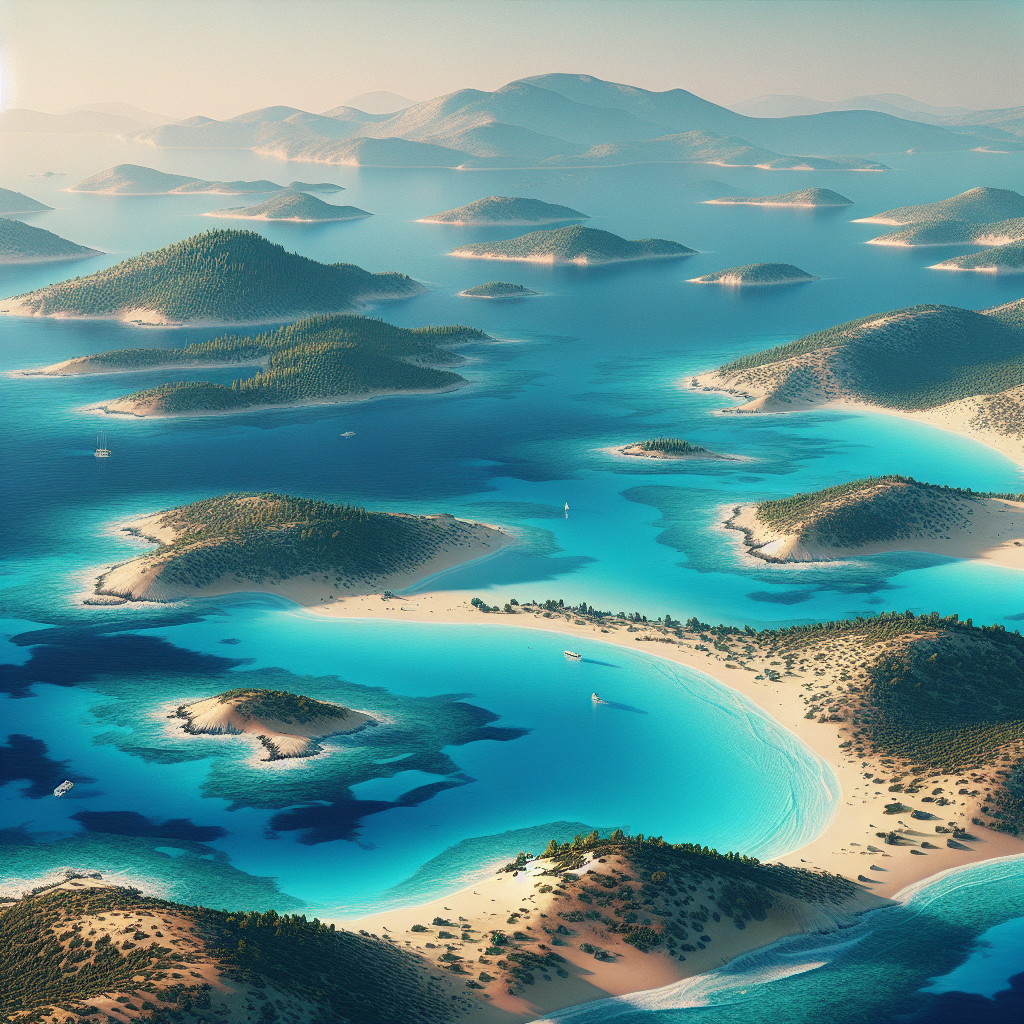

The Hidden Gems of the Diapontian Islands
Imagine a cluster of islands so serene and untouched that they seem like a secret whispered by the Ionian Sea. The Diapontian Islands, a trio of Greek islands located northwest of Corfu, are exactly that. Comprising Othonoi, Ereikoussa, and Mathraki, these islands are a haven for those seeking tranquility away from the bustling tourist spots. While they have been inhabited since ancient times, their relative obscurity has kept them off the radar for many travelers. The islands are a perfect escape for those who want to experience authentic Greek culture and natural beauty without the crowds.
The Diapontian Islands are not just about picturesque landscapes; they are steeped in history and local lore. Othonoi, the largest of the three, is said to be the island where Odysseus was held captive by the nymph Calypso in Homer's epic. This mythological connection adds a layer of intrigue to the island's already captivating charm. Ereikoussa, known for its lush greenery and sandy beaches, offers a more laid-back vibe, while Mathraki, the smallest, is a quiet retreat with its own unique allure. Each island has its own character, yet they all share a sense of timelessness that is increasingly rare in today's fast-paced world.
Despite their beauty and historical significance, the Diapontian Islands face challenges that are common to many small communities. The islands' populations are dwindling as younger generations move to urban areas in search of better opportunities. This migration threatens the preservation of the islands' cultural heritage and traditional way of life. However, there is a growing movement to promote sustainable tourism as a means to revitalize the local economy. By attracting visitors who appreciate the islands' natural and cultural assets, the hope is to create jobs and encourage young people to return.
The debate over how to best support the Diapontian Islands is a microcosm of a larger conversation about balancing development and preservation. On one hand, there is a need to improve infrastructure and services to make the islands more accessible and appealing to tourists. On the other hand, there is a risk that overdevelopment could erode the very qualities that make the islands special. Striking the right balance is crucial, and it requires input from both locals and policymakers who understand the unique challenges and opportunities of the region.
For those who have visited the Diapontian Islands, the experience is often transformative. The islands offer a chance to disconnect from the digital world and reconnect with nature and oneself. The slow pace of life, the warm hospitality of the locals, and the stunning natural beauty create an environment that encourages reflection and relaxation. It's a reminder of the simple pleasures that can be found in life, away from the noise and distractions of modern society.
The Diapontian Islands may not be as famous as other Greek destinations, but their charm lies in their authenticity and unspoiled beauty. They represent a way of life that is increasingly rare, and their preservation is important not just for the locals, but for anyone who values cultural diversity and natural wonders. As more people discover these hidden gems, the hope is that they will be appreciated and protected for generations to come.