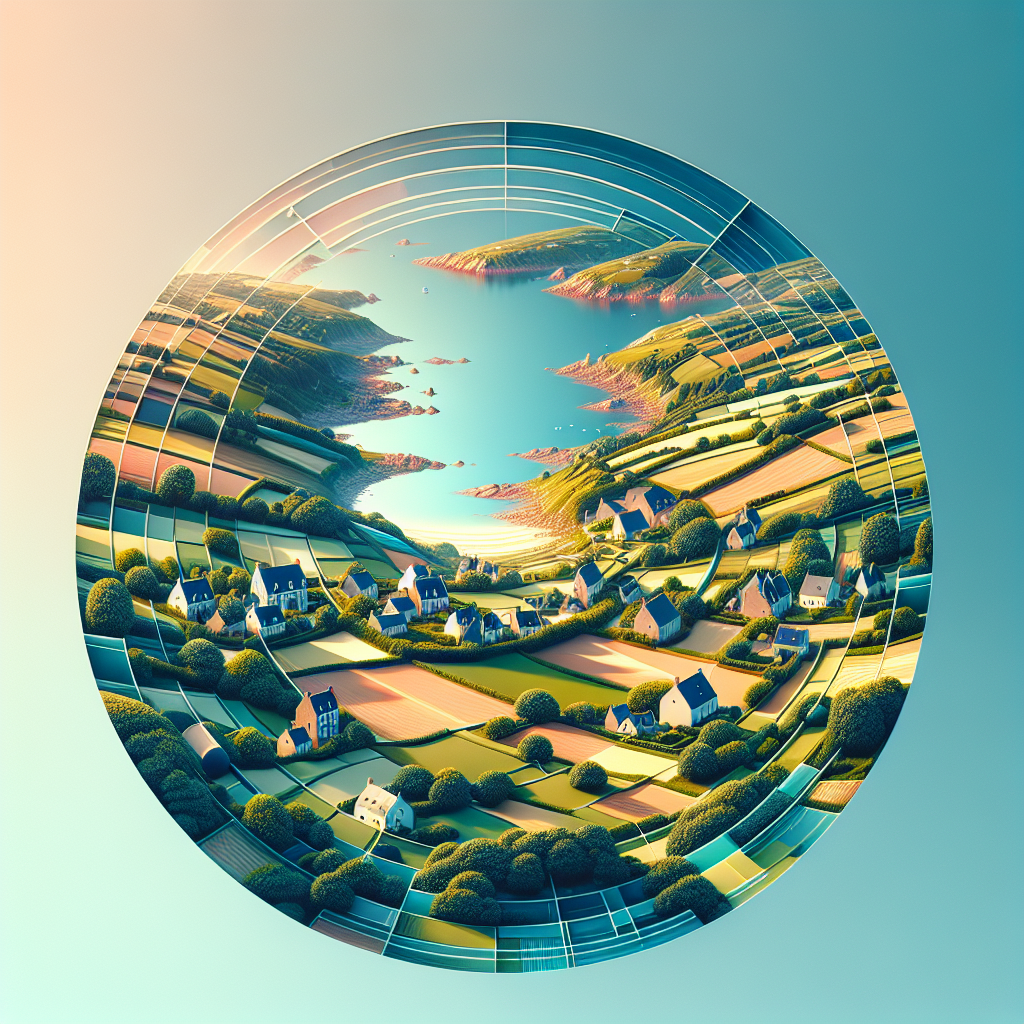

Picture yourself standing on the rugged cliffs of Brittany, waves crashing below, as the salty air fills your lungs. You’re in Cornouaille, a region that whispers tales of history and culture, and offers a connection to the ancient Celtic lands of northwestern France. Cornouaille is more than mere geography; it’s an enchanting blend of who constructed the past, what sustains the present, and when these stories twined together, all set against the backdrop of a timeless landscape. It's where tradition hugs modernity, and where a rich heritage lives within every stone, song, and soul.
Cornouaille beckons with its striking landscapes stretching from untamed coastlines to lush, magical forests. Many are familiar with Brittany, but not all realize that Cornouaille is the name of its southern part, boasting a distinct culture and dialect that adds depth to its local charm. Its ancient Celtic roots are palpable, like the standing stones near Carnac or the evocative sounds of a Breton fest-noz, where communal dances are held in festive spirit.
The region’s history ties back to the Medieval era, characterized by its duchy involvement and political shifts. Inhabitants, known as Bretons, have a reputation for resilience, shaped by their environment and a distinct language that’s one of the last Celtic wings surviving on the continent. Political shifts from the union of Brittany with France have led to a blend of culture, where traditionalism and French influence harmonize, yet the local autonomy remains a cherished ideal.
One cannot mention Cornouaille without touching on its culinary offerings. The traditional crêpes and galettes are staples, derived from ancient recipes. But food here is not just about eating—it’s about storytelling, where generations have passed down flavors that resonate as loudly as the region’s bagpipes. The famed lobster fishers of Audierne or the cider makers of nearby farms are not just selling products; they’re sharing their heritage.
Despite its quaint nature, the allure of Cornouaille faces challenges. The struggle between preserving traditions and embracing globalization is complex. Young people sometimes leave seeking broader opportunities, a situation common in many regions balancing progress and conservation. Yet, there’s pride in local culture, often highlighted during events like the Festival de Cornouaille in Quimper, which showcases traditional costumes and music, binding the old with the new.
Cultural heritage preservation is a hot topic among world citizens, especially for Gen Z, who often balance appreciation for past while pushing for future progress. There’s an appeal in Cornouaille that transcends geographic boundaries, creating a basis for discussions on the importance of maintaining cultural diversity in an increasingly homogenized world. Some argue that holding onto traditions might slow economic development, but it can also offer a unique selling point in global tourism and identity.
Activism in the community is evident in how locals fight to keep their language alive. Breton is taught in schools and appears on street signs as a silent protest to cultural erosion. Some suggest that learning and reintegrating such regional languages into everyday life could challenge the dominance of global languages, keeping diversity vital. For some, it’s about advancing local pride, while others see it as a form of resistance against cultural assimilation.
A walk through Cornouaille splits time. It’s ancient but familiar, echoing a shared humanity that transcends eras. Here, modern art installations can often be found next to the remnants of an ancient chapel. You find yourself in a story that a thousand others have walked before, yet its chapters remain unwritten and inviting.
Technology bridges divides here, too. Social media platforms become gateways for sharing Cornouaille with the outside world, creating a digital tapestry of dances, festivals, and daily life. It shows a region rich in diversity, and it invites a global audience to join in its celebrations or to learn about its causes. Connectivity can offer solutions to isolation, a real threat to remote places.
Cornouaille offers lessons in balancing heritage with progress and demonstrates the strength of local identities in a global landscape. It inspires with its coastline, its stories and its spirit of resilience. Exploring Cornouaille becomes a metaphor for diving into cultural richness while participating in a broader human experience. It reminds us that history can lead in understanding who we become, and that traditions, like roots, can anchor us into the vastness of today. In every sense, Cornouaille challenges us to redefine connection—to place, to culture, and to each other.