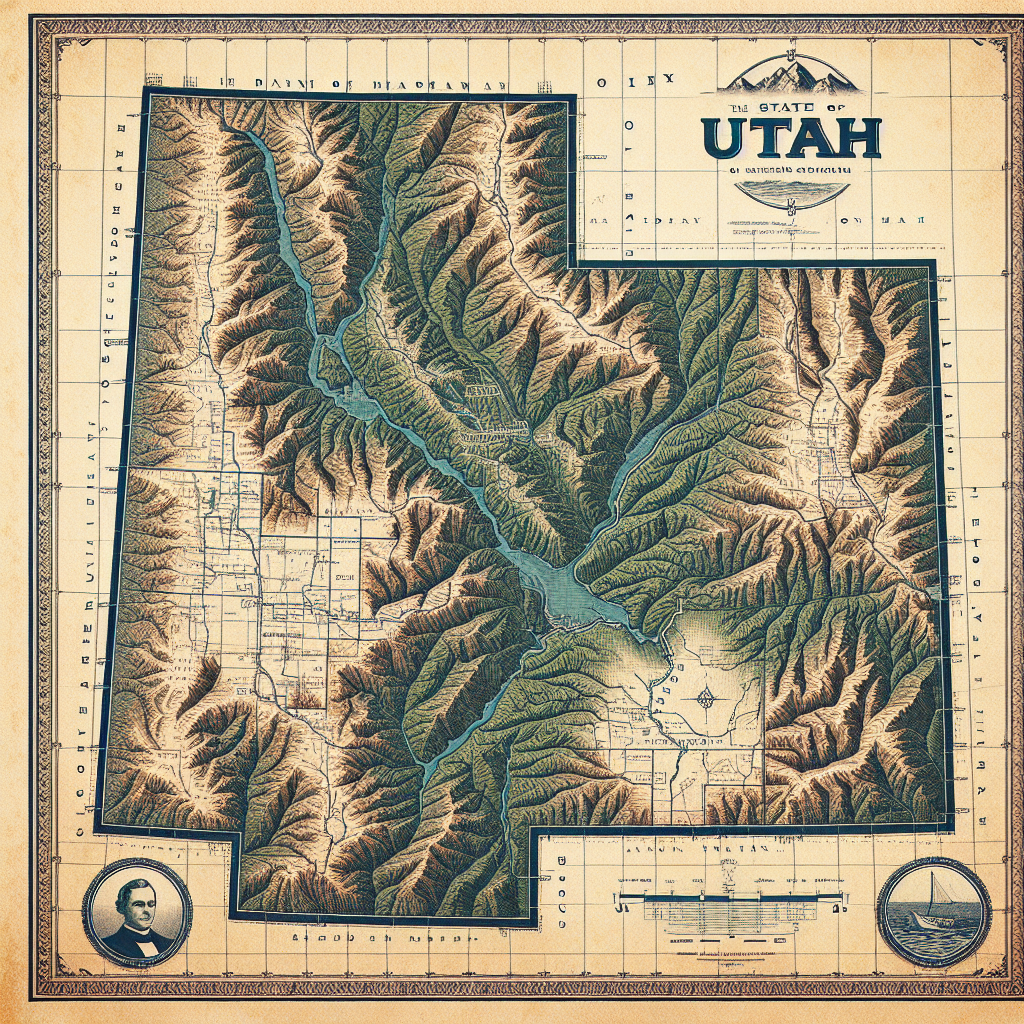

Nestled equanimously between nowhere and everywhere, Border, Utah is a place where even tumbleweeds have become lore. Whenever someone whispers about this ghostly community, you might wonder who, what, when, where, and why all came together to birth such an enigmatic spot. Border is a small, unincorporated community that skulks silently on the verge of the Utah-Nevada line, making its home deep in the Great Basin Desert. With its unique position right on the state border and a population so small that it might just fit in a single van, this hamlet seems almost as ephemeral as a mirage.
Border, Utah came to life due to its enticing location on the Lincoln Highway, one of the earliest transcontinental highways in the United States, dating back to the early 20th century. Its existence can be attributed to those who traveled through, looking for a sliver of promise in a land of endless horizons. When the highway held its sway, Border thrived as a rest stop. But as time went on, the echoes of progress led to a shift, causing even the wind to seem more present than people.
Walking through Border today is like unraveling a piece of nostalgia, where the past holds tightly to crumbling relics of a bygone era, nestled in more contemporary whispers of its history. The gas station, an old motel, and a few remaining structures speak of a time when Border resonated with the hum of engines and the chatter of travelers. It's a haunting reminder of a lost time, capturing the juxtaposition between the relentless march of civilization and the silence it can leave in its wake.
Environmental enthusiasts might wander into Border seeking solitude, as its splendor lies with the vast, open skies and the sweeping, untouched landscapes that surround it. Here, city lights surrender to the brilliance of stars, painting a cosmic dance across a canvas as infinite as it is hauntingly beautiful. For Gen Z, constantly connected to a digital world, such an unplugged spot might offer a retreat into a realm where notification sounds are but the distant cry of a coyote.
Characterized by a blend of intrigue and isolation, Border reflects deeper conversations about sustainability and the choices we make. While some vehemently champion the preservation of such small communities for cultural heritage, others argue their redundancy in a world rushing towards urbanization. Respect for history can coexist with modernity, inviting discussions on how to innovate respectfully.
Despite its serene and still demeanor, Border has been tugged in different directions by politics, economics, and environmental factors. Debates on land use policies often bring such small communities into focus. Should efforts go towards reviving these faded spots, or should energy be spent elsewhere? Balancing development with preserving history is a challenge as intriguing as Border’s very existence.
Those intrigued by the road less traveled often find Border intriguing. Explorers of the unconventional might find it a mosaic of tales waiting to be unearthed. While the booming winds sweep across its landscape, Border gently invites you to pause, reflect, and perhaps, to consider what it means for places like these as we advance into an ever-connected future.
Not merely a footnote in a history book, Border, Utah embodies the many paradoxes of progress, solitude, nostalgia, and resilience. It’s an invitation to ponder the importance of these almost-forgotten places in our society's tapestry. After all, despite the technological strides we make, our roots lie deeply entwined in the stories of these quiet frontiers.