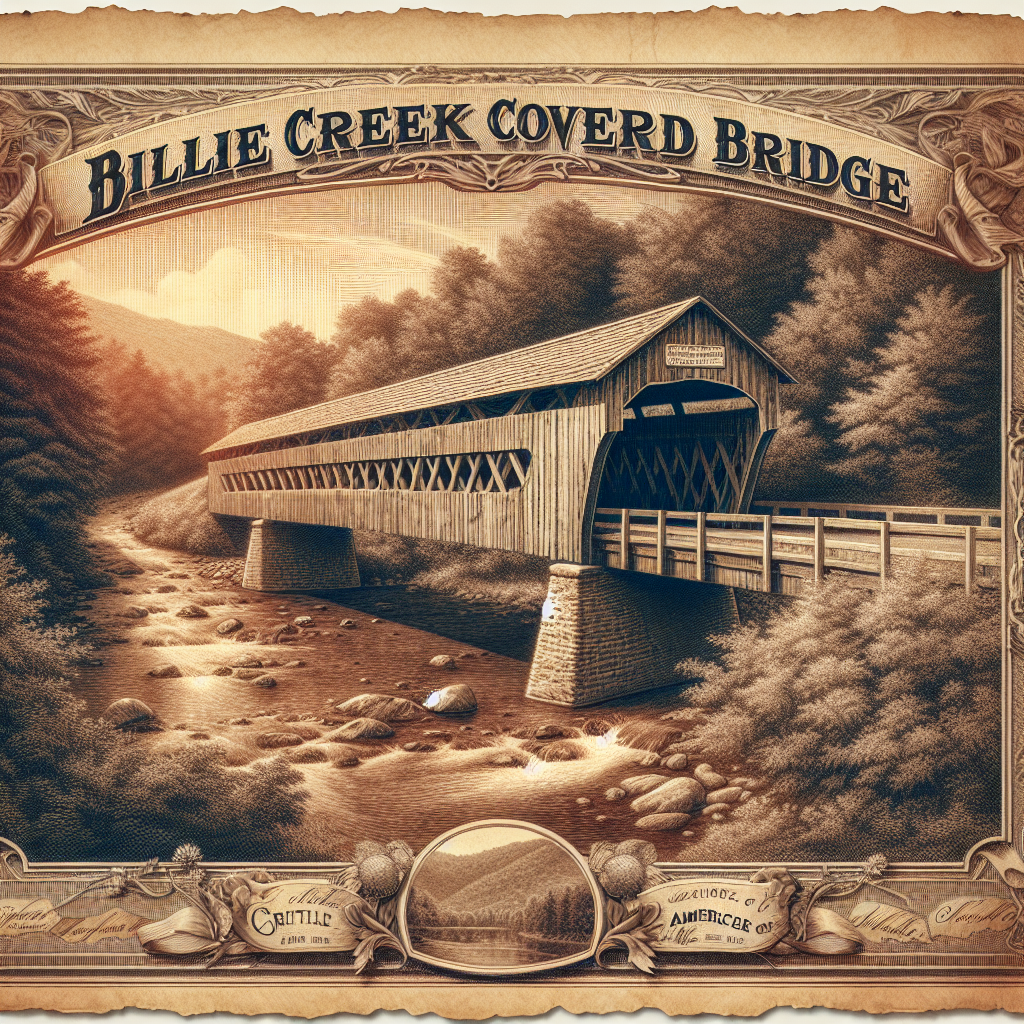

The Billie Creek Covered Bridge is more than just an aging structure; it's a time traveler, bridging the gap between the past and present in the heart of America's Midwest. Built in 1895, nestled in Parke County, Indiana—often claimed as the 'Covered Bridge Capital of the World'—this bridge stands as a symbol of an era when craftsmanship and nature were harmoniously intertwined. Each autumn, the Billie Creek Covered Bridge draws visitors from all around the nation, who arrive to witness the vibrant tapestry of leaves that seem to mirror the bridge's own storied hues of red and gold.
Named after the scenic Billie Creek Village it connects to, the bridge itself has withstood not just the forces of nature, but also the test of changing times. While some might dismiss it as simply a relic, those who walk across its timbered planks are often struck by the profound quietness that such history brings. In an age where everything is increasingly digital and rapidly changing, there's something significant about a structure that offers stillness—a brief reprieve from the commotion of everyday life.
The bridge is 62 feet long and was constructed using the Burr Arch design, a popular architectural style for covered bridges in the 19th century. Such bridges were once a necessity to cross America’s obstacle-ridden landscapes, combining strength and durability in their design. The unique red hue of the Billie Creek Covered Bridge creates the quintessential backdrop for storytelling and photographs, making it a must-see during the Parke County Covered Bridge Festival each October.
Some argue that preserving such old structures—and investing public money into their care—diverts funds away from projects deemed more 'progressive' or 'necessary' in today’s society. This position resonates with those who prioritize modern infrastructure over historic preservation. Yet, it is also true that such physical reminders of our past can serve to ground us, providing context and continuity in a world that often feels fragmented.
The cultural significance of places like the Billie Creek Covered Bridge extends beyond picturesque aesthetics. It represents a pivotal piece of labor history, a nod to the workers who crafted it from local timber without modern machinery or technology. With the advance of industrialization, these bridges began to become obsolete, and they now face threats not only from environmental decay but also from human neglect.
For Generation Z, who are beginning their journey in shaping the future, understanding the importance of such historical markers is crucial. It isn't just about preserving a bridge; it's about learning from the past to inspire future creativity and innovation. Growing demands for virtual connectivity and the omnipresent digital buzz make physical ties to our shared history all the more important. Learning how past generations tackled challenges can fuel today's drive for more sustainable and thoughtful solutions.
In an era dominated by high-speed communication and disposable culture, bridges like Billie Creek challenge us to slow down and appreciate the craftsmanship and ingenuity of those who came before. They remind us of a world that is both larger and smaller than the one we often get caught up in—a world that requires both care and commitment from every new generation.
As debates continue between progress and preservation, seeing the Billie Creek Covered Bridge not just as wood and steel, but as an embodiment of a community's spirit, might help illuminate the broader conversation about what it means to truly invest in where we've been, where we are, and where we're headed. Embracing a balanced perspective allows for both growth and memory—a trajectory toward a future that acknowledges and respects its roots.
In your journeys, take a moment to step onto the Billie Creek Bridge. Picture the generations who've crossed before you, each with their own stories and paths. Feel the wood beneath your feet and absorb the quiet wisdom it offers. Sometimes, the most reliable bridges in life are the ones built on the solid foundation of experience and history. Exploring the spaces between yesterday and tomorrow can offer insight into who we were, who we are, and who we hope to become.