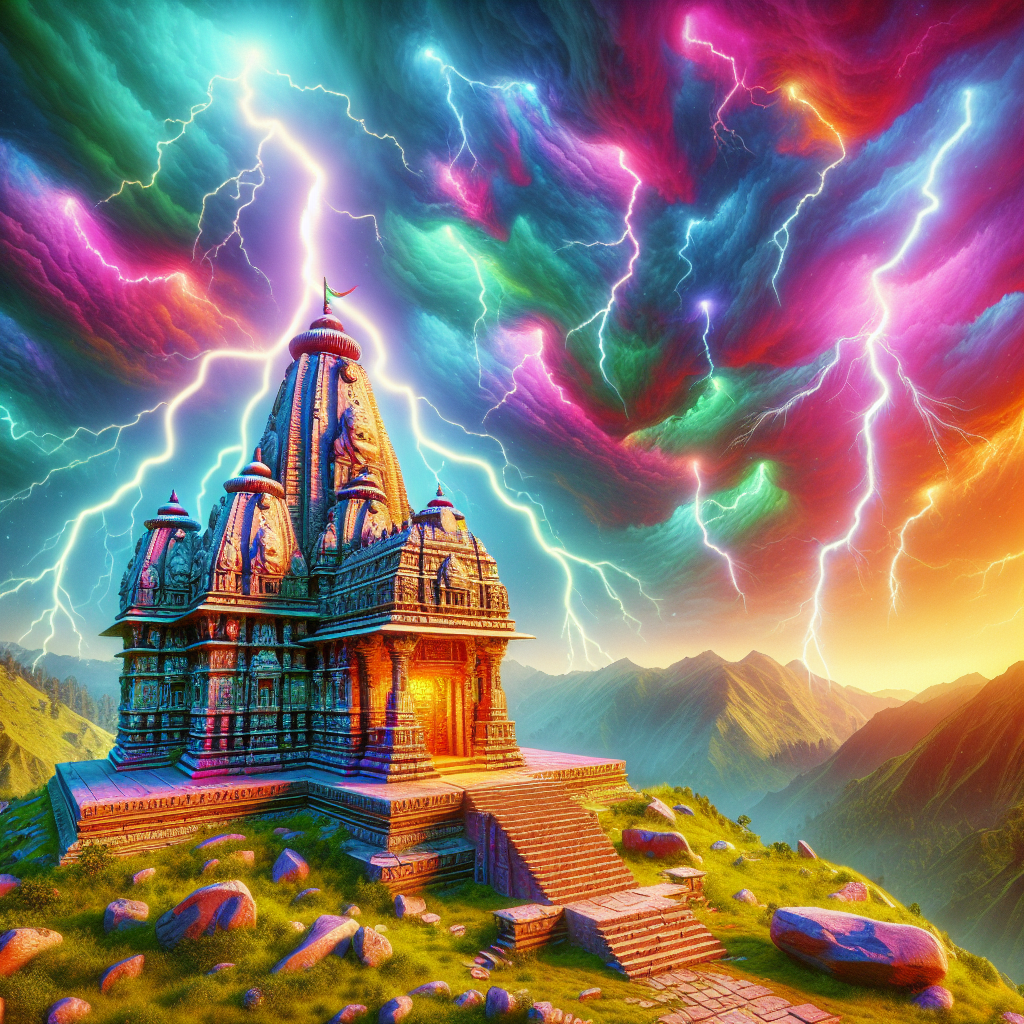

The Enigmatic Bijli Mahadev: A Temple of Thunder and Tradition
Nestled in the picturesque Kullu Valley of Himachal Pradesh, India, the Bijli Mahadev Temple is a fascinating blend of spirituality and natural wonder. This ancient temple, dedicated to Lord Shiva, is renowned for its unique ritual involving lightning strikes. The temple, believed to be over 500 years old, sits atop a hill at an altitude of about 2,460 meters, offering breathtaking views of the surrounding mountains and valleys. The name "Bijli Mahadev" translates to "Lightning Shiva," and the temple lives up to its name with a peculiar tradition that has intrigued both locals and tourists alike.
The temple's most captivating feature is its Shiva Lingam, which is said to be shattered by lightning every few years. The priests of the temple then meticulously piece it back together using a mixture of butter and sattoo (a type of flour). This ritual is not just a testament to the temple's spiritual significance but also a symbol of resilience and renewal. The belief is that the lightning strike is a blessing from Lord Shiva, and the reconstruction of the Lingam is a way to honor and preserve this divine connection.
For the local community, the Bijli Mahadev Temple is more than just a place of worship; it is a cultural cornerstone. The temple is a focal point for various festivals and gatherings, drawing people from nearby villages and towns. The most significant celebration is the annual fair held in August, which sees a convergence of devotees who come to pay their respects and participate in the vibrant festivities. This event is a blend of religious devotion and cultural expression, featuring traditional music, dance, and local cuisine.
The journey to Bijli Mahadev is an adventure in itself. The trek to the temple is a popular activity for both pilgrims and tourists, offering a chance to experience the natural beauty of the region. The trail winds through dense forests and open meadows, providing stunning vistas at every turn. For many, the trek is a spiritual journey, a chance to connect with nature and reflect on the deeper meanings of life and faith.
While the temple is a source of pride and spiritual solace for many, it also raises questions about the intersection of faith and science. The phenomenon of the lightning strike is a natural occurrence, yet it is imbued with spiritual significance by the devotees. This duality is a reflection of the broader human experience, where the lines between the mystical and the empirical often blur. It invites a dialogue between tradition and modernity, encouraging us to explore how ancient beliefs can coexist with contemporary understanding.
Critics might argue that attributing natural events to divine intervention is a way of avoiding scientific explanations. However, for the believers, the lightning strike is a manifestation of the divine, a reminder of the power and unpredictability of nature. This perspective is not about rejecting science but about finding meaning and connection in the world around us. It is a reminder that faith and reason can coexist, each offering its own insights into the mysteries of life.
The Bijli Mahadev Temple stands as a testament to the enduring power of faith and tradition. It is a place where the past and present converge, where the natural and the supernatural intertwine. For those who visit, it offers a chance to witness a unique cultural practice and to reflect on the ways in which we seek to understand and engage with the world. Whether one approaches it as a spiritual pilgrimage or a cultural exploration, the temple invites us to consider the many ways in which we find meaning and connection in our lives.