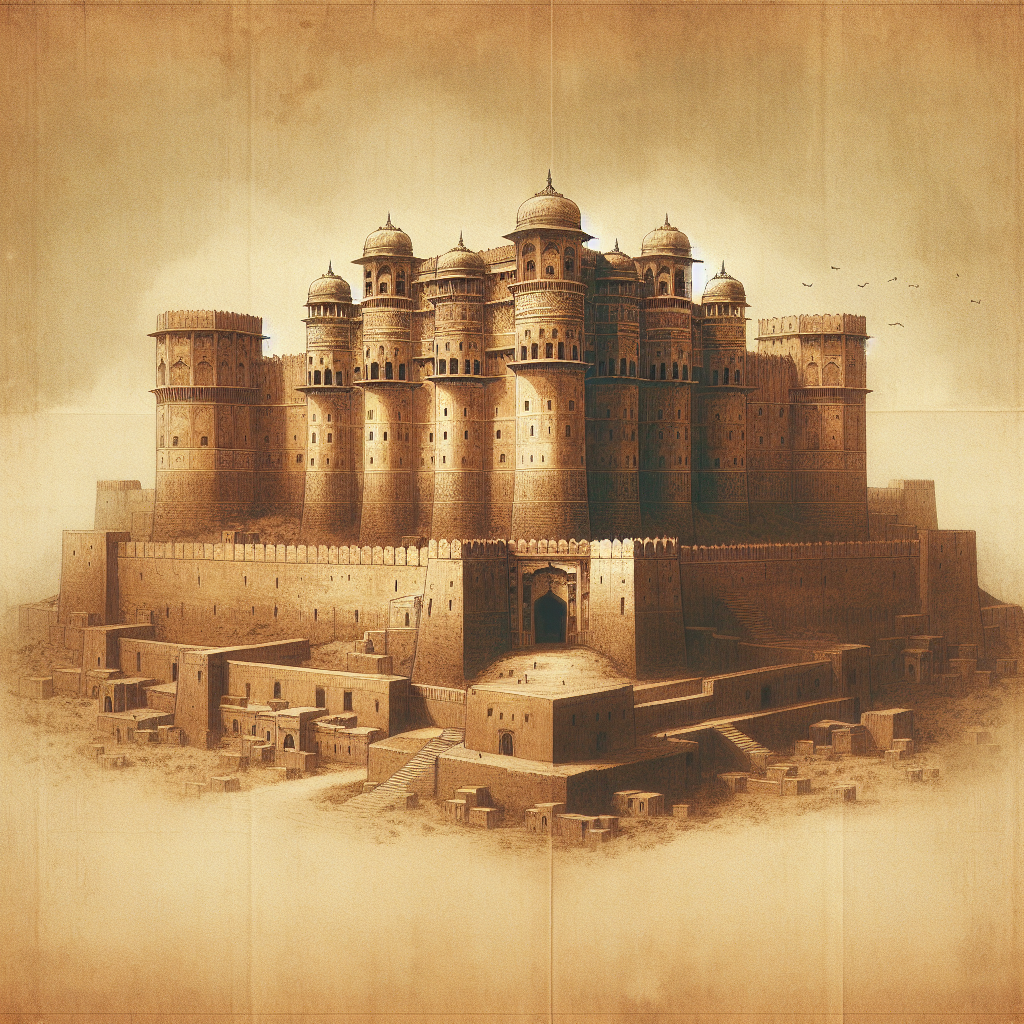

Imagine a place where history whispers through the stones and mystery hangs thick in the air. Welcome to Baghsar Fort—a living testament to the past. Built by the Mughals during the reign of Emperor Akbar in the late 16th century, the fort majestically perches on hills in the Bhimber district of Azad Kashmir, Pakistan. It stands not just as a fortress of stones but as a canvas that has captured centuries of history, culture, and the ebbs and flows of empires.
Baghsar Fort is a masterpiece of Mughal architecture, a stoic structure facing the Baghsar Lake, present for all to witness the collision of nature and human ingenuity. The fort has served as a significant military establishment during its time. It held strategic value, especially during times of conflict between the Mughals and their rivals. It’s fascinating to think about how this fort once buzzed with the energy of soldiers, strategists, and even spies, all playing pivotal roles in shaping the course of history.
The setting sun over Baghsar paints a romantic yet haunting picture of resilience. Walls that have seen the swinging of swords now stand silent but never forgotten. Generations have wandered through these grounds, feeling the palpable connection to a past that continues to intrigue. The fort offers not just breathtaking views but also a complex narrative of power struggles, indicating how territorial power defined and redefined political spaces.
People visiting Baghsar Fort today find themselves in the midst of a serene landscape, yet their imaginations run wild with stories of war cries and inked strategies discussed under the moonlit shadows of the fort. While it may no longer serve its martial purpose, it still guards secrets of antiquity that draw the curious and the introspective alike.
As the younger generation explores this fort, questions about preservation come to the forefront. The fort, though resilient against time, requires special attention regarding conservation efforts. Here, the viewpoints can diverge. Some may argue in favor of modernizing or reconstructing parts of historical sites to retain economic relevance through tourism. Others feel that history should be preserved in its original state, untouched by modernity, allowing the genuine aura of antiquity to captivate visitors and researchers.
Both arguments find their roots in a shared passion for history, albeit manifesting differently. For Gen Z, who grew up with technology and accessibility, balancing authentic history with modern conveniences can be both a challenging and exciting prospect. Baghsar Fort serves as a tangible link to the past. It invites not just admiration but a conversation on how newer generations can balance reverence with innovation.
The cultural and historical significance of this fort extends beyond just pedestrian walls. It challenges us to think about the stories we've inherited, the lessons they hold, and how they fit into our contemporary understanding of the world. As much as it's about looking back, visiting Baghsar Fort can make one look ahead. It acts as a reminder of how historical narratives shape our present-day identities and inform the social fabric we are weaving today.
Spurred by this dual sentiment of nostalgia and renewal, there's a quiet beauty in knowing that Baghsar Fort remains a place for dreamers, historians, and explorers. Each visit promises fresh discoveries and perhaps even more questions than answers. It's a place where every stone has something to say and every corridor echoes with voices from the past.
Exploring Baghsar Fort, both physically and intellectually, invites a kind of introspection seldom experienced elsewhere. For those with open eyes and minds, it becomes a personal tapestry where stories—both imagined and real—intertwine. As we learn from its history, we also touch upon larger themes of resilience and transformation.
Baghsar Fort captivates not just as a historical monument but as a living dialogue about what was, what is, and what can be. This fort stands as an emblem of endurance, waiting to share a piece of humanity’s crowded canvas with all who seek to understand it.